
High-ticket sales in B2B is less about a specific price tag and more about the weight of the decision.
When a purchase costs more, affects several teams or changes an important business process, buyers tend to ask harder questions. They want proof. They need to understand the risk. More people may need to approve the decision.
That changes the sales process.
A high-value deal is rarely won because one salesperson delivered a perfect pitch. It moves forward when the seller finds the right account, understands the buying context, earns trust, involves the right people and gives the buyer enough confidence to make a decision.
Outbound can start that process. It should not try to finish it in the first email.
This guide explains how high-ticket sales works in B2B, how it differs from lower-value selling and how to move a high-value account from first contact to a deal without turning the process into aggressive closing.
What is high-ticket sales in B2B?
High-ticket sales means selling a product or service where the value, cost or business impact creates a higher-consideration buying decision.
There is no universal number that makes an offer high ticket.
A $10,000 consulting engagement may be a major decision for a small company. A much larger annual software contract may fall inside a normal procurement process for a global enterprise.
Price matters, but it is only one part of the picture.
A deal starts to behave like a high-ticket sale when several of these factors appear:
- the purchase has meaningful financial impact
- the buyer sees material risk if the decision goes wrong
- more than one stakeholder influences the decision
- implementation or onboarding takes real effort
- the product changes an existing workflow or technology stack
- the buyer needs a business case before approving the spend
That is why high-ticket sales often involves software platforms, professional services, enterprise technology, consulting, infrastructure and other products where the buyer needs more than a product page to make a confident decision.
High-ticket sales is not the same as enterprise sales
The terms overlap, but they are not identical.
| Sales motion | What defines it | Typical buying process |
| Low-ticket B2B | Lower cost and lower decision risk | Short evaluation, often one buyer or self-service |
| High-ticket B2B | High value, high impact or meaningful buying risk | Research, discovery, proof, stakeholder alignment and commercial review |
| Enterprise sales | Selling into large organizations with more formal buying processes | Often includes procurement, security, legal and several business stakeholders |
A high-ticket deal can happen outside an enterprise account. An enterprise sale can also start with a smaller contract.
The practical question is not “Does this cross a high-ticket price threshold?”
Ask how much scrutiny the buyer needs before they can say yes.
What about high-ticket closers and remote closing?
Online, “high-ticket sales” is also used for remote closing jobs linked to coaching programs, courses and consumer services.
That is a different context from complex B2B selling.
A B2B salesperson may still be called a closer, especially when they own the later stages of the deal. But high-value B2B sales usually involves research, discovery, stakeholder management, technical review and follow-up long before the final commercial conversation.
Why high-ticket buyers behave differently
A buyer taking a free trial can reverse the decision with little damage.
A buyer replacing a core platform, committing a large budget or asking several teams to change how they work has more to lose.
That creates different questions:
- Will this solve the problem we actually have?
- What will implementation involve?
- What will the team need to change?
- How does the cost compare with the expected value?
- What happens if the project fails?
- Who else needs to review or approve it?
A strong salesperson makes those questions easier to answer.
That is one reason personal selling becomes more useful as a purchase becomes more complex. Automated channels can create the first interaction. A person usually needs to handle the nuance that follows.
Step 1: start with high-fit accounts, not more leads
High-ticket sales gives you more reason to be selective.
If one account could become a valuable customer, spending more time deciding which accounts deserve attention can be more productive than expanding the list as far as possible.
Start with a clear ideal customer profile.
Then look beyond firmographic fit.
A company can match your ICP perfectly and still have no reason to buy now.
Look for context that changes the timing:
- a new senior leader
- a hiring push
- expansion into another market
- a major product launch
- changes in the technology stack
- direct engagement with your product or commercial content
Woodpecker’s guide to B2B buying signals explains how to separate a useful signal from a random company event.
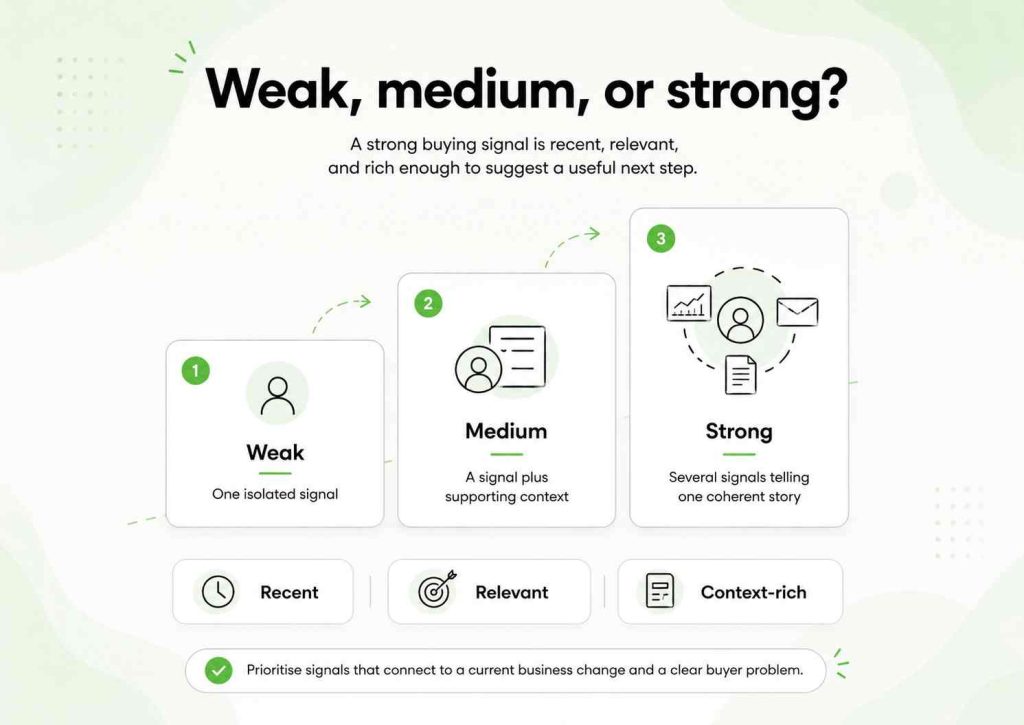
One funding announcement is weak context on its own.
A funding round, a new sales leader, several open sales roles and expansion into another region may tell a more useful story.
The point is not to collect the most signals. It is to understand what may be changing inside the business.
If you need more sources for potential accounts, use these places to find B2B prospects.
Use account-based prospecting for the accounts that deserve it
High-ticket sales is a natural fit for account-based prospecting.
Instead of starting with one contact, start with the company.
Ask:
- Why is this account valuable?
- What business change may create a need?
- Who feels the problem?
- Who owns the budget?
- Who can influence or block the decision?
Do not contact everybody at once.
Map the account first. Start with the person who has the most relevant context. Learn from the response before expanding the conversation.
Step 2: research enough to form a useful hypothesis
Research matters more when the account matters more.
That does not mean spending three hours preparing every cold email.
Your research needs to answer a practical question:
Why might this company have a reason to care about this problem now?
Look at public company updates, job posts, leadership changes, product launches, relevant technology and previous CRM history.
The research stage of cold email personalization gives you a practical structure for gathering that context.
Then turn research into a hypothesis rather than pretending you already understand the account.
| Weak assumption | Stronger hypothesis |
| Your growing sales team must be struggling with outbound. | You are adding SDRs in two regions. Is keeping outreach consistent across the new team already becoming a priority? |
| You need a better CRM. | With the new RevOps hires, are you reviewing how sales activity gets reported across the team? |
| Your current provider is expensive. | Teams at this stage often review the cost of the current setup as usage expands. Is that part of your evaluation? |
The second version gives the prospect room to confirm, reject or refine your thinking.
That is a better starting point for a high-value conversation.
Step 3: use outbound to earn the conversation
Cold outreach has a clear role in high-ticket sales.
It helps you start a conversation with a good-fit account that may not be actively searching for your product.
The first cold email does not need to close the sale.
It needs to earn a reply.
That means the message should usually do four things:
- Show why the account was selected.
- Introduce one relevant problem or hypothesis.
- Give enough proof to make the sender credible.
- Ask for a small, clear next step.
If you need actual copy structures, do not recreate them here. Woodpecker already has nine outreach templates for high-ticket sales.
For broader inspiration, you can also review cold email templates that work in 2026 and the guide to writing personalized cold emails.
Give each channel a different job
A valuable account may justify several channels, but multichannel does not mean repeating the same pitch everywhere.
| Channel | Role in a high-ticket sequence |
| Cold email | Explain the reason for contact and introduce the problem |
| Create familiarity or add a lighter point of contact | |
| Follow-up email | Add proof, a new question or another useful angle |
| Call | Continue a conversation when there is enough context for a live discussion |
Read the guide to LinkedIn outreach and Woodpecker’s framework for planning a multichannel sales cadence before adding more channels simply for the sake of activity.
For the email side, a well-planned cold email sequence helps each touch build on what came before.
Check the email as the buyer will see it
A high-value prospect is a poor place to discover that your email looks broken, contains a messy signature or hides the main point under too much copy.
Before launch, use Woodpecker’s free email preview tool to review the message as a complete email.
Step 4: sell through diagnosis, not a premature demo
Once a prospect responds, the job changes.
A reply gives you permission to continue the conversation. It does not prove the account is qualified or ready to buy.
A consultative selling process works well here because it puts diagnosis before the product pitch.
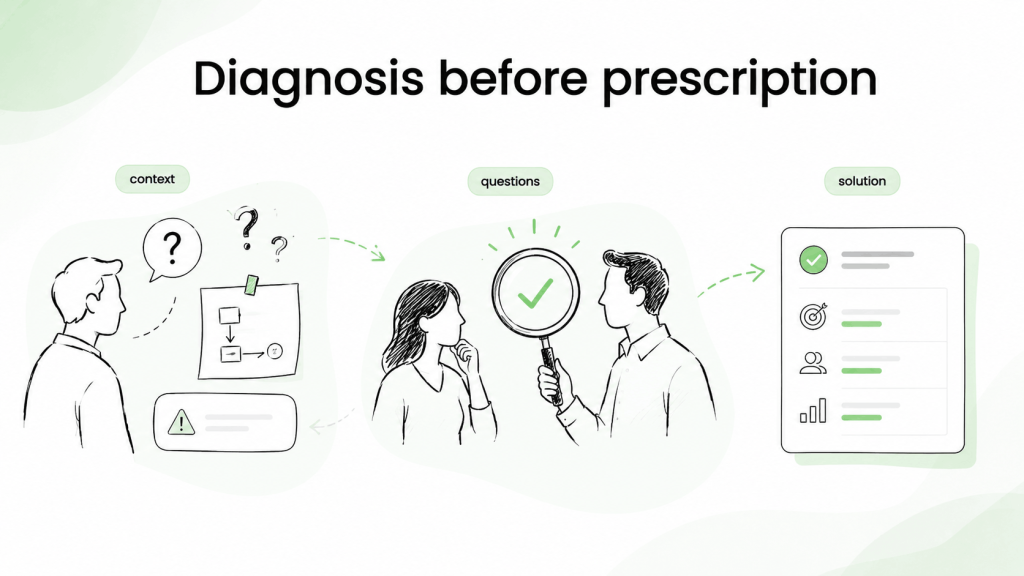
The goal of discovery is not to run through a question bank.
You are trying to understand six things:
- How does the process work today?
- Where is the real pain?
- What business impact does it create?
- Who else is affected?
- Why does the timing matter?
- What should happen next?
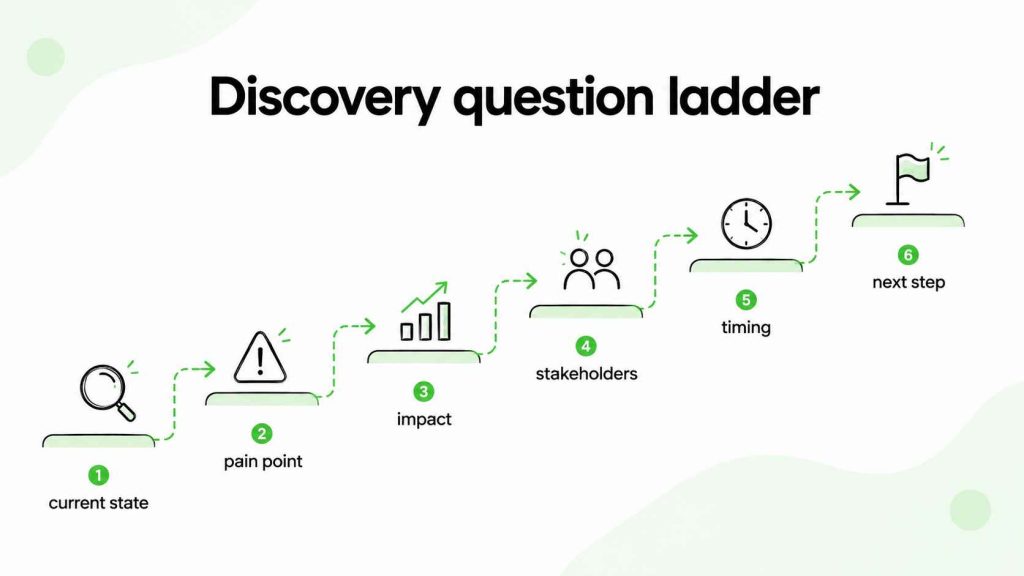
The full guide to discovery call questions gives examples for each stage.
Do not mistake interest for qualification
A prospect can like the product and still be a poor sales opportunity.
They may have no urgency. They may lack budget. They may not own the problem. Another project may matter more.
Woodpecker’s guide to qualifying sales leads can help separate interest from actual fit.
When a cold email does produce a positive response, the guide to handling an interested reply is also useful. Keep the conversation focused on what the prospect asked rather than immediately sending every sales asset you have.
Step 5: map the buying group before the deal gets stuck
One enthusiastic contact does not equal organizational support.
High-ticket deals often slow down when the seller discovers late that another person controls the budget, security has concerns or procurement has a process nobody discussed.
Map the likely stakeholders while the opportunity is still developing.
| Stakeholder | What they may care about | Useful evidence |
| Daily user | Ease of use, workflow, time saved | Product workflow, practical examples, onboarding plan |
| Team manager | Productivity, consistency, reporting | Team results, process improvements, adoption plan |
| Economic buyer | Cost, return, business risk, strategic value | Business case, financial impact, comparable customer outcome |
| Technical or security reviewer | Integration, data, security, implementation | Technical documentation and implementation requirements |
| Procurement or legal | Terms, risk, compliance, commercial process | Clear documentation, pricing and contract information |
Do not send all five people the same message.
The problem may be shared. Their reasons for caring about it are different.
That is another reason account-level outreach is more useful than treating a valuable company as five unrelated contacts.
Step 6: build a business case the buyer can repeat internally
High-ticket buyers often need to sell the decision internally before they can buy from you.
Your job is to make that internal conversation easier.
A strong business case connects the problem with a concrete outcome.
Useful proof can include:
- relevant customer stories
- measured time or cost savings
- revenue impact
- cost of keeping the current process
- implementation effort
- security or technical information
- a realistic path to adoption
Choose evidence for the person receiving it.
An end user may care about removing repetitive work. A sales leader may care about pipeline. Finance may care about cost and expected return.
That is where the principle behind a good value proposition becomes useful: explain the value in terms the recipient can connect to their own situation.
Step 7: handle objections as information
Objections are normal in high-ticket sales.
A buyer taking a meaningful commercial risk should have questions.
The mistake is treating every objection as something to defeat.
| What the buyer says | What may sit underneath it | Useful next move |
| “It is too expensive.” | Value is unclear, budget is limited or expectations differ | Clarify the value gap before discussing a discount |
| “The timing is not right.” | The problem may be real but not urgent | Understand what would need to change for the project to move |
| “We already use another provider.” | Switching cost or satisfaction with the current setup | Learn what works today before arguing for change |
| “I need to involve more people.” | The buying process is wider than one contact | Help the prospect bring the right stakeholder into the next step |
| “Send me more information.” | Real research, low urgency or a polite exit | Ask what would be most useful instead of sending a generic deck |
Woodpecker’s guide to common sales objections covers price, features and resistance to change in more detail.
If the prospect needs time, use a useful sales follow-up email rather than pushing for a decision before the buyer is ready.
The newer guide to follow-ups with more context and less nagging is especially useful when you want every new touch to add something rather than repeat the previous ask.
Step 8: close the next decision, not every decision at once
Closing a high-ticket deal is usually a sequence of smaller commitments.
The prospect agrees to a first conversation.
Then to involve another stakeholder.
Then to review a technical requirement.
Then to confirm commercial terms.
Trying to skip those steps can create pressure without removing any of the buyer’s risk.
At the end of each meaningful conversation, define what happens next:
- who needs to be involved
- what information needs to be shared
- who owns the action
- when the next decision should happen
Keep those actions visible in the pipeline.
Woodpecker’s guides to building an outbound sales pipeline and managing a sales pipeline can help connect early outreach with later deal progress.
What should you measure in high-ticket sales?
High-ticket sales can look weak if you measure it like a high-volume campaign.
A small number of excellent target accounts may produce fewer total replies than a broad list while creating much more valuable pipeline.
Useful metrics include:
- positive reply rate
- qualified meetings
- target-account-to-opportunity conversion
- stakeholders engaged per account
- pipeline value per target account
- sales cycle length
- win rate
- average deal size
The wider sales metrics guide covers deal size, win rate, sales cycle length, pipeline velocity and other useful measures.
For the process between initial contact and an active opportunity, review the sales engagement process as well.
Use outbound benchmarks carefully
High-ticket outbound often involves smaller and more selective lists.
That makes a generic benchmark useful for context, but not a target your campaign needs to hit.
Use Woodpecker’s free cold email benchmarks to see how broader campaign results compare, then judge the high-ticket campaign against its own target accounts and historical performance.
You can also review Woodpecker’s cold email statistics for more context around reply behavior and follow-ups.
Do not force an A/B test onto a tiny account list
A/B testing is useful when you have enough observations to learn from the result.
If a Tier 1 account campaign contains a small number of deeply researched prospects, the result may never have enough volume to support a useful statistical conclusion.
For larger segments, use Woodpecker’s cold email A/B test calculator to check whether the difference between variants is likely to be meaningful.
Do not forget the infrastructure behind high-value outreach
The value of the target account does not matter if the first email lands in spam.
Before running outbound, check the technical side of the campaign.
Woodpecker’s guide to cold email infrastructure covers domains, mailboxes, authentication, sending setup and monitoring.
If you are planning outreach across a larger target-account list, the cold email infrastructure calculator can help estimate how many domains and email accounts the campaign may need.
Before launch, it is also worth running an email deliverability audit and reviewing the full cold email campaign setup.
For new sending identities, see the guides to email warm-up and preparing a domain for outreach.
Where Woodpecker fits into a high-ticket sales process
Woodpecker supports the outbound part of high-ticket sales.
It can help a sales team find B2B prospects, verify addresses, run cold email campaigns, add LinkedIn steps, manage follow-ups and protect the technical side of outreach.
It does not replace discovery, negotiation or the salesperson’s judgement.
The point is to automate the repeatable work around the conversation so the sales team has more time for the part that needs a person.
For example, a high-ticket outbound workflow can look like this:
- Select high-fit accounts.
- Research the account and likely buying context.
- Find and verify the right contacts.
- Start a relevant cold email and LinkedIn sequence.
- Stop automated outreach when the prospect replies.
- Move the conversation into discovery and qualification.
- Keep follow-up and account activity connected with the wider sales process.
The outbound sales automation guide explains where automation can reduce repetitive work without automating the judgement calls that still belong to the sales rep.
A cold email sales funnel can then connect that first outreach with the real sales process that starts after a prospect responds.
Common high-ticket sales mistakes
Trying to close before you understand the problem
A polished demo does not compensate for weak discovery.
Understand what the buyer is trying to change before showing how your product works.
Assuming a bigger deal needs a harder pitch
Higher risk usually creates a need for more clarity, not more pressure.
Help the buyer evaluate the decision rather than trying to rush them through it.
Working one contact for too long
A champion can open the door. They may not be able to approve the deal.
Map other stakeholders before the opportunity reaches a late stage.
Discounting before understanding the objection
A price objection does not always mean the price is wrong.
The buyer may not understand the value, the budget owner may be missing or another project may have higher priority.
Using generic outreach for valuable accounts
The higher the potential value of an account, the harder it is to justify a message that could have been sent to anybody.
Use research to change the substance of the message, not only the first line.
Measuring activity instead of account progress
More emails and calls do not automatically mean a high-ticket opportunity is healthier.
Look at stakeholder engagement, confirmed pain, agreed next steps and actual pipeline movement.
High-ticket sales FAQ
What counts as high-ticket sales?
There is no universal price threshold. A sale is more likely to behave like a high-ticket deal when the financial impact, implementation effort or business risk creates a more complex buying process. Several stakeholders and a longer evaluation are also common.
Is high-ticket sales the same as enterprise sales?
No. High-ticket describes the value and complexity of the purchase. Enterprise sales describes selling into large organizations with more formal buying processes. The two often overlap, but a high-ticket deal can happen with a smaller company too.
How do you sell a high-ticket B2B product?
Start with high-fit accounts, research the buying context and use outreach to earn a conversation. Then diagnose the problem, map stakeholders, build a clear business case, address risk and agree on the next decision at each stage.
Can cold email work for high-ticket sales?
Yes. Cold email can create an initial conversation with a relevant account. The message should be researched, concise and built around a credible business problem. The email is the start of the process, not the place to close a complex deal.
What is high-ticket closing?
High-ticket closing is the later part of a high-value sales process where the buyer and seller resolve remaining commercial, stakeholder and risk questions before making a final decision. In B2B, closing is usually the result of good work earlier in the sales cycle rather than one persuasive final call.
Is high-ticket sales a real job?
Yes. Salespeople can specialize in high-value deals. Depending on the company, the role may include account research, discovery, demos, stakeholder management, negotiation and closing. In complex B2B sales, several people may contribute to the same deal.
What metrics matter most in high-ticket sales?
Useful metrics include qualified opportunities, pipeline value, win rate, average deal size, sales cycle length and stakeholder engagement. For outbound, positive replies and qualified meetings matter more than simply counting sends or opens.
High-ticket sales is a decision process, not a closing trick
High-value buyers do not need more pressure.
They need enough context and confidence to make a decision they can support after the contract is signed.
Start with the right accounts. Use outbound to earn attention. Ask better questions once a prospect responds. Bring the right stakeholders into the conversation and give each person the proof they need.
That is what turns high-ticket sales from a persuasive pitch into a repeatable B2B sales process.