
An SDR gets a positive reply, books a meeting and marks the lead as qualified. The account executive opens the CRM ten minutes before the call and finds a company name, job title and one note: “Interested. Wants to learn more.” The prospect then spends the first fifteen minutes repeating everything they already told the SDR. The AE asks questions the SDR already answered. A buying signal that made the account interesting disappears somewhere between the outreach campaign and the sales pipeline. That is an SDR to AE handoff problem. A good handoff transfers enough context for the next salesperson to continue the conversation without pretending they are meeting the account for the first time.
The process does not need a huge form. It needs a clear handoff trigger, one owner, a response expectation and a small packet of information that helps the AE decide what to do next.
What is an SDR-to-AE handoff?
An SDR-to-AE handoff is the point where a sales development representative transfers a qualified prospect or opportunity to an account executive who will manage the next stage of the sales conversation.
The SDR usually creates the initial conversation through prospecting, email, LinkedIn, calls or another outbound channel. The AE takes responsibility once the conversation needs deeper discovery, solution evaluation, commercial discussion or deal management.
Woodpecker’s guide to personal selling uses the SDR-to-AE transition as an example of where sales context is easily lost. The SDR has already built familiarity with the buyer, so the AE should inherit that relationship rather than restart it.
The handoff begins before the meeting gets booked
A calendar booking is not automatically a qualified opportunity. Some prospects are curious. Some want pricing. Others accepted because the email arrived at the right moment but have no active project or buying authority.
Define the event that makes a lead handoff-ready before SDRs start passing meetings to AEs. Otherwise one SDR transfers every booked call while another keeps qualifying until a project, pain point and timeline are confirmed.
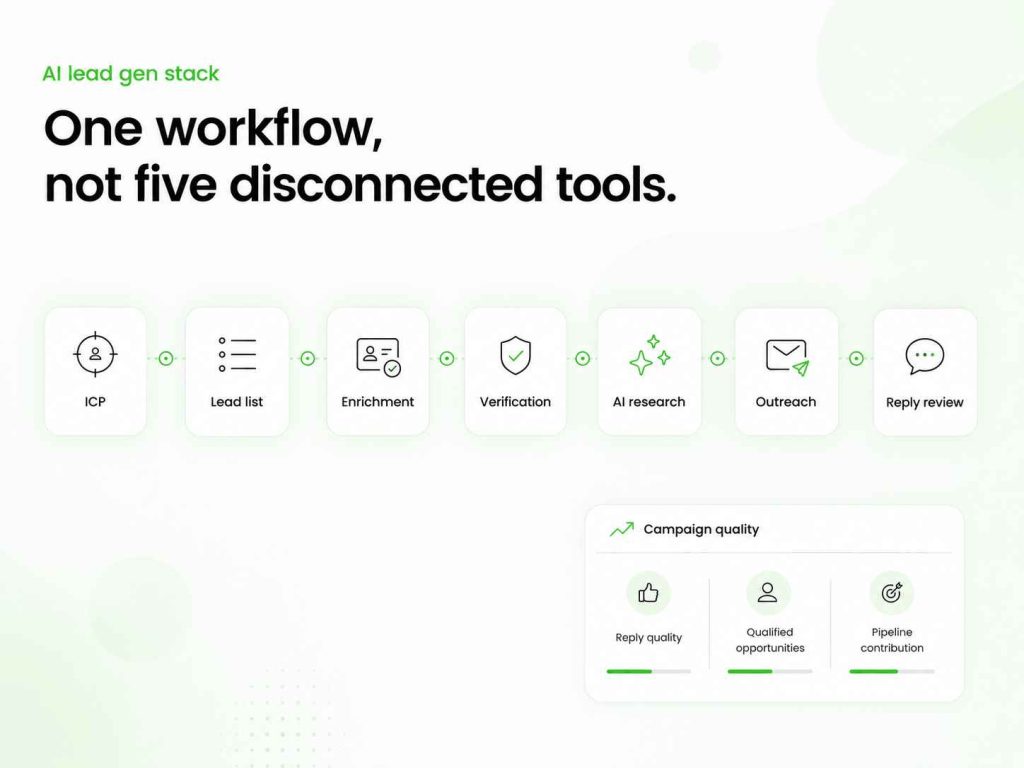
A simple handoff threshold may require enough evidence to answer four questions:
- Fit: Does the account broadly match the customers you want?
- Problem: Is there a credible reason for a sales conversation?
- Person: Are you speaking with someone relevant to the problem or buying process?
- Next step: Has the prospect agreed to continue the conversation?
The threshold should match the sales motion. A high-volume SMB team may hand meetings over earlier. A complex enterprise motion may need more evidence before an AE invests time in the account.
Use lead qualification to define what makes a lead worth pursuing, then connect that definition to your sales engagement process so qualification does not depend on which SDR happens to own the conversation.
Build a handoff contract between SDRs and AEs
Most handoff problems are ownership problems disguised as communication problems.
The SDR thinks the lead became the AE’s responsibility when the meeting was booked. The AE thinks ownership begins after the discovery call. Nobody responds to a question the prospect sends in between because each person assumes the other has it.
Write a short internal handoff contract that answers five things:
- Trigger: What must happen before an SDR transfers a lead?
- Owner: At which exact point does the AE become responsible?
- Information: Which fields or notes must be complete?
- Timing: How quickly should the AE accept and act on the handoff?
- Fallback: What happens when the lead is not actually ready?
Those rules should complement your lead routing logic. Routing determines where a lead should go. The handoff defines what the new owner receives and what happens after ownership changes.
The SDR-to-AE handoff packet
The AE does not need every piece of research the SDR collected. They need the information that changes the next conversation.
A practical handoff packet can look like this:
| Handoff field | What to capture | Why the AE needs it |
| Why this account | ICP fit, trigger or reason it entered outreach | Explains the original sales hypothesis |
| Original contact | Name, role and relationship to the problem | Shows where the conversation started |
| Prospect’s words | Key reply or direct statement about the problem | Preserves the buyer’s language |
| Pain or goal | What they want to fix, improve or investigate | Gives the AE a useful discovery starting point |
| Known impact | Business consequence already mentioned | Separates mild interest from meaningful pain |
| Timing | Deadline, trigger or buying window | Helps the AE understand urgency |
| Stakeholders | Other people mentioned or already involved | Prevents single-threading the opportunity |
| What has been sent | Emails, case study, pricing, deck or other assets | Stops the AE from repeating material |
| Promised next step | What the SDR told the prospect would happen | Protects trust during the transfer |
| Open questions | What remains unknown | Gives discovery a purpose |
Do not turn every field into a mandatory essay. A handoff packet should take minutes to complete because most of the information should already exist in the outreach thread, CRM and SDR notes.
Preserve the prospect’s exact words
One of the most valuable pieces of a handoff is often the sentence the buyer wrote themselves.
Compare these notes:
Weak handoff note: Interested in improving outbound.
Better handoff note: “We’re adding six SDRs this quarter and everyone currently builds their own campaigns. The managers want a more consistent process before the new group starts.”
The second version gives the AE the problem, trigger, timing and language the buyer already uses. It also suggests what to explore next.
That context often begins with the prospect’s positive reply. Treat the reply as new sales intelligence rather than simply a signal to book a meeting.
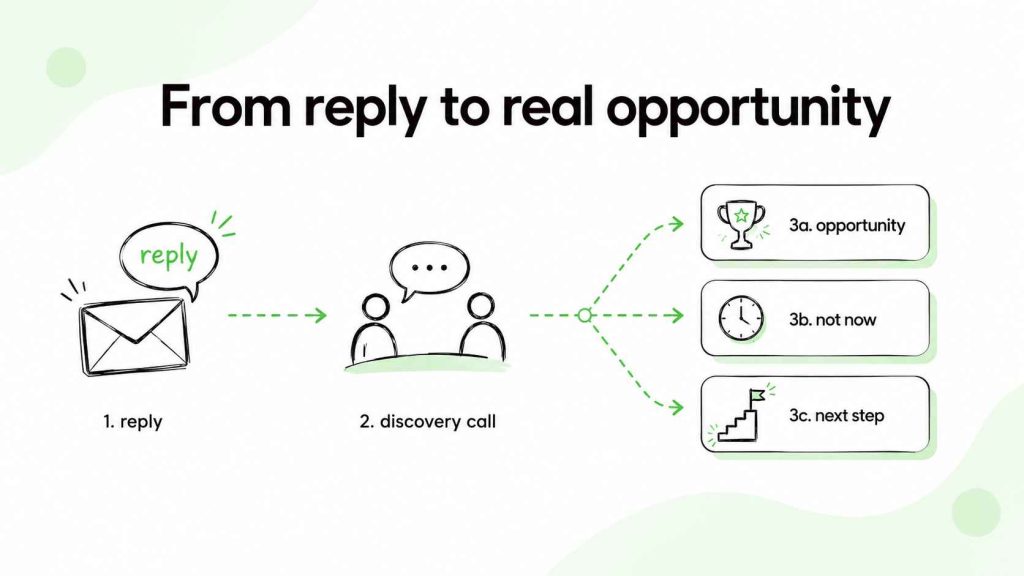
Example: from cold email to AE handoff
Imagine an SDR contacts Maya, Head of SDR at a SaaS company that recently opened several sales development roles.
The email raises one hypothesis: growing the team may make it harder to keep outbound workflows consistent. Maya replies that consistency is already becoming a problem and says she is happy to talk.
The SDR has several options. They could immediately book the AE. They could run a short qualification call first. Or they could ask one or two questions by email before deciding what happens next.
The right choice depends on how the team has designed its sales motion. A high-ticket sales process will often justify more qualification before the handoff than a low-complexity product.
Suppose the SDR learns that Maya’s team is growing from eight SDRs to fourteen, campaign setup varies by rep and RevOps owns the technical workflow. Maya wants the problem addressed before the new hires finish onboarding.
Now the handoff can tell the AE something useful:
- Trigger: six new SDR hires
- Pain: inconsistent campaign setup across reps
- Impact: managers spend time fixing campaigns and onboarding is harder to standardize
- Timing: before the new cohort finishes onboarding
- Stakeholder: Maya owns SDR operations, RevOps owns technical workflow
- Next step: discovery call focused on standardization and reporting
The AE can now prepare a real conversation instead of opening with, “So, tell me a little about what you’re looking for.”
Use discovery to extend the handoff, not repeat it
The AE should still ask questions. A good handoff does not replace discovery.
It changes where discovery starts.
If Maya has already explained that inconsistent workflows are slowing onboarding, the AE does not need to ask whether the company has any outbound challenges. They can confirm the context and go deeper.
For example:
“Maya, Alex mentioned that the main issue is keeping campaign setup consistent as the SDR team grows. He also said RevOps owns the underlying workflow. Is that still the right place for us to start?”
That opening shows continuity while giving the buyer room to correct the handoff.
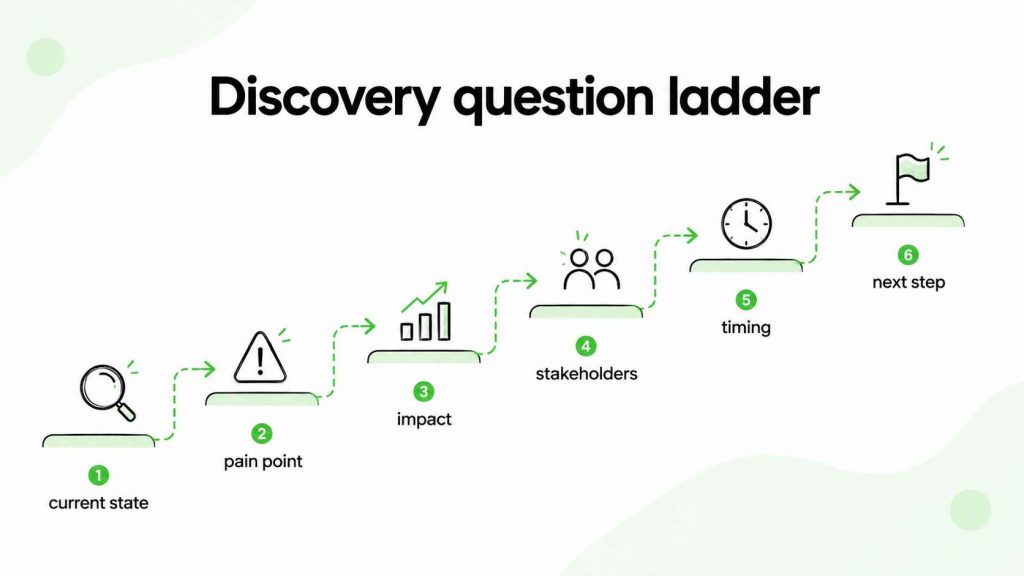
From there, the AE can use discovery questions to explore business impact, stakeholders, timing and the decision process.
Agree on who introduces the AE
A handoff feels cleaner when the prospect can see it happening.
The SDR can introduce the AE by email rather than silently changing the sender after the meeting is booked.
For example:
Hi Maya,
Thanks for the context today.
I’m bringing in Jordan, who handles these conversations on our side. I’ve filled Jordan in on the SDR expansion, the campaign consistency issue and the RevOps piece you mentioned, so you won’t need to start from scratch.
Jordan, Maya’s team is adding six SDRs and wants to standardize the outbound setup before that group is fully ramped.
I’ll leave you both to take it from here.
Best,
Alex
That message does more than transfer an email thread. It signals that the two salespeople have spoken to each other.
Do not make the prospect manage your internal organization
The buyer should not have to work out which salesperson owns which part of your process.
Avoid transitions such as:
- “You’ll need to explain that to my AE.”
- “I only book the meetings, so Jordan will need to ask you about that.”
- “Someone from Sales will contact you.”
The prospect does not need your org chart. They need a continuous conversation.
That principle also appears in Woodpecker’s pipeline repair workshop: a buyer repeating the same information to several people is usually a context problem rather than proof that the company needs fewer conversations.
Make the AE acceptance visible
Do not treat “assigned in CRM” as proof that the handoff happened.
A clean process includes an acceptance step. The AE reviews the account, checks the notes and either accepts the opportunity or sends it back with a clear reason.
That can happen automatically through a status field, Slack notification or task, but the operational rule should be obvious.
For example:
- SDR marks the lead “handoff ready”
- CRM assigns the opportunity to the correct AE
- AE reviews it within four business hours
- AE accepts or returns it with a qualification reason
- ownership becomes visible to everyone
The exact SLA depends on the sales cycle. What matters is removing the period when the SDR believes the lead has moved while the AE has not yet taken responsibility.
Keep account context together when several people respond
Handoffs get harder when an account contains several active contacts.
Imagine Maya introduces Priya from RevOps. Separately, Tom, the VP Sales, replies to an earlier message. If the CRM treats all three contacts as independent leads, they can end up with different owners and disconnected conversations.
Move from contact-level thinking to account-level context.
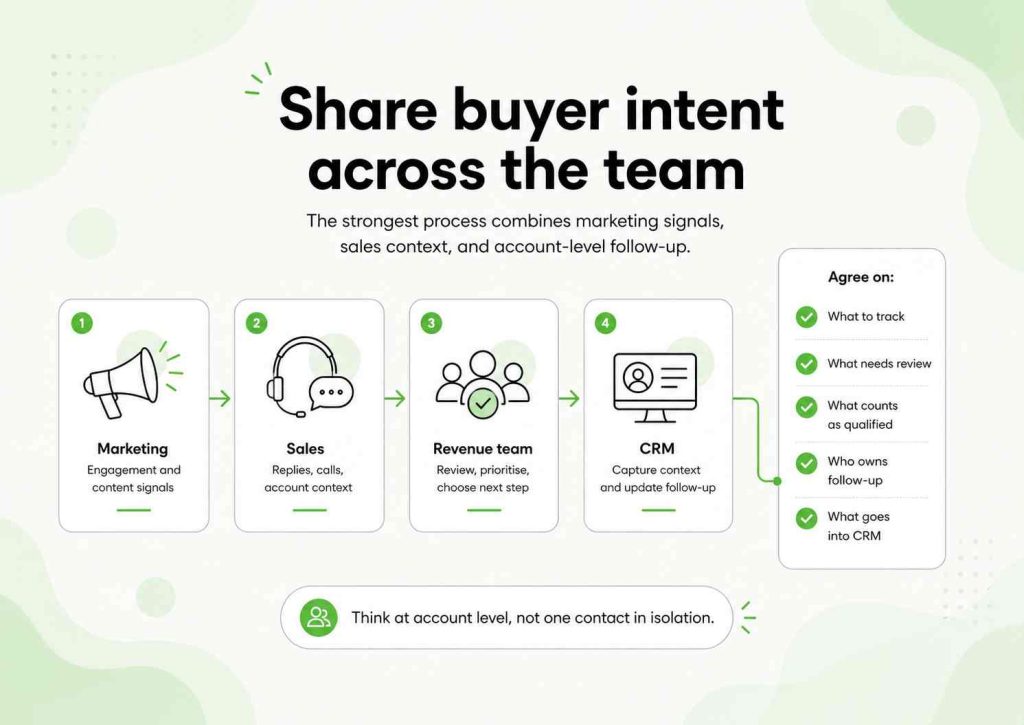
Woodpecker’s sales multithreading playbook explains how several stakeholder conversations should improve one shared account story. The same principle applies to the SDR-to-AE handoff.
For strategic accounts, account-based prospecting can make the ownership model even clearer because the account is selected and mapped before individual contacts enter outreach.
Capture what the SDR has already promised
Promises are part of the handoff.
If the SDR told the prospect that the AE would bring a migration example, discuss pricing or answer an integration question, record it. The AE should not arrive unaware and tell the buyer that the topic belongs to someone else.
A simple field called Promised for next step can prevent surprisingly expensive mistakes.
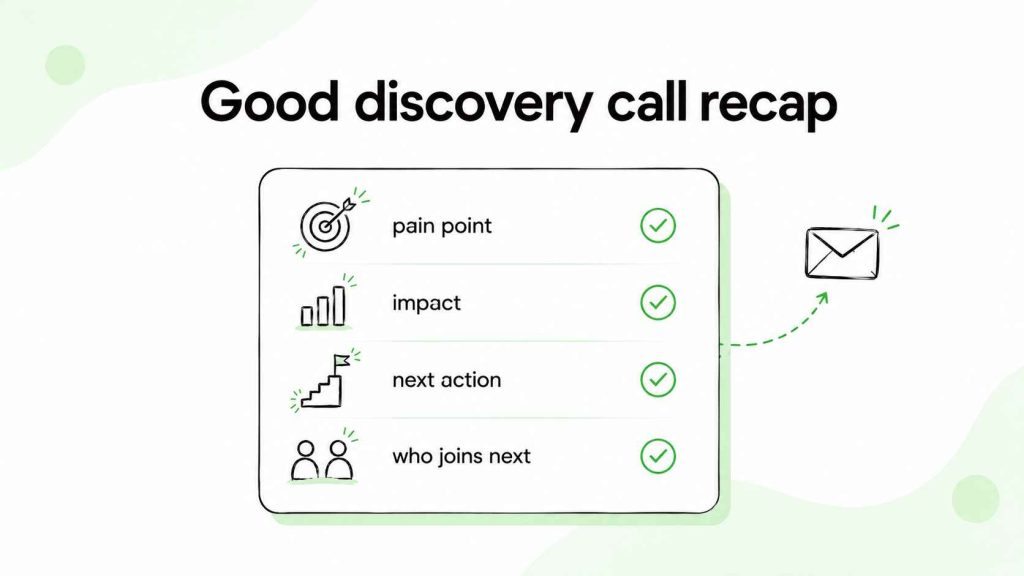
After the meeting, continue the same discipline with a sales follow-up email that records what both sides agreed to do next.
What should happen when the AE rejects the handoff?
Rejected handoffs are useful data when the reason is visible.
Do not let the AE simply mark a lead “not qualified.” Choose a reason that helps the team improve.
Useful rejection reasons might include:
- account does not match ICP
- wrong contact and no path to the right person
- no identifiable problem
- timing too early
- student, competitor, vendor or non-commercial inquiry
- duplicate or existing opportunity
- insufficient information for the handoff
Those reasons create a feedback loop. If half of rejected meetings have no real problem attached to them, the SDR qualification threshold is probably too low. If qualified accounts keep landing with the wrong AE, the problem may belong in routing instead.
Do not send every rejected lead back into immediate outreach
“Not ready for an AE” does not always mean “bad lead.”
A relevant prospect may have good fit but no active project until next quarter. Another may need a different stakeholder involved. A third may have a real problem but no urgency yet.
Return each one to the correct state instead of dumping all rejected handoffs into the same sequence.
The team’s sales sequence should reflect those stages. Prospects who are not ready can move into a later follow-up or nurture path rather than continuing to receive meeting requests.
For prospects still in outbound, a cold email sequence should stop or change once the person has replied. Automation should respond to the state of the conversation.
Coordinate handoffs across email, LinkedIn and calls
The handoff becomes easier when all active channels agree on ownership.
Suppose the SDR connected with the prospect on LinkedIn, exchanged two emails and booked the meeting after a phone call. If the AE sees only the email thread, part of the buyer context has already disappeared.
A good multi-channel outreach process records the relevant outcome of each touch rather than running separate conversations by channel.
The same issue appears in cross-channel lead generation. Once the prospect responds, the system needs to recognize that response and move them into the correct sales conversation instead of continuing independent channel activity.
Automate administration, not judgment
Several parts of an SDR-to-AE handoff are good automation candidates.
A CRM can assign the AE based on territory. A workflow can create a task after a positive reply. A meeting booking can update the opportunity. An integration can copy campaign activity into the CRM.
Woodpecker’s outbound sales automation guide covers that wider operating model. The useful distinction is between moving information automatically and deciding what the information means.
An SDR still needs judgment when a prospect writes, “Interesting, but talk to Priya in January.” That reply contains timing, routing and stakeholder context. A workflow can capture it, but the team still needs a rule for what happens next.
Measure the handoff as a conversion stage
If the SDR-to-AE handoff is important enough to have a process, it is important enough to measure.
Start with a small set of operational metrics:
- Handoff acceptance rate: What percentage of transferred leads are accepted by AEs?
- Time to acceptance: How long does a prospect sit between SDR transfer and AE ownership?
- Meeting held rate: How many handed-off meetings actually happen?
- Handoff-to-opportunity rate: How many accepted handoffs become real sales opportunities?
- Rejection reason: Why do AEs send handoffs back?
Do not optimize the SDR team only for meetings booked if AEs consistently reject those meetings or they rarely convert into qualified opportunities.
The wider sales metrics should connect activity with pipeline outcomes. Once enough history exists, sales forecasting can also use cleaner qualification data because the pipeline begins with opportunities that passed a more consistent threshold.
A copyable SDR-to-AE handoff note
Keep the standard template short enough that SDRs will actually use it.
Account: {{COMPANY}}
Primary contact: {{NAME + ROLE}}
Why we targeted them: {{ICP FIT / TRIGGER}}
What they said: {{DIRECT QUOTE OR SHORT SUMMARY}}
Problem: {{KNOWN PAIN}}
Business impact: {{KNOWN IMPACT OR UNKNOWN}}
Timing: {{KNOWN TIMELINE OR UNKNOWN}}
Other stakeholders: {{NAMES / ROLES / UNKNOWN}}
What we already sent: {{LINKS / PRICING / CASE STUDY / NOTHING}}
Next meeting: {{DATE + PURPOSE}}
Promised next step: {{WHAT THE BUYER EXPECTS}}
Still unknown: {{QUESTIONS FOR DISCOVERY}}
If the AE cannot prepare for the next conversation from that note plus the existing thread, add what is missing. If half the template is never used, remove it.
Run a ten-account handoff audit
You do not need a large RevOps project to improve the process.
Open the last ten SDR-to-AE handoffs and look at what the AE could see before the meeting.
- Could they explain why the account was targeted?
- Did they have the prospect’s original reply?
- Was the problem recorded in the buyer’s language?
- Did they know what had already been discussed or sent?
- Was the next-step promise visible?
- Could everyone see who owned the account after transfer?
Then inspect the outcomes. If good-fit meetings repeatedly fall apart immediately after the transfer, the issue may sit in the handoff rather than at the top of the funnel.
That type of inspection fits naturally with broader sales pipeline management. A pipeline becomes easier to trust when ownership, qualification and next steps mean the same thing across the team.
The handoff should make the buyer feel remembered
The best test of an SDR-to-AE handoff is not how complete the CRM record looks.
It is whether the next conversation feels like a continuation.
The AE knows why the prospect replied. They understand the problem already mentioned. They know what the SDR promised and who else may need to join. The prospect can move forward instead of reconstructing the story for a new salesperson.
That is what the handoff is supposed to transfer: not a contact record, but the context that made the sales conversation worth continuing.