
A proposal is sent on Monday. The salesperson expects feedback by Friday. The buyer assumes security needs to review it first. Procurement has not been told about the project. The technical lead is waiting for documentation nobody realized they needed. Two weeks later, the opportunity is still marked “decision.” Nobody can explain what the buyer is actually doing next. A mutual action plan gives both sides a shared answer. Instead of treating a deal as a sequence of seller activities, it maps the actions required to reach a buyer outcome. Each important step has an owner, target date and visible result. The buyer can see what needs to happen on their side. The seller can see what they have promised to deliver.
What is a mutual action plan?
A mutual action plan, often shortened to MAP, is a shared plan that helps a buyer and seller coordinate the steps required to complete a complex purchase or implementation decision.
It may include discovery, technical review, security, stakeholder approval, commercial terms, procurement and contract steps. The exact milestones depend on the buyer’s process.
Woodpecker already references Mutual Action Plans as part of Outreach’s deal-management functionality, where they are also called Success Plans. The important idea is not the software feature. It is the shared visibility into what both sides need to do next.
That makes MAPs particularly useful in high-ticket B2B sales, where several stakeholders, approvals and risks can sit between initial interest and a signed contract.
A MAP is not your internal sales checklist
An internal checklist might say:
- send deck
- book demo
- follow up
- send proposal
A mutual action plan asks different questions:
- What does the buyer need to evaluate?
- Who needs to be involved?
- Which internal buyer steps must happen?
- What evidence shows that each stage is complete?
- What date is the buyer actually working toward?
The distinction matters because seller activity is not the same as buyer progress.
Woodpecker’s pipeline repair workshop makes a similar point: “follow up” is not a meaningful next step, while “buyer will review the proposal with finance on Tuesday” describes real movement.
Start with the outcome, then work backward
A weak MAP starts with today’s date and fills the next several weeks with seller tasks.
A stronger one starts with the buyer’s target outcome.
Suppose a SaaS company wants a new outbound platform live before its next SDR hiring cohort starts on December 1.
That gives the plan a real endpoint:
Target outcome: selected platform contracted and ready for implementation before December 1.
Now work backward.
If implementation needs two weeks, the contract cannot be signed on November 30. If procurement normally needs ten business days, commercial approval needs to happen earlier. If security review precedes procurement, that needs its own date too.
This is where a MAP becomes much more useful than a CRM close date.
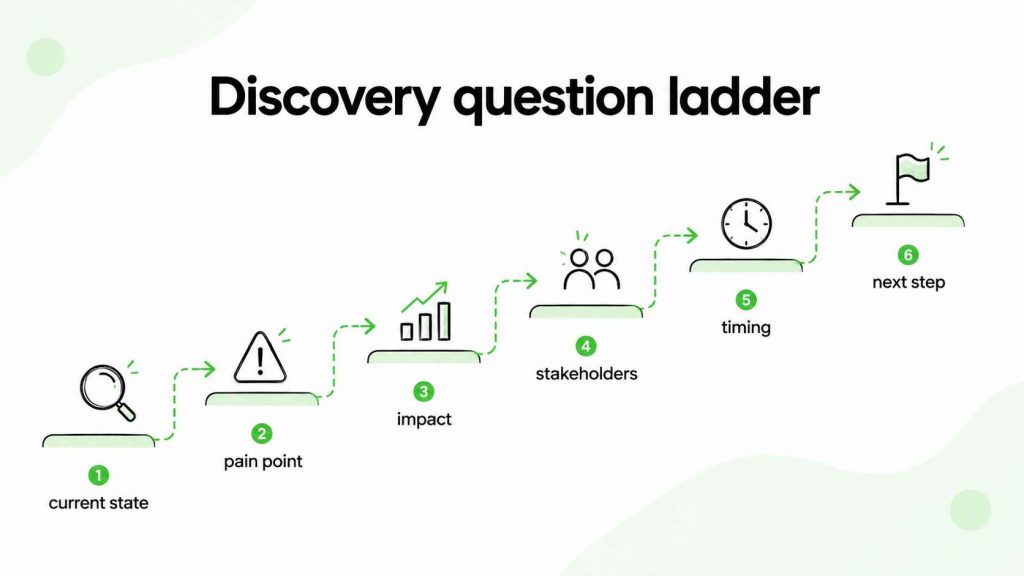
Good discovery questions help uncover that endpoint because timing should come from the buyer’s situation, not the seller’s quarter.
What belongs in a mutual action plan?
Keep the structure simple enough that both sides can use it.
| Field | What it captures | Example |
| Milestone | The meaningful step in the buying process | Security review complete |
| Buyer action | What the customer needs to do | IT submits security questionnaire |
| Seller action | What your team needs to provide | Return questionnaire and architecture documentation |
| Owner | Named person responsible for the next action | Priya, IT Manager |
| Target date | When the action should happen | October 18 |
| Completion evidence | What proves the milestone is actually complete | IT confirms no open security blockers |
| Dependency | What must happen before the step can begin | Technical evaluation completed |
You do not need twenty columns. You need enough information to answer: what happens next, who owns it and what does “done” mean?
Example: a 45-day mutual action plan
Imagine the same SaaS company is evaluating a new outbound platform. The VP Sales is the project sponsor, RevOps owns workflow design and IT needs to complete security review.
A practical MAP might look like this:
| Timing | Milestone | Buyer commitment | Seller commitment |
| Day 1 | Discovery complete | Confirm current workflow, problem and target outcome | Document requirements and open questions |
| Day 5 | Workflow review | RevOps joins evaluation | Show workflow against stated requirements |
| Day 10 | Technical fit | Confirm integrations and data requirements | Provide technical answers and documentation |
| Day 16 | Security review starts | IT sends security requirements | Return completed review materials |
| Day 23 | Commercial review | Confirm package, users and budget owner | Provide final commercial proposal |
| Day 30 | Economic approval | CRO approves spend | Answer final business-case questions |
| Day 33 | Procurement | Vendor setup and PO process begins | Submit required vendor documentation |
| Day 40 | Contract review | Legal completes redlines | Resolve outstanding contract points |
| Day 45 | Signature and implementation handoff | Contract signed and implementation owner confirmed | Kickoff scheduled |
The dates are examples. The buyer’s real process should determine the plan.
Do not invent buyer commitments
A mutual action plan is only mutual when the buyer agrees to it.
A seller can create a beautiful spreadsheet saying:
“CFO approval — October 25.”
That does not mean the CFO knows about the project.
The strongest MAP entries come from explicit conversation:
“If the security review is complete by Friday, Maya will take the commercial recommendation to the CRO on Tuesday.”
Now the plan contains a real dependency, owner and action.
That buyer evidence is also what improves sales forecasting. A deal becomes more predictable when the expected close date reflects activities the buyer has actually confirmed.
Introduce the MAP after there is enough discovery
Do not send a 12-step buying plan after the prospect’s first positive reply.
At that stage you may not know the problem, stakeholders, evaluation process or timeline.
The plan becomes useful once both sides agree there is a real project worth progressing.
A natural introduction might be:
“You mentioned that the team wants this resolved before the December hiring cohort. There are a few reviews between now and then. Would it help if I put those into one shared plan so we can both see what needs to happen and when?”
The wording matters. You are offering coordination, not imposing your sales methodology on the buyer.
A consultative selling approach works well here because the plan is built around the customer’s desired outcome and constraints.
Map stakeholders into the plan
Complex purchases rarely belong to one person from start to finish.
The champion may own evaluation. IT may own security. Finance may approve the spend. Procurement may control vendor onboarding. Legal may manage the contract.
Do not list every employee you have ever spoken with. Add the people who own actions or can materially change the buying process.
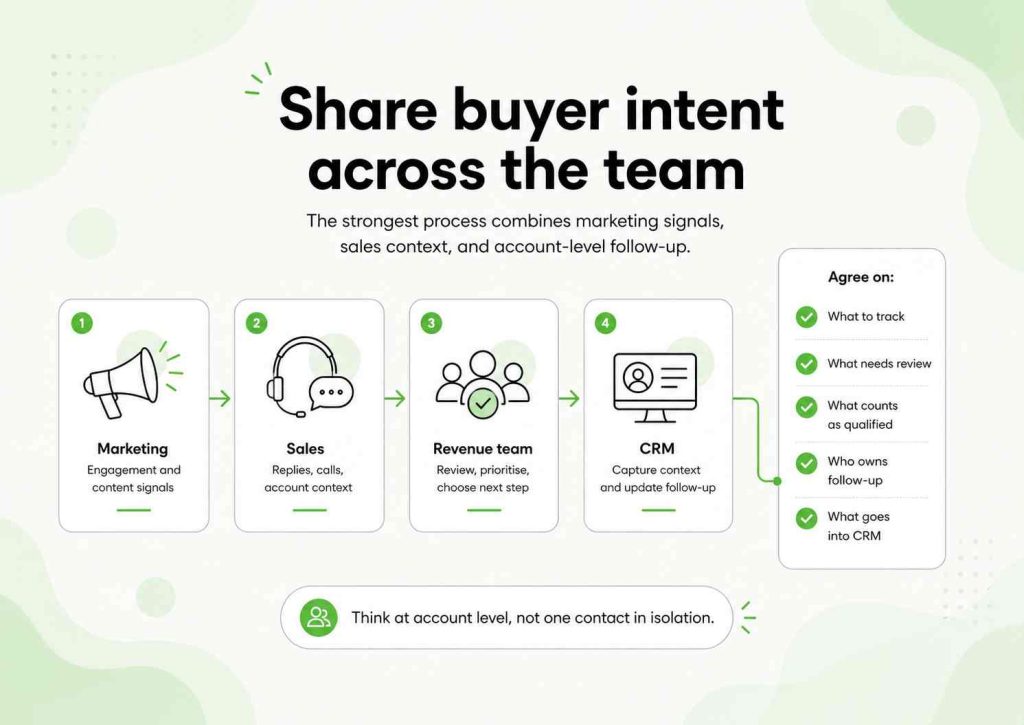
Woodpecker’s sales multithreading guide explains how to identify the people who influence a B2B purchase without sending disconnected outreach to half the company.
The MAP gives those stakeholder relationships another purpose: each thread should improve the shared understanding of how the account can reach a decision.
Separate buyer tasks from seller tasks
MAPs become much easier to use when commitments are visibly separated.
Buyer responsibilities might include:
- invite IT to technical review
- confirm required user count
- share procurement requirements
- review the business case with the CRO
- return contract comments
Seller responsibilities might include:
- send technical documentation
- prepare a workflow-specific demo
- provide pricing for the agreed scope
- answer the security questionnaire
- send revised legal language
That separation makes delays easier to diagnose without turning the plan into blame.
Use completion evidence instead of vague status labels
“In progress” can mean almost anything.
For each important milestone, define the evidence that shows it is complete.
Weak: Security review done soon.
Stronger: IT confirms there are no unresolved security blockers.
Weak: Finance reviewing.
Stronger: CRO approves the budget for the agreed package.
Weak: Proposal reviewed.
Stronger: Buyer confirms scope and commercial structure are acceptable.
The same principle helps with sales pipeline management. A stage should represent buyer evidence rather than seller optimism.
Capture commitments immediately after meetings
A MAP is only accurate if it changes when the conversation changes.
After a discovery or evaluation call, update the plan with:
- new stakeholders
- new requirements
- changed dates
- open questions
- actions promised by either side
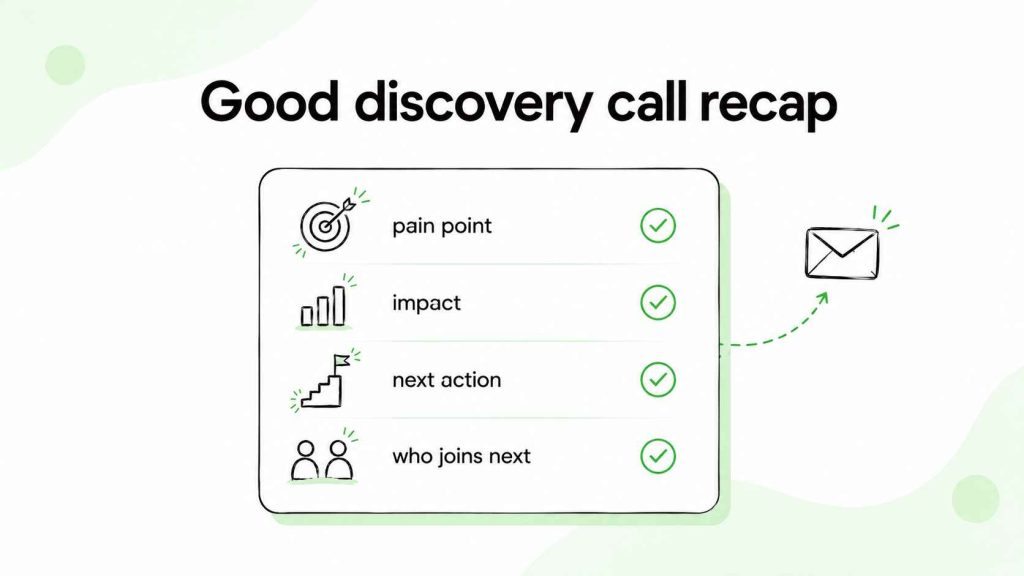
A concise sales follow-up email can mirror the plan after the meeting: what was agreed, who owns each action and when both sides expect the next milestone.
That gives the buyer a chance to correct misunderstandings while the conversation is fresh.
Use the MAP to expose missing qualification
Trying to build a mutual action plan often exposes what the salesperson does not yet know.
You may discover that nobody can answer:
- who controls the budget
- how procurement works
- which stakeholder can block the purchase
- why the buyer needs a decision by a certain date
- what criteria will determine the winner
Do not fill the gaps with assumptions simply to complete the plan.
The unknowns become questions for the next conversation.
That is also why MAPs pair well with structured sales qualification. Qualification tells you whether an opportunity deserves attention. The MAP shows what must happen if both sides decide to move forward.
Let the buyer change the plan
If the buyer says procurement takes four weeks instead of one, update the timeline.
If they want IT involved earlier, change the order.
If the economic buyer cannot review the proposal until the next board meeting, the expected decision date should move too.
A MAP should describe reality better over time. It should not preserve the seller’s original forecast.
That makes it useful for managing sales metrics such as deal age and stage conversion because delays can be connected to actual buyer dependencies.
Do not turn the MAP into homework for the buyer
The seller should do most of the administrative work.
The buyer should not receive a blank 25-row spreadsheet with a request to complete their purchasing process for you.
Build the first version from information already discussed. Then ask the buyer to confirm or change it.
For example:
“I mapped the steps we discussed through your November target date. I have security starting after the RevOps evaluation and procurement beginning once commercial terms are approved. Does that match how this normally works on your side?”
That is much easier to answer than “Can you fill in our mutual action plan?”
A MAP should get shorter when the deal is simpler
Not every sale needs a mutual action plan.
For a straightforward purchase with one decision-maker and no meaningful implementation or procurement process, the overhead may exceed the value.
MAPs are more useful when deals include some combination of:
- several buyer stakeholders
- technical evaluation
- security review
- procurement
- legal review
- a fixed implementation deadline
- high contract value or organizational risk
For simpler deals, one documented next step may be enough. Woodpecker’s B2B sales checklist shows how a named owner and date can keep an opportunity moving without creating unnecessary process.
Use the MAP when a deal starts to stall
A stalled deal often has a missing dependency hiding underneath the silence.
Instead of sending another “Any updates?” email, open the plan.
Which milestone should have happened?
Who owns it?
Is the deadline still real?
Did another requirement appear?
Has the buyer’s priority changed?
A follow-up can then refer to the missing step:
“We had IT review planned for Thursday before procurement starts next week. Has that review happened, or should we move the procurement date?”
That is more useful than asking whether the prospect “had a chance to look.”
Woodpecker’s follow-up after no response guide covers the wider principle: add new context instead of repeatedly asking for the same response.
Connect the MAP to account context
The plan should not live separately from everything the sales team knows about the account.
New stakeholders, replies, calls and technical concerns should improve the same account story.
For larger accounts, account-based prospecting gives you the account-level research before the opportunity exists. A MAP takes over later, once the buying process becomes real.
If several stakeholders are active, coordinate their conversations through the same plan rather than treating each thread as a separate opportunity.
Keep outbound and deal execution separate
A prospect may enter the funnel through a cold email sequence, LinkedIn or another outbound motion.
Once a real buying process begins, the original prospecting cadence should stop controlling the conversation.
The next action may now depend on security, finance or an internal buyer meeting rather than “follow-up number three.”
Woodpecker’s sales cadence guide makes the same shift for strategic accounts: once there is a live conversation, the buying process should replace the original outreach schedule.
Use the plan during deal reviews
A MAP gives managers a better starting point than “How’s the deal looking?”
Review:
- the last completed buyer milestone
- the next dated commitment
- any milestone that has slipped
- dependencies without an owner
- stakeholders missing from the process
- seller commitments that remain incomplete
Those questions make the review about observable deal movement rather than rep confidence.
They also fit naturally into a broader sales engagement process where each stage has a clear purpose and next action.
Copy this mutual action plan template
Buyer outcome: {{WHAT NEEDS TO BE TRUE AT THE END}}
Target date: {{DATE}}
Business reason for the date: {{WHY IT MATTERS}}
Champion / project owner: {{NAME}}
Economic approver: {{NAME OR UNKNOWN}}
Technical stakeholders: {{NAMES / ROLES}}
Procurement / legal stakeholders: {{NAMES / ROLES}}
Milestone 1: {{ACTION + OWNER + DATE + COMPLETION EVIDENCE}}
Milestone 2: {{ACTION + OWNER + DATE + COMPLETION EVIDENCE}}
Milestone 3: {{ACTION + OWNER + DATE + COMPLETION EVIDENCE}}
Milestone 4: {{ACTION + OWNER + DATE + COMPLETION EVIDENCE}}
Milestone 5: {{ACTION + OWNER + DATE + COMPLETION EVIDENCE}}
Current blockers: {{OPEN QUESTIONS / RISKS}}
Next shared action: {{ACTION + OWNER + DATE}}
A useful MAP makes the deal easier for the buyer too
A mutual action plan should not exist only because Sales wants a cleaner forecast.
It should reduce coordination work for the buyer.
The champion can see which colleagues need to participate. IT knows when documentation arrives. Procurement knows when the commercial decision is expected. The salesperson knows which materials they owe the customer.
Everybody can see what changed when a date slips.
That is the real value of the plan. It turns a complex B2B deal from a collection of emails, meetings and assumptions into a shared path toward a decision.