
One enthusiastic contact can make a deal feel healthy. It can also hide a fragile sales process. If that person changes jobs, loses budget, goes quiet or discovers late in the process that security, finance or another department has concerns, the opportunity can stall quickly. Multithreading sales can reduce that dependency by building relevant relationships with several people involved in the same buying decision. That does not mean emailing five employees at once with the same pitch. Good sales multithreading identifies the people who influence the decision, understands what each one cares about and coordinates outreach so the account experiences one connected conversation rather than several disconnected campaigns.
This guide explains how to map a B2B buying committee, decide when another stakeholder should enter the conversation and build a multithreaded outreach process across email, LinkedIn and calls.
What is multithreading in sales?
Multithreading in sales means developing relationships with several relevant stakeholders inside the same account instead of relying on one contact throughout the sales process.
Each relationship is a thread. One may connect you with the day-to-day user, another with the person who controls budget and another with a technical evaluator or senior decision-maker. The goal is not maximum contact coverage. It is enough account coverage to understand how the decision will actually be made.
| Single-threaded deal | Multithreaded deal |
| One main contact | Several relevant stakeholder relationships |
| Information comes through one person | Different perspectives reveal different requirements |
| The deal depends heavily on one champion | Support can exist across the buying group |
| Objections may appear late | Technical, financial and operational concerns can surface earlier |
| A job change can break the relationship | Other relationships can preserve account context |
Multithreading is most useful in complex B2B sales. A simple self-service purchase may have one buyer and need very little stakeholder mapping. A larger deal that affects several departments, requires implementation work or goes through procurement is much more likely to involve a wider buying group.
Multithreading starts with account fit, not stakeholder count
Do not multithread every company in the database simply because you can find several employees there. The account still needs to fit your ideal customer profile and justify the additional research.
Account value, buying complexity and implementation impact are useful signals. A strategic account with a large potential contract may justify deeper stakeholder research. A small prospect buying a simple product may not.
This is one reason multithreading fits naturally with account-based prospecting. Both treat the company as the unit of interest while recognizing that individual people still need different conversations.
Who belongs in a B2B buying committee?
Job titles alone do not define the buying committee. Two companies can buy the same product through completely different organizational structures. It is more useful to map roles in the decision than to assume the most senior title is automatically the most important contact.
| Buying role | What they may care about | Typical question |
| Champion | Solving the problem and building internal support | Will this make my team’s work better? |
| End user | Workflow, usability and daily impact | What changes in my day-to-day work? |
| Economic buyer | Cost, risk, return and priorities | Why should we fund this now? |
| Technical evaluator | Security, integrations and implementation | Can this work safely inside our stack? |
| Manager | Team output, process and adoption | Will this improve performance without creating more admin? |
| Procurement or finance | Commercial terms, vendor risk and contract process | Does the purchase meet our buying requirements? |
| Executive sponsor | Strategic outcome and organizational impact | Does this support an important company priority? |
One person can fill several roles. A founder may be the user, champion and budget owner. At a larger company, those same responsibilities may sit across four departments.
How to find the right stakeholders
Start with the person closest to the problem, then work outward. Look at who owns the workflow, who manages that person, who controls budget and which teams could block implementation later.
Professional networks are useful here. LinkedIn Sales Navigator includes account and relationship features that can help sellers explore company structures, job changes and relevant people inside an account. Woodpecker’s Sales Navigator guide covers those research capabilities in more detail.
Prospecting databases can help once you know the roles you need. The important distinction is that contact discovery comes after account logic. Finding ten email addresses at a company does not mean all ten belong in the deal.
If you need a wider view of the prospecting stack, Woodpecker’s guide to sales prospecting tools covers databases, research tools and list-building options.
Buying signals can tell you when another thread is worth opening
You do not always need to contact several stakeholders on day one. A new thread can become useful when the account gives you more information.
For example, a prospect may mention that IT needs to review the product, a second employee may begin researching the category or a new executive may join the company. These signals can help the salesperson decide which relationship deserves attention next.
Woodpecker’s guide to B2B buying signals explains why signals should guide prioritization rather than automatically trigger outreach.
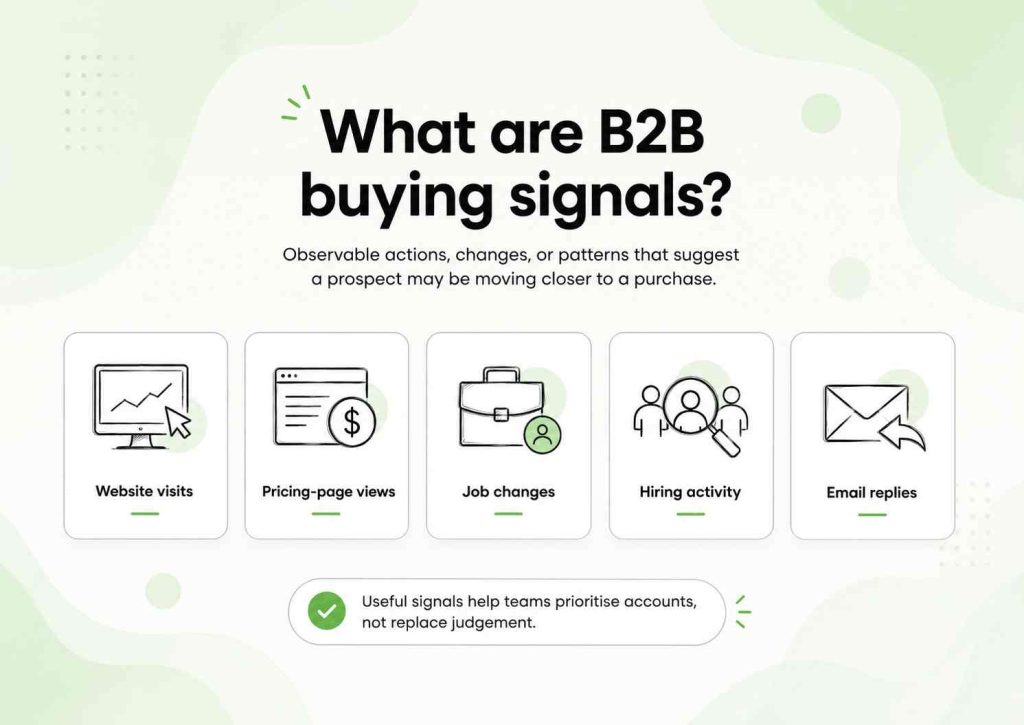
A signal is context, not proof. A job change, website visit or hiring announcement may justify more research, but the salesperson still needs to work out how that event relates to the buying process.
A five-part sales multithreading playbook
1. Map the account before increasing outreach
Start with a simple map rather than a full organization chart. Record your existing contact, likely users, probable budget owner, possible technical evaluator and anyone your current contact has already mentioned.
Label confidence levels too. “Confirmed stakeholder” is different from “VP of IT, probably involved.” That prevents assumptions from turning into unnecessary outreach.
| Person | Likely role | Status | Evidence |
| Maya, Head of SDR | Champion / user | Confirmed | Replied and described current workflow |
| Tom, VP Sales | Economic buyer | Likely | Owns SDR organization |
| Priya, RevOps | Technical/process evaluator | Confirmed | Maya said RevOps owns integrations |
| Finance | Commercial approval | Unknown | Typical process, not yet confirmed |
2. Ask your existing contact who else matters
The simplest stakeholder-mapping tool is often a good question. During discovery, ask who else needs to evaluate the problem, who owns the current process and what happens internally if the team decides to move forward.
Woodpecker’s discovery call questions can help structure that conversation without turning it into an interrogation.
- Who else is affected by the current process?
- Who would need to be comfortable with a change?
- If you decided to move forward, what happens internally next?
- Does RevOps, IT or procurement normally join before a vendor is approved?
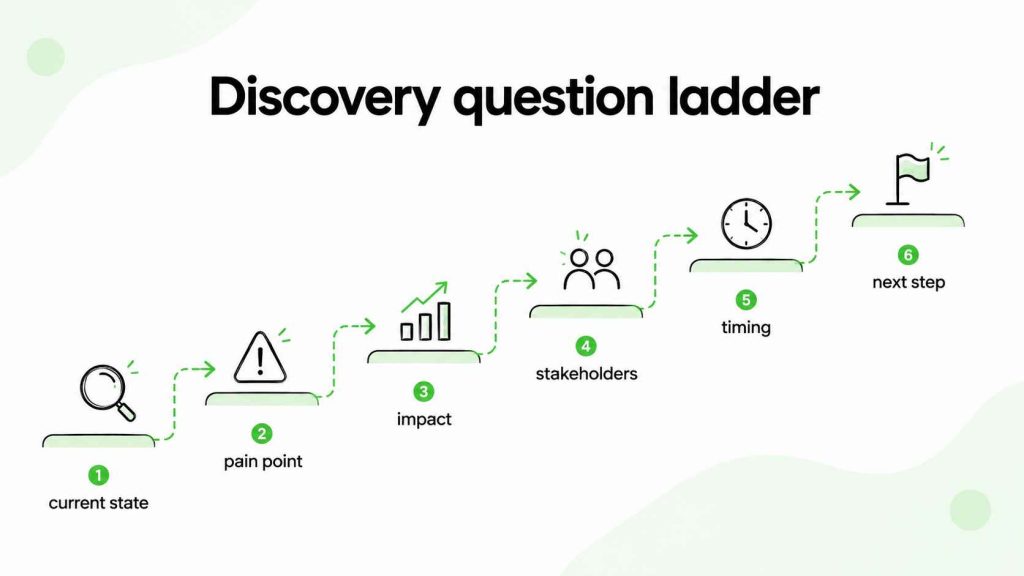
Questions about stakeholders belong alongside questions about pain, timing and next steps. That gives you a buying-process map based on what the customer actually says instead of assumptions made from job titles.
3. Give each stakeholder a reason to care
Multithreading does not mean taking one email and changing the first name. Each person enters the decision from a different angle, so the core business problem can stay consistent while the evidence, impact and question change.
| Stakeholder | Message angle |
| SDR manager | Campaign setup, rep workflow and reply management |
| VP Sales | Pipeline capacity, team consistency and scaling |
| RevOps | Integrations, governance, visibility and data flow |
| IT or security | Authentication, access, security and technical risk |
| Finance | Cost, contract structure and business case |
A consultative selling approach is useful here because it starts from each buyer’s situation rather than forcing everyone through one product pitch.
4. Coordinate the threads instead of launching separate campaigns
The account should feel like one seller is paying attention, not like several automations discovered the same company independently.
If Maya has already told you that Priya owns RevOps, an outreach message to Priya can use that context:
Hi Priya,
I have been speaking with Maya about how the SDR team handles outbound as it expands into two new markets. She mentioned that RevOps owns the integrations and sending setup, so I wanted to include you before we go much further.
The question we are working through is how to standardize campaigns without giving reps another disconnected tool. Is that the right problem from your side too?
That is different from pretending Priya is a brand-new cold lead. The new conversation acknowledges what has already happened and explains why this particular stakeholder matters now.
Woodpecker’s guide to multichannel outreach covers how email, LinkedIn and other touches can work together without simply duplicating the message. The LinkedIn outreach guide is useful when one stakeholder is easier to reach socially than through another email sequence.
5. Replace the original cadence when a real deal starts
Cold outreach automation is useful until the account starts giving you better information. Once several stakeholders are replying, attending meetings or providing internal context, the deal should stop behaving like a generic prospecting sequence.
The next steps should follow what the buying group has actually agreed to. A sales cadence tool can coordinate early touches, but reps still need to pause or change automation when conversations become specific.
Do not multithread around your champion
There is a major difference between expanding a deal and going behind the person who introduced you.
If you already have an engaged champion, tell them why you want another stakeholder involved. “It would help to include RevOps before we discuss implementation” is collaborative. Secretly messaging six of their colleagues can damage the trust you already built.
Your champion can often provide the strongest introduction because they understand the internal politics, priorities and language of the organization.
How to multithread before you have a champion
Outbound creates a different problem because sometimes you do not know which person will become the entry point.
For strategic accounts, contacting two relevant stakeholders can be reasonable when the messages reflect their separate roles and are spaced sensibly. Contacting an entire department at once is not multithreading. It is account-level spray and pray.
A strong first-touch strategy might begin with the person closest to the pain and a second stakeholder who owns the outcome. Woodpecker’s guide to personalized cold emails can help adapt the account hypothesis for each role without rebuilding the entire message from scratch.
For message structure, use the cold email template library as a starting point rather than sending identical copy to every member of the buying committee.
Use replies to discover the buying group
Not every new thread comes from research. Replies often reveal the organization faster than any database.
“Talk to our Head of RevOps,” “IT owns that,” “I need to discuss this with finance” and “My manager handles vendor decisions” are stakeholder signals. Treat them as account intelligence rather than simply redirecting the same pitch.
Woodpecker’s guide to contextual cold email follow-ups explains how later outreach can use new information instead of repeating the opener.
Guides to interested replies and negative replies are also useful because both positive and negative responses can reveal who actually owns the problem.
Move from stakeholder coverage to real discovery
More contacts do not automatically mean more deal insight. A salesperson can have five email threads and still misunderstand the buying process.
Use conversations to test what you think you know. Woodpecker’s guide to qualifying sales leads can help separate activity from genuine opportunity progress.
The aim is to learn enough about the account that each new conversation becomes more useful. One stakeholder may confirm the original problem, another may reveal a constraint and a third may explain that the buying process works differently from what you assumed.
Track several threads as one account story
Multithreading becomes difficult when every conversation lives in a separate inbox and nobody can see the whole account.
At minimum, keep a shared record of the stakeholder, role in the decision, last interaction, confirmed concerns and next step. Reps should be able to see that one person raised a security concern before another stakeholder receives a message claiming implementation is simple.
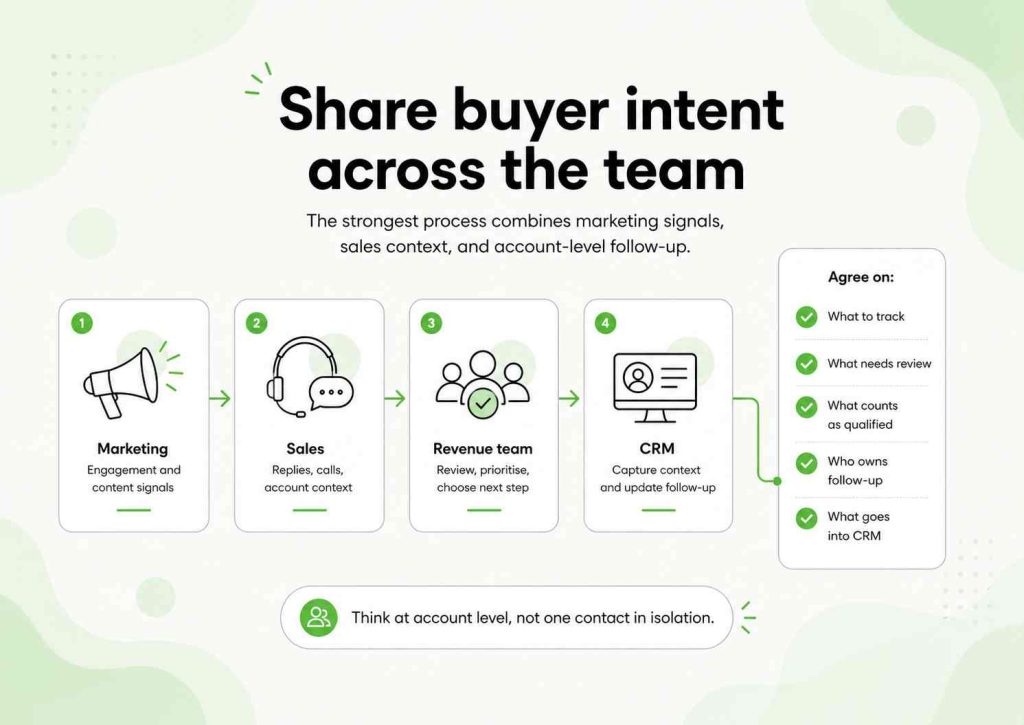
The important shift is from treating every contact as an isolated lead to treating their conversations as parts of the same account story. Outreach, CRM notes, meetings and buying signals should all improve the shared picture of how the company may buy.
Woodpecker can help coordinate email and LinkedIn touches and centralize replies at the outreach layer, while the CRM remains the broader source of deal context.
How many stakeholders should you contact?
There is no useful universal number. The right level of coverage depends on the deal.
A small company may have two relevant people. A complex enterprise purchase may involve users, operational owners, security, finance, procurement and an executive sponsor.
Instead of setting a target such as “five contacts per account,” ask three questions:
| Question | What it tells you |
| Who experiences the problem? | User and champion coverage |
| Who controls or can block the decision? | Budget, technical and procurement coverage |
| Who needs to support the outcome internally? | Executive or cross-functional sponsorship |
Stop adding threads when you can explain the decision process and the important roles are represented. More contacts after that point may only create noise.
Common multithreading mistakes
Contacting everyone at once. Five simultaneous cold emails can make an account feel attacked. Start with the most relevant people and expand when the context supports it.
Sending every stakeholder the same message. Different roles need different business context. Replacing only the first name is not stakeholder personalization.
Going around an active champion. Use the relationship to gain introductions rather than making the champion feel excluded from their own buying process.
Confusing seniority with influence. The highest-ranking person is not always the person who understands the workflow or shapes the shortlist.
Opening new threads without sharing context. Once the account has entered a real sales conversation, acknowledge that conversation instead of treating each colleague as a completely cold prospect.
Keeping automation running after the buying process changes. A sequence planned three weeks ago should not override what the buyer told you yesterday.
How to measure a multithreaded sales process
Do not measure success as the number of contacts reached per account. More outreach is not the goal. The useful question is whether additional stakeholder relationships improve your understanding of the deal and help it progress.
| Metric | What to watch |
| Accounts with multiple engaged stakeholders | How often the team moves beyond one active relationship |
| Referral rate | How often contacts introduce the seller internally |
| Stakeholder coverage by stage | Whether critical roles are discovered before late-stage evaluation |
| Qualified meeting rate | Whether added threads create useful conversations |
| Deals stalled on a missing stakeholder | Where the buying process repeatedly breaks |
| Opportunity progression | Whether stronger account coverage accompanies healthier pipeline movement |
For the email layer, Woodpecker’s cold email benchmarks can provide external context for replies. Compare account-level outcomes separately because one strong conversation from several carefully selected contacts can be more valuable than a high response rate from a broad list.
Use Woodpecker to coordinate the outreach layer
Woodpecker can support multithreaded prospecting when email and LinkedIn are part of the account strategy. Reps can build sequences, define follow-ups, coordinate social touches and handle responses without manually remembering every scheduled action.
Before launching a new stakeholder message, use the email preview tool to check personalization and make sure account context has not produced awkward copy.
If you are testing two versions inside the same stakeholder group, the cold email A/B test calculator can help determine whether the observed difference is meaningful rather than a few extra replies in a small sample.
Multithreading can also increase total campaign volume because one account may now contain several contacts and several follow-ups. Use the cold email infrastructure calculator before scaling a larger account list so the sending plan reflects the real number of messages rather than only the number of companies.
Multithreading sales FAQ
What is multithreading in sales?
Multithreading in sales means building relevant relationships with several people involved in the same B2B buying decision. Instead of depending on one contact, the seller develops enough stakeholder coverage to understand and support the wider buying process.
What is a single-threaded sales deal?
A single-threaded deal depends primarily on one relationship inside the account. That contact may be helpful, but the seller has little direct access to other users, decision-makers or potential blockers.
When should you start multithreading a deal?
Start when the deal is important enough to justify deeper account work and there is evidence that more than one person will influence the decision. Discovery conversations, referrals, technical requirements and buying signals can all reveal when another stakeholder should join.
How do you multithread without annoying the prospect?
Do not contact an entire company at once. Choose people with a clear role in the problem, tailor the message to that role and use existing conversations as context. When you already have a champion, ask for introductions rather than working around them.
How many people should you contact in one account?
There is no fixed number. Contact enough relevant stakeholders to understand the problem, decision process and potential blockers. A simple deal may require two relationships while an enterprise purchase can involve several functions.
Does multithreading mean multichannel outreach?
No. Multithreading describes the number of stakeholder relationships inside an account. Multichannel outreach describes using several communication channels such as email, LinkedIn and calls. The two strategies can work together.
Can sales automation support multithreading?
Yes. Automation can coordinate timing, follow-ups and different channels across stakeholders. It should not decide blindly who deserves outreach or continue generic sequences after an account enters a real buying conversation.
Build more relationships, not more noise
Sales multithreading works when each new relationship improves your understanding of the account. A user can explain the workflow, a champion can build support, RevOps can expose implementation requirements and an economic buyer can clarify what makes the purchase worthwhile.
That is very different from sending the same email to every senior title you can find.
Map the buying roles, use signals and conversations to decide when another thread is useful and keep the account context connected as outreach expands. The result is not simply more contacts. It is a deal that depends less on one inbox and more on a buying group that understands why the change is worth making.