
Imagine you have three sales reps, 1,800 possible accounts and a new-quarter target sitting in front of you. You could split the database into three equal pieces and call them territories. That would be easy. It would also assume that every group contains the same opportunity, requires the same amount of work and gives each rep an equally realistic path to quota. Sales territory planning is the work that happens before that split. You decide which market deserves attention, which accounts belong together, how much opportunity each rep can realistically cover and what happens when several people or regions overlap.
Rather than giving you another abstract territory-planning framework, this guide works like a planning session. We will build one territory model from a blank page and make the decisions in the order they actually need to happen.
What is sales territory planning?
Sales territory planning is the process of dividing a target market into manageable areas of ownership for salespeople or teams.
A territory does not have to be geographic. It can be based on company size, industry, product, customer type, named accounts or a combination of those criteria. Geography is useful when location genuinely changes ownership or the buying process, but drawing lines on a map is only one version of territory design.
The finished plan should answer a practical question: which accounts does each rep own, why do they own them and what should they do with them?
Open a blank territory sheet
For the running example, imagine a fictional B2B software company called Northstar. It sells sales workflow software to companies with 50–1,000 employees across the US, UK, Germany, Austria and Switzerland.
Northstar has three outbound reps. Until now, all three have prospected freely across the entire database. The result is predictable: some attractive accounts receive attention from two people, less obvious markets barely get touched and nobody can explain which rep owns a new company when it enters the CRM.
Our job is to replace that with a territory system.
Workshop round 1: write the territory thesis
Do not begin with rep names.
Begin with the market. Your ideal customer profile defines the companies worth pursuing before ownership enters the picture.
For Northstar, the first territory note might look like this:
- Core market: B2B companies with outbound sales teams
- Primary company size: 50–500 employees
- Secondary company size: 501–1,000 employees where sales complexity justifies a larger deal
- Priority markets: US, UK and DACH
- Primary personas: Sales leadership, SDR leadership and RevOps
- Exclusions: companies without a meaningful outbound motion, unsupported markets and accounts below viable deal size
That paragraph is more important than the map. It defines which opportunities should exist inside the territory in the first place.
Workshop round 2: build the account universe
Now turn the thesis into an actual set of companies.
You can start with existing CRM accounts, prospect databases or a lead finder. If the market is still being explored, broader sales prospecting tools can help identify companies before you look for individual contacts.
Woodpecker Lead Finder, for example, lets teams filter prospects using criteria such as geography, industry, role, seniority and company characteristics. Those filters become much more useful when they come from a territory thesis instead of random list building.
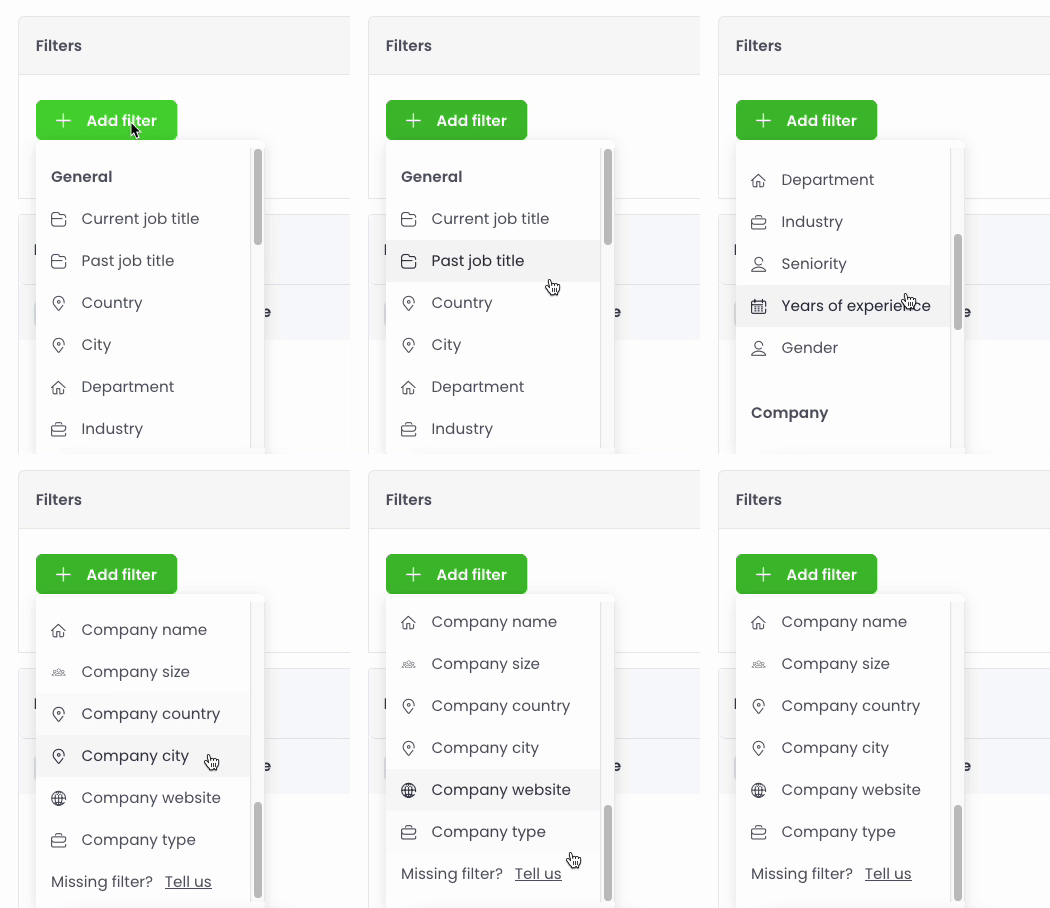
Northstar might discover 2,400 companies that broadly match its initial filters. That is not yet a territory. It is the account universe that needs another round of decisions.
Workshop round 3: do not divide opportunity equally by account count
Suppose Northstar finds 800 target companies in each of three broad territories.
Giving each rep 800 accounts looks fair. But account count says nothing about the opportunity inside those lists.
One territory may contain mostly 60-person companies. Another may contain hundreds of mid-market accounts with established SDR teams. A third may have fewer companies but much larger potential contract values.
Before assignment, look at:
- number of ICP accounts
- expected account value
- sales complexity
- amount of manual research required
- existing customers and active opportunities
- language or market-specific work
Territory balance means giving reps comparable opportunity, not identical spreadsheets.
Workshop round 4: create tiers inside every territory
Even a well-designed territory can contain hundreds of accounts. Reps still need to know where effort belongs.
Northstar can split each territory into three working tiers.
Tier 1: named strategic accounts
These accounts have excellent fit and enough potential value to justify individual research. A rep may map several stakeholders, study recent changes and use account-based prospecting rather than treating each person as an isolated lead.
Tier 2: core territory accounts
These companies fit the ICP well but can be handled through repeatable segments. Personalization should still matter, but the rep does not need a bespoke account plan for every company.
This is where structured cold email personalization works better than either extreme: completely generic campaigns or thirty minutes of manual research per prospect.
Tier 3: monitor or lower-priority accounts
These accounts may fit the wider market but lack enough value or current context to justify active work now. They can move upward when stronger evidence appears.
Workshop round 5: let timing move accounts between tiers
A territory should not freeze every account into the same priority for twelve months.
A company can become more interesting when it hires a sales leader, opens a new market, grows an SDR team or starts actively evaluating the problem you solve. Those B2B buying signals can temporarily move an account higher in the rep’s queue.
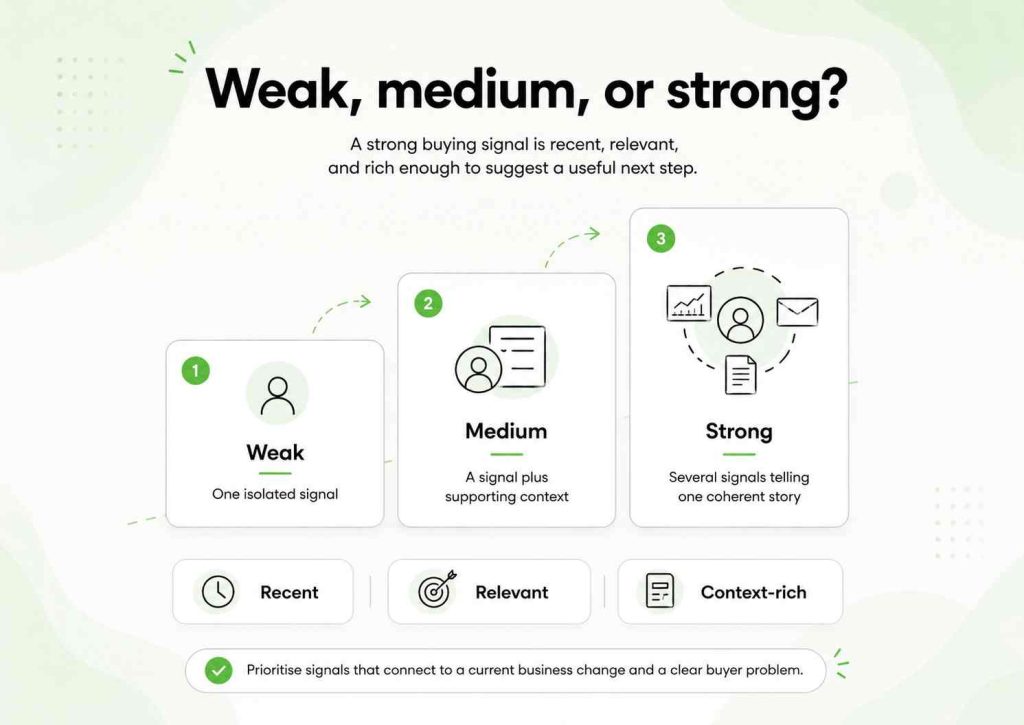
For Northstar, a Tier 2 company hiring six SDRs and appointing a new VP Sales might deserve Tier 1-level research for the next campaign cycle.
The account has not changed territory. Its priority inside the territory has changed.
Workshop round 6: estimate rep capacity before assigning the book
A territory can contain more accounts than one person can meaningfully work.
Instead of asking how many records fit inside the CRM, estimate how many accounts a rep can actually research, contact and follow up with at the quality level each tier requires.
Imagine one Northstar rep can realistically handle:
- 40 strategic Tier 1 accounts requiring deeper manual work
- 250–350 active Tier 2 accounts running through segmented outbound
- a larger Tier 3 watchlist that only becomes active after a trigger
That is very different from assigning 800 accounts and calling them all active.
Sending capacity matters too. Several territories running multiple follow-ups can create far more email volume than the raw prospect count suggests. Use the cold email infrastructure calculator to estimate the number of domains and mailboxes required before territory plans become live campaigns.
The broader cold email infrastructure guide is useful when the territory model implies several senders or parallel campaigns.
Workshop round 7: map people after you map accounts
Territory planning happens at account level first. Contact research comes second.
Inside a strategic account, the territory owner may need to find the operational buyer, a manager, an economic buyer and technical stakeholders. LinkedIn Sales Navigator is useful for exploring the organizational layer after an account has already earned attention.
The Sales Navigator breakdown covers the research side in more depth. For larger deals, the aim is not simply finding one senior title. It is understanding who is connected to the problem and the buying process.
Once conversations start, discovery questions should replace assumptions made during research.
Workshop round 8: write ownership rules before conflicts happen
A territory plan is incomplete if two reps can both make a reasonable argument that the same account belongs to them.
Northstar needs rules for situations such as:
- A US headquarters with a German buying team
- A parent company and several subsidiaries
- An existing customer entering a new market
- A previously owned account returning after six months of inactivity
- Several stakeholders from one company entering through different campaigns
One useful ownership hierarchy might be:
Existing active opportunity → existing customer owner → named strategic-account owner → territory rule → reassignment pool.
The exact sequence can differ. What matters is that the team knows it before the conflict happens.
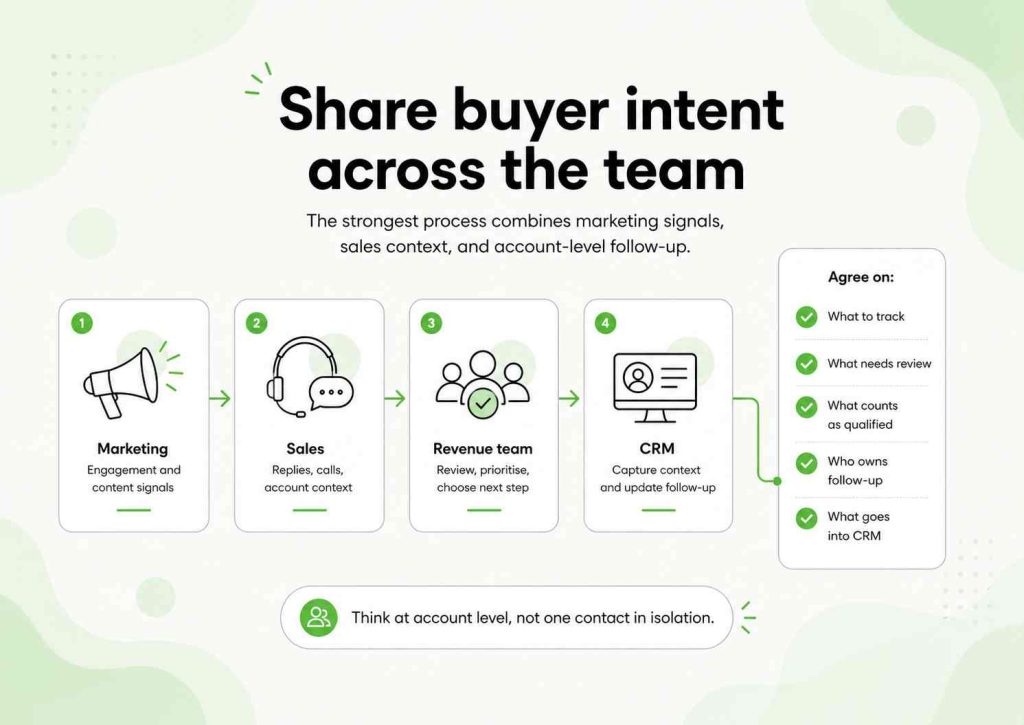
That account-level view becomes particularly important when several stakeholders engage. Otherwise one buying group can accidentally be split across different reps and different outreach sequences.
Good outbound automation should preserve those ownership decisions instead of creating another parallel source of truth.
Workshop round 9: give each tier its own sales motion
Now the territory finally becomes outreach.
Tier 1 accounts may justify manual research, several stakeholders and a combination of email, LinkedIn and selective calls. A multichannel outreach plan makes sense when each channel contributes something different.
Tier 2 accounts can use a repeatable sales cadence built around one segment-level problem, with enough account context to make the message relevant.
Tier 3 accounts may remain inactive until a new signal makes the timing stronger. Not every name inside a territory needs to be inside a sequence today.
Before a new territory campaign goes live, check several real records with the email preview tool. Territory-specific personalization fields are exactly where missing data can produce strange copy at scale.
Workshop round 10: run the territory as a living book of business
The plan should change as evidence accumulates.
A territory that looked balanced in January may not look balanced in June. One market can grow faster. A rep can inherit several active opportunities. A segment can underperform while another produces more qualified conversations than expected.
Review the territory using outcomes rather than activity alone.
- ICP accounts actively worked: Is the rep covering the book or only the easiest names?
- Positive reply rate: Does the territory’s message resonate with the target segment?
- Qualified conversations: Are replies turning into useful discovery?
- Opportunities created: Which parts of the territory produce real pipeline?
- Coverage gaps: Which high-value accounts receive little or no attention?
- Capacity: Does one rep carry substantially more active opportunity than another?
Use cold email benchmarks as outside context, but compare territories primarily against similar territories and your own history.
If two message variants are being compared inside the same territory, the A/B test calculator can help distinguish a meaningful change from normal variation.
The current cold email statistics also provide wider context for reply and conversion expectations without turning one global average into every rep’s quota.
Copy this territory-planning canvas
You can run the whole exercise from one document. Fill these fields before building the final CRM assignment rules:
- Territory name: ____________________
- Core ICP: ____________________
- Boundary: geography / industry / segment / named accounts / other
- Total viable accounts: ____________________
- Tier 1 account definition: ____________________
- Tier 2 account definition: ____________________
- Signals that can raise priority: ____________________
- Primary buyer roles: ____________________
- Rep capacity: ____________________ active accounts
- Ownership precedence: ____________________
- Tier 1 sales motion: ____________________
- Tier 2 sales motion: ____________________
- Review cadence: ____________________
What Northstar’s finished territory plan looks like
At the beginning, Northstar had three reps and one database.
At the end of the exercise, each rep has a defined account universe, a manageable set of active accounts, clear strategic tiers and rules for overlaps. Buying signals can move accounts up the queue without changing ownership. Larger accounts receive deeper research while repeatable segments can run through structured outbound.
More importantly, everyone can explain why a company belongs to a territory and what should happen next.
That is what a useful territory plan should create. Not prettier boundaries, but a market that salespeople can actually work.