
A sales team can have a good lead list and still spend its time badly. Some prospects fit the ICP but have no reason to buy now. Others show a promising signal but sit far outside the target market. A third group may look perfect on paper while the contact data is outdated or the person has little connection to the problem. Lead prioritization helps sales decide where attention should go first. Instead of treating every prospect as equally urgent, the team weighs account fit, timing, evidence and contact quality before choosing the next action.
The goal is not to build a mathematically perfect lead score. It is to create a queue that helps reps spend more time on accounts with a credible reason to engage and less time researching prospects that are unlikely to turn into useful conversations.
What is lead prioritization?
Lead prioritization is the process of ordering prospects according to how much sales attention they deserve right now.
A prioritized lead usually combines several forms of evidence. The company fits your market, the contact is relevant, something suggests the timing may be useful and the available data is strong enough to justify outreach.
That makes prioritization slightly different from defining an ideal customer profile. ICP fit tells you who could become a good customer. Prioritization helps answer who deserves attention first among all the companies that fit.
A lead score is useful, but it is not the decision
Sales teams often turn prioritization into a score because numbers make a long list easier to sort. That is useful until the score starts hiding the reason behind it.
A prospect with 87 points may look better than one with 73. The salesperson still needs to know why. Did the first company receive points because it fits the ICP, because it is actively researching the category or simply because somebody visited three pages on the website?
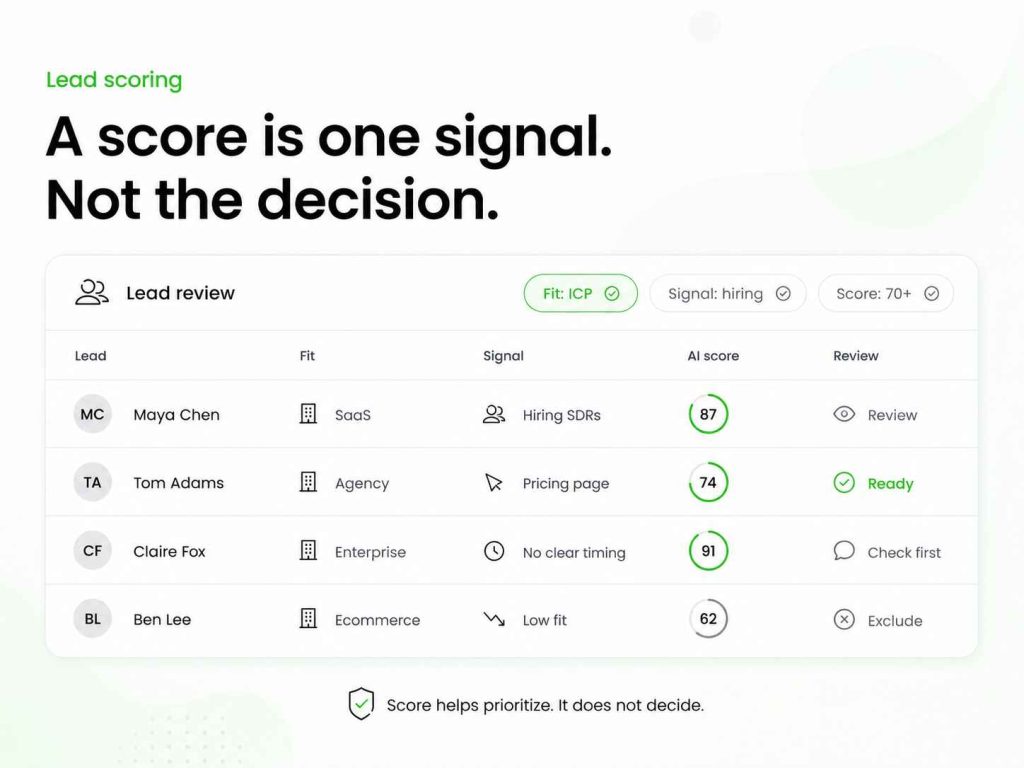
The best scores remain explainable. Reps should be able to look at a prioritized account and understand the evidence behind its position.
That distinction becomes even more important with AI-assisted lead generation, where a model can process far more signals than a salesperson can review manually. Speed helps. An unexplained number does not.
Four things should decide who moves up the queue
1. Fit: should this company be on the list at all?
Fit is the foundation. Before looking for intent or recent activity, ask whether the company resembles the customers you can realistically help.
Industry, company size, business model, geography, technology and sales motion can all matter. The exact criteria depend on what you sell. A company does not become a high-priority account simply because it has started researching your category if it is too small, operates in an unsupported market or needs something your product does not solve.
This is also where account-based prospecting becomes useful. High-fit accounts can justify more research because the potential value makes deeper preparation worthwhile.
2. Timing: why might the account care now?
A company can be a perfect customer and still have no reason to change anything today.
Timing improves when something has changed. The company may be hiring, entering another market, replacing leadership, launching a product, expanding its sales team or reviewing a technology category. First-party actions such as a trial start, demo request or reply provide even stronger context.
These B2B buying signals should influence priority without becoming automatic proof of purchase intent. A funding announcement can create an opportunity for research. It does not automatically create a buyer.
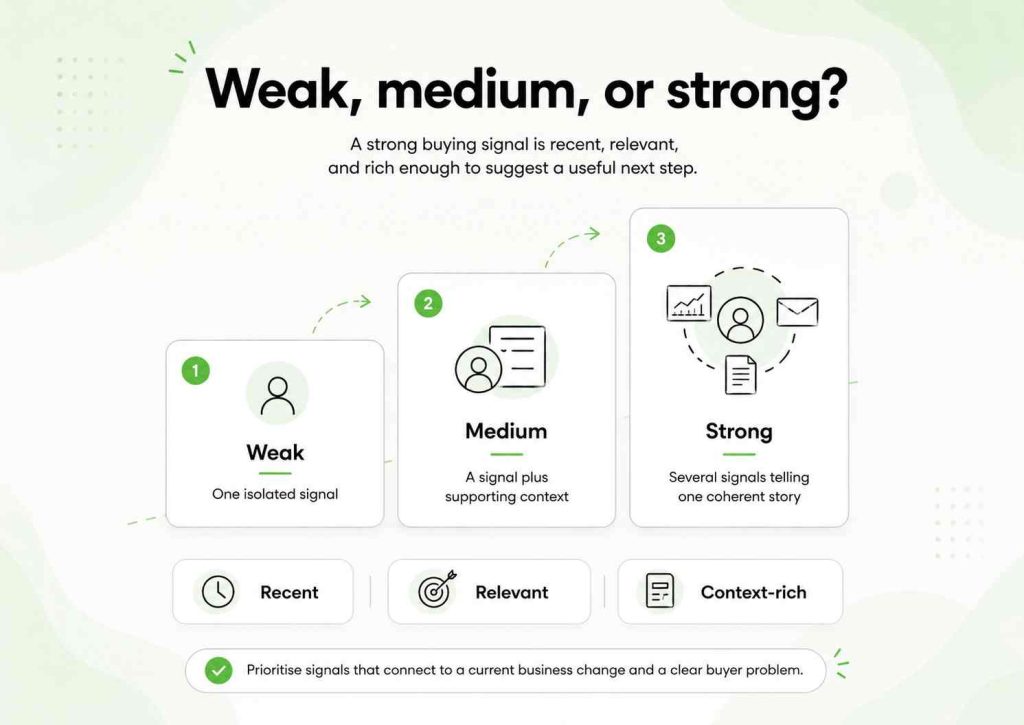
Notice what makes the strong signal stronger: several pieces of evidence tell the same story. Recent hiring, a new leader and direct engagement with relevant content are more useful together than one isolated company event.
3. Contact quality: are you looking at the right person?
Good account fit does not guarantee good contact fit.
The person should be close enough to the problem to understand why the message matters. That may be the operational owner, a manager, a senior decision-maker or somebody who can point you toward the right person.
Contact data matters too. A valid professional email, current job title and correct employer are basic requirements before a prospect moves into active outreach. If the list came from several sources, run an email verification check rather than assuming every record is equally reliable.
Tools covered in the lead finder software comparison can help discover contacts, but the sales team still needs to decide which role belongs in the conversation.
4. Evidence: how confident are you in the story?
A priority lead should come with a reason you can explain in plain language.
“They are an enterprise SaaS company” is evidence of fit. “They hired a new VP Sales and opened eight SDR positions in the last month” adds timing. “Their RevOps lead replied to an earlier campaign and asked about integrations” is much stronger.
A useful priority decision combines those facts into one hypothesis:
This account fits our market, appears to be rebuilding its outbound team and has already shown direct interest in the workflow we solve.
That is much more actionable than “Score: 92.”
A practical 10-point prioritization model
You do not need predictive modeling to build a first lead-priority system. A small sales team can start with four criteria and improve them after seeing which accounts actually turn into conversations and opportunities.
| Criterion | 0 points | 1 point | 2 points | 3 points |
| Account fit | Outside ICP | Partial fit | Strong fit | Core ICP |
| Timing | No context | Weak trigger | Relevant recent change | Direct buying intent |
| Contact fit | Wrong role | Adjacent role | Relevant stakeholder | — |
| Evidence quality | Unverified assumption | One credible data point | Several supporting signals | — |
The maximum is ten points, but the number itself is less important than consistency. Everyone on the team should interpret “strong fit” or “direct buying intent” in roughly the same way.
You can also weight criteria differently. A high-value B2B sales motion may put more weight on account fit and stakeholder coverage. A high-volume outbound team may care more about contact quality and a recent trigger.
Three accounts can have the same score and need different actions
Account A: perfect fit, no timing signal. The company matches every ICP criterion, but nothing suggests a current initiative. Keep it in the target market, but do not automatically treat it as today’s highest-priority account. A well-researched cold email may still make sense, especially if your sales outreach plan includes strategic accounts that are worth creating demand with.
Account B: medium fit, very strong intent. A company outside your normal sweet spot requests a demo. The lead deserves a fast response because its intent is explicit, but the rep should check fit before investing in a long sales process.
Account C: strong fit, strong trigger, uncertain contact. The company has just hired a sales leader and opened several SDR roles, but the database only contains a generic senior executive. The account deserves attention. The first task is not outreach. It is finding a better stakeholder.
That is why prioritization works better as a decision system than a leaderboard.
Turn one lead list into three working lanes
Priority A: research before outreach
These are accounts where fit and timing are both strong enough to justify manual work.
Read the account history, confirm the trigger, identify the likely buying roles and prepare a specific message hypothesis. For larger accounts, research more than one stakeholder instead of depending on a single contact from the start.
This lane works particularly well for strategic accounts where a smaller number of higher-quality conversations matters more than raw sending volume. The sales prospecting stack can support the research without turning the workflow into ten disconnected tools.
Priority B: good fit, repeatable campaign
These prospects have enough relevance for outbound but do not need thirty minutes of individual research each.
Group them around a shared problem or trigger, then add account-specific context where it changes the message. Strong cold email personalization does not require writing every email from scratch. It requires the personalized detail to support the reason for contacting that person.
The sequence can then follow a consistent sales cadence while leaving room to stop or change course when the prospect replies.
Priority C: monitor, nurture or remove
Some prospects belong in your market but do not deserve active outbound now.
A weak timing signal may justify watching the account. An incomplete record may need enrichment. Poor company fit should usually lead to exclusion rather than another follow-up.
Prioritization saves time partly because it tells reps who not to contact today.
AI can prepare the queue without owning the decision
AI becomes useful when the lead list is too large for manual research on every record.
It can compare companies with ICP criteria, summarize recent events, identify likely decision-makers and highlight accounts that deserve human review. It can also help organize unstructured information from job descriptions, CRM notes or company updates.
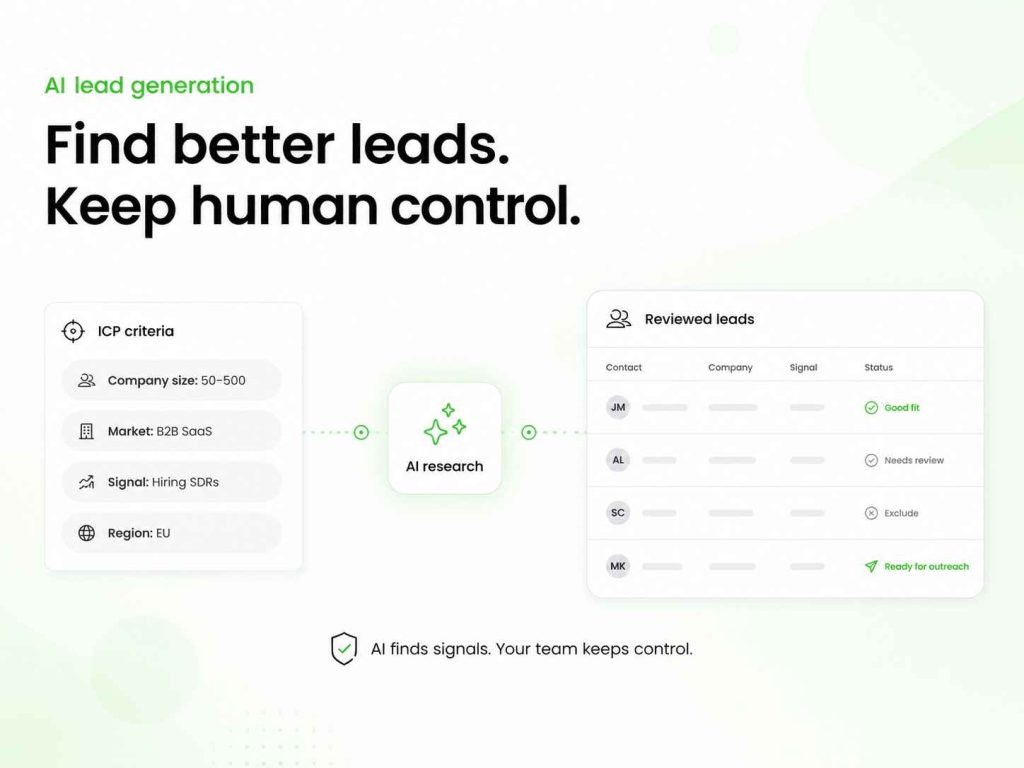
That division of labor is important. Let software process the repetitive evidence. Let the salesperson decide whether the evidence tells a coherent story.
If you want to automate more of the research layer, AI sales prospecting workflows can help collect and summarize account context. The rep should still verify anything that will become part of the outreach message.
Use buying signals as tie-breakers, not excuses to pitch
Signals are especially useful when two accounts have similar fit.
Imagine that both companies match your ICP. One has been unchanged for a year. The other has hired a new sales leader, opened five SDR roles and started reviewing content related to outbound infrastructure. The second account has a stronger reason to move up the queue.
That does not mean the email should read, “I saw you opened five SDR roles.” The information belongs first in your research logic. Then turn the likely business change into a useful message.
A good signal-based decision usually follows this pattern:
Signal → business change → likely problem → useful next step.
That same principle works in multichannel outreach. The signal helps decide where to spend attention. It does not mean the prospect needs an email, LinkedIn message and call on the same morning.
The priority changes when the prospect replies
Pre-outreach prioritization is based on evidence from outside the conversation. A reply gives you better information.
Someone who says “not until Q1” should not remain in the same active queue as someone asking about implementation. A prospect who refers you to another stakeholder gives you both a new contact and useful buying-process context.
Once a conversation starts, sales qualification becomes more important than the original score. Questions around the problem, impact, timing, ownership and next steps reveal information no database could know in advance.
Good discovery questions should replace assumptions with evidence as the opportunity develops.
From priority queue to campaign
Prioritization should change execution. If every lead eventually enters the same campaign with the same message and the same timing, the scoring exercise has not achieved much.
Priority A accounts may receive more account research and manual personalization. Priority B may enter a well-defined segment with reusable message logic. Priority C may wait for a stronger trigger or leave the active queue altogether.
AI can prepare some of that workflow too. It can research accounts, detect signals, suggest message angles and flag uncertain cases for review rather than silently sending everything it finds.
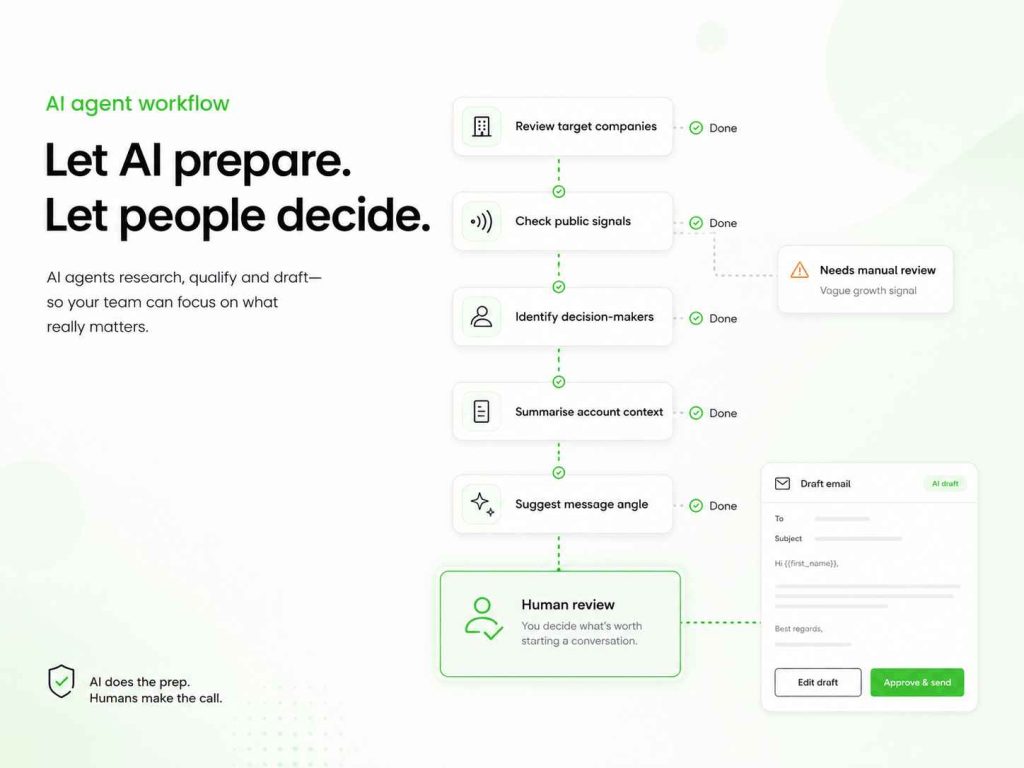
Before an email goes live, the email preview tool gives you a quick way to inspect the final message with real formatting and personalization.
If several prioritized segments will run at once, calculate the combined volume rather than looking at each campaign in isolation. The cold email infrastructure calculator can help estimate the domains and mailboxes needed for the planned workload.
Judge the model on pipeline quality, not scoring elegance
A prioritization model is useful only when the top of the queue consistently produces better sales conversations than the bottom.
Look at positive replies, qualified meetings, opportunities created and eventual pipeline contribution. Compare those outcomes across priority levels. If low-scoring prospects repeatedly convert while top-ranked accounts do not, change the model rather than defending it.
The current cold email statistics can provide broad context, while the cold email benchmark tool is useful for comparing campaign performance. Your own results by priority group matter more when evaluating the scoring logic itself.
When you test a message change inside one stable group, the A/B test calculator can help you avoid treating small random differences as evidence.
Keep the whole workflow connected
Lead prioritization becomes harder when ICP data lives in one platform, enrichment in another, signals in a spreadsheet, verification somewhere else and outreach in a fourth system.
The rep ends up spending more time rebuilding context than acting on it.
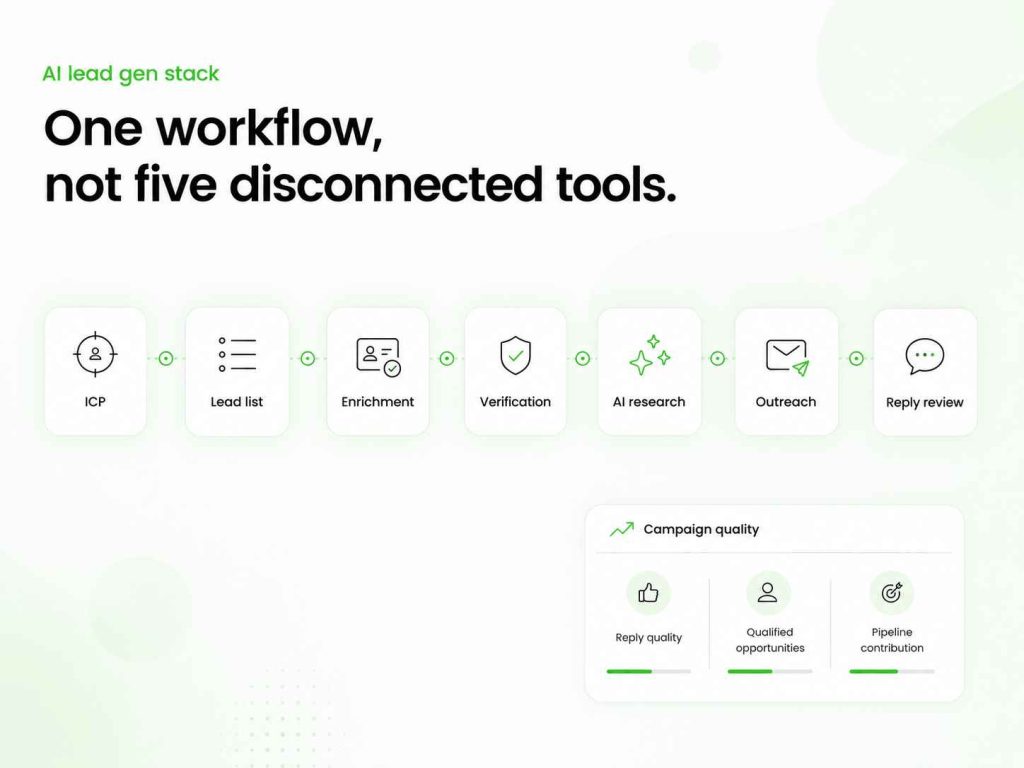
A cleaner workflow moves from ICP to list building, enrichment, verification, research, outreach and reply review without losing the reason the lead was prioritized in the first place.
That is the practical value of prioritization: the salesperson opening the next account should understand why it is next.
The five-minute lead queue review
Before launching a new outbound batch, take the first ten prospects in the queue and review them manually. You are not trying to redo the whole scoring system. You are checking whether its output still makes sense to a person.
- Fit: Would we genuinely want this company as a customer?
- Timing: Is there any reason this account deserves attention now rather than six months from now?
- Contact: Are we speaking with someone close enough to the problem?
- Evidence: Can we explain the priority without referring only to a numeric score?
- Action: Does this prospect need manual research, a segmented campaign, monitoring or no outreach?
If the top ten leads cannot pass that review, the problem is probably upstream in the criteria rather than downstream in the cold email copy.
A useful prioritization system does not promise to predict every buyer correctly. It gives sales a defensible order of operations: start with accounts that fit, look for credible timing, verify the right contact and keep enough human judgment in the process to recognize when the data is telling the wrong story.