


AI outreach is changing how sales teams research prospects, prepare sales emails and manage follow-ups.
An AI outreach tool can scan account data, suggest message angles, draft cold email outreach and help a sales rep decide what to do next. Some AI sales tools go further. They position themselves as AI SDRs, AI sales agents or an AI outreach agent that can run parts of the outbound process with limited input from a human.
That sounds efficient. It can be. But AI does not turn weak targeting into good outreach.
The useful role of AI is to reduce repetitive work around research, writing and campaign operations. The sales team still needs to decide who deserves attention, what problem is worth raising and when a prospect should not receive another message.
This guide explains how AI outreach works, where AI can help and what to look for in the best AI outreach tools.
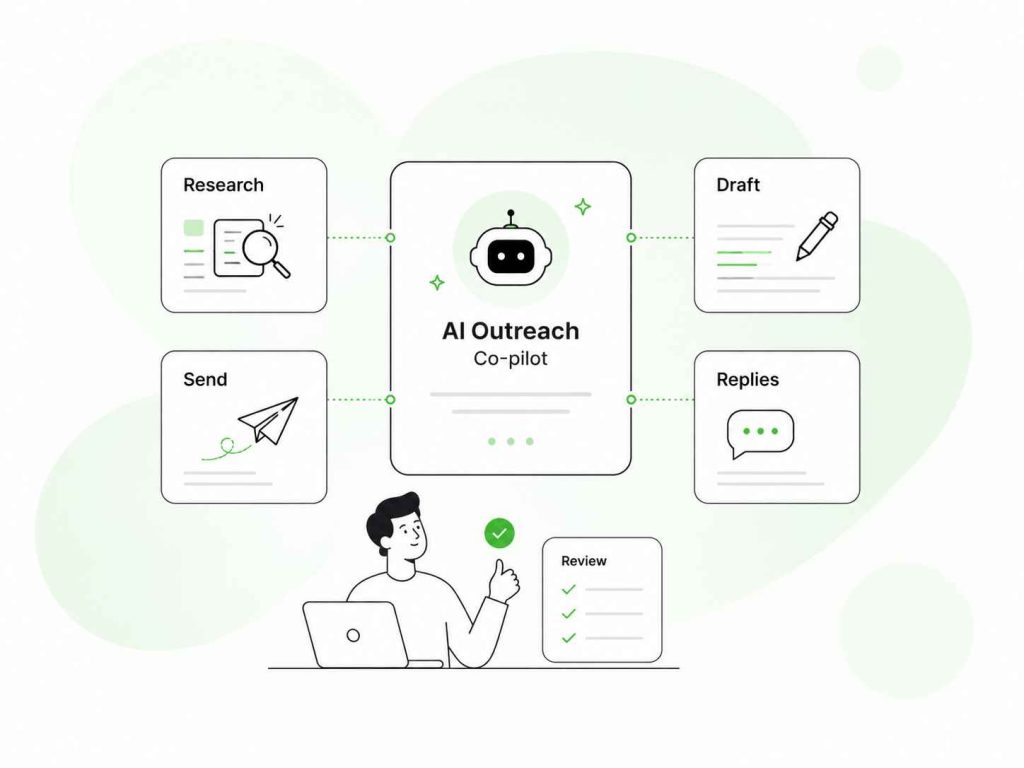
What is AI outreach?
AI outreach uses artificial intelligence to support communication with prospects through email, LinkedIn outreach and other outbound channels.
An AI tool may help a sales team research an account, identify a relevant trigger, write an outreach email or create follow-up suggestions. It may also help with reply sorting, contact enrichment and sales workflows.
The term covers a wide range of products.
Some outreach tools focus on AI research. Others focus on outbound automation. Some are built as an all-in-one outreach platform with campaign sending, inbox management and reporting. Others work as an AI assistant inside an existing sales platform.
The simplest definition is:
AI outreach uses AI to improve the preparation, execution or analysis of outbound communication.
That does not mean every part of outreach should be automated.
A prospect can tell when a message was created from a generic prompt. AI outreach works best when it supports a specific reason to contact a specific person.
Woodpecker’s guide to AI for sales prospecting is a useful starting point because AI should improve prospect selection before it starts generating sales emails.
AI sales and outreach tools: where they fit
AI sales is a broad category. It can include tools for lead scoring, meeting summaries, CRM updates, account research and outreach campaigns.
AI outreach tools sit closer to the top of the funnel. They help sales teams find prospects, prepare messages and manage outbound activity.
A typical AI outreach tool may support:
- AI research on companies and decision-makers
- cold email drafting
- message personalisation
- follow-up preparation
- reply classification
- sales intelligence signals
- outreach workflows across channels
A sales engagement platform may include some of these AI features while also handling sending limits, inbox rotation, reply detection and campaign reporting.
The difference is important.
A tool for sales that writes messages is not automatically an outreach engine. A tool that finds contacts is not automatically a safe sending platform. Teams often end up with multiple tools because each one covers one narrow part of the outreach process.
The better setup connects research, message creation, sending and response handling without making the workflow harder to manage.
Woodpecker’s sales prospecting tools guide shows why prospecting, verification and outreach are separate jobs, even when they sit in the same sales stack.
AI outreach tool for prospect research
Prospect research is one of the strongest uses for AI.
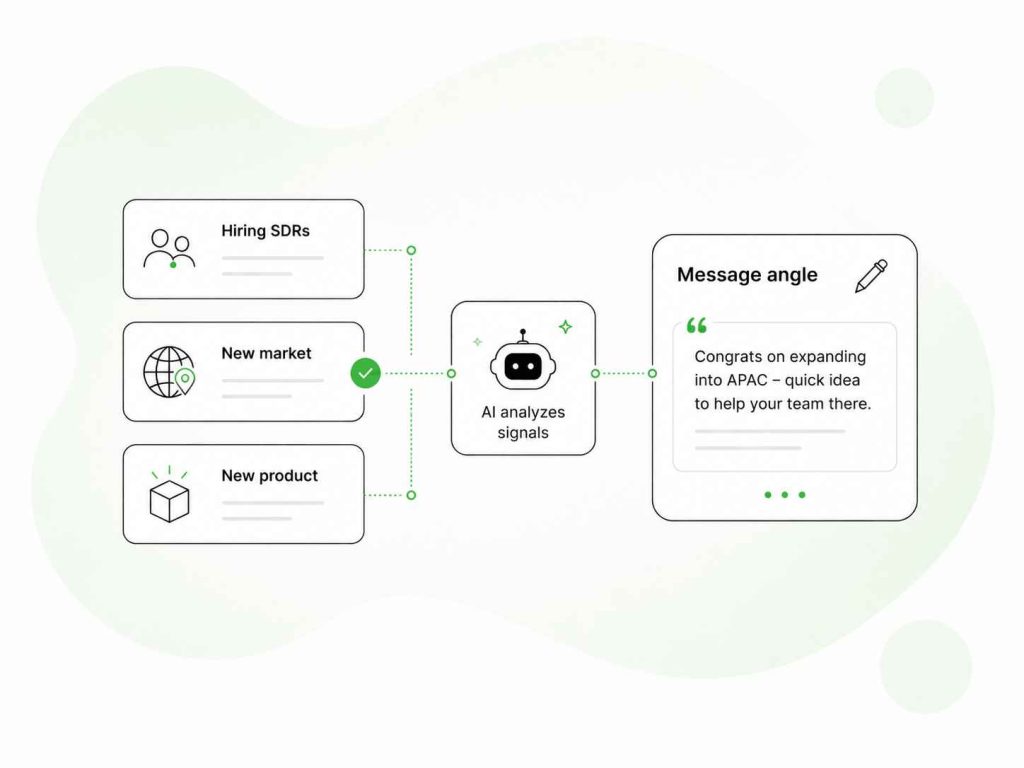
An AI outreach tool can collect company news, hiring activity, role changes, public posts and website information. It can turn that into a short account summary for the sales rep.
For example, AI may highlight that a prospect has:
- hired new SDRs
- launched in another market
- changed sales leadership
- announced a new product line
- started recruiting for a role connected to your offer
That gives the rep a faster starting point.
It does not confirm that the prospect has a buying problem.
A good AI outreach workflow uses research to form a hypothesis. The sales rep then checks whether the signal is current and whether it connects to a problem the prospect may recognise.
A message such as “I saw your company is growing quickly” may technically use AI research. It is still vague.
A stronger opening could be:
Noticed you are hiring SDRs while expanding into the DACH market. Teams at that stage often struggle to keep new outreach campaigns consistent across reps. Is that already on your radar?
The difference comes from using one specific signal and connecting it to a plausible issue.
For more detail on that process, see how to personalise cold emails through research and how to turn research into better cold email copy.
AI outreach and cold outreach: where automation helps
Cold outreach includes many repetitive tasks.
A sales rep may need to research accounts, check email addresses, build lists, write a first message, create an email sequence, schedule follow-ups and record replies in the CRM.
AI can help with parts of that work.
It can suggest a subject line, prepare message variants or draft an outreach email based on account notes. It can also classify replies so the sales team can spot interested prospects faster.
That said, AI cold outreach should not become a volume game.
A tool can automate outreach faster than a human can. It can also send more irrelevant messages faster than a human can.
The safest use of AI is to automate preparation and admin while keeping human review around targeting, messaging and timing.
Before launching a campaign, the team should still review:
- the prospect list
- the outreach message
- the reason for contacting each segment
- the number of follow-ups
- the sending setup behind the campaign
Woodpecker’s cold email format guide is useful here because it keeps the focus on a relevant opening, a clear value proposition and a low-pressure next step.
AI SDR, AI SDR agent and AI sales agents
An AI SDR is software that supports the job of a sales development representative.
An AI SDR agent may research accounts, prioritise leads, draft messages, suggest follow-ups and route replies. Some AI sales agents aim to manage more of the outbound workflow, including list building and meeting booking.
The language can get confusing.
An AI SDR, AI sales agent and AI outreach agent may all perform similar tasks. The real difference is how much control the tool gives the user.
A simple AI assistant may write a first draft and wait for approval.
A more autonomous AI system may create outreach messages, send them and trigger follow-ups based on rules.
A full AI SDR may promise to do all of that with minimal human involvement.
For most B2B sales teams, the practical option sits in the middle.
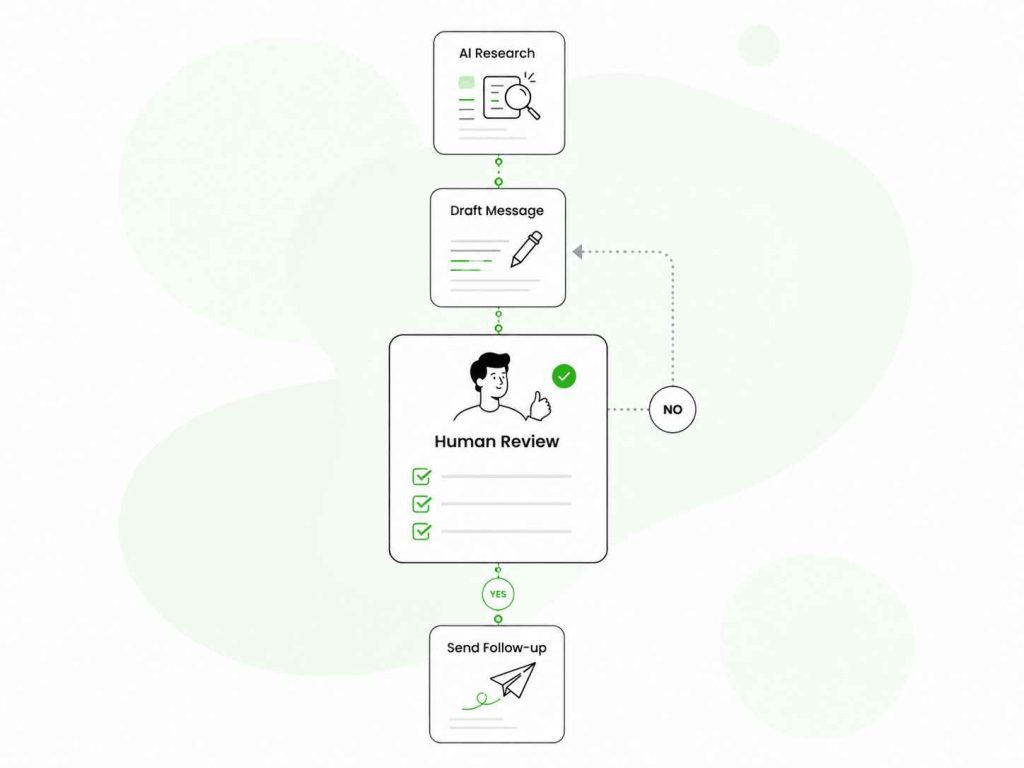
Use AI to prepare research, draft campaigns and help sales reps work through repetitive tasks. Keep people involved when the prospect replies, when a message needs real judgement or when the account is strategically important.
Woodpecker’s article on humanising an automated sales process explains why sales automation should not remove the human layer from outreach.
AI sales outreach and the sales team
AI sales outreach should make the sales team more effective, not harder to manage.
The right setup gives reps better account context, faster drafts and clearer follow-up options. It should not create a flood of AI-generated content that managers need to rewrite before every campaign.
A good AI SDR experience feels like a co-pilot.
The AI handles first-pass research, suggests a few angles and helps organise the work. The sales rep chooses the direction, adapts the message and decides whether the prospect belongs in the sales process.
AI can help when the team needs to:
- prepare account briefs
- create message variants by persona
- review a large prospect list
- draft sales emails faster
- spot relevant company news
- organise outreach workflows
- reduce manual CRM work
But AI should not be allowed to decide that every prospect deserves cold email.
Strong outreach starts with a defined target account. Woodpecker’s ideal customer profile guide can help sales teams define that before they use AI to scale outreach.
AI assistant, AI copilot and AI workflows
An AI assistant gives users suggestions.
An AI copilot usually works alongside a sales rep inside a wider product. It may help draft messages, summarise notes or recommend next steps.
AI workflows connect several actions together. For example:
- AI research collects public account data.
- The AI tool suggests a message angle.
- A sales rep reviews the draft.
- The outreach campaign starts.
- The system pauses when someone replies.
- AI helps categorise the response.
That is different from asking AI to “write a cold email” with no context.
The best AI workflows start with a defined input and a clear action. They do not ask the model to guess the sales strategy.
For example, AI can use a company’s hiring activity to suggest two message angles. It cannot know which one fits unless the team understands the target buyer and the product.
Woodpecker’s AI email writing guide is helpful because it treats AI output as a starting point that needs testing and editing.
AI outreach agent and agentic AI: what “autonomous” really means
Agentic AI describes systems that can take several steps towards a goal instead of producing one answer at a time.
In sales outreach, that may mean an AI outreach agent can find prospects, collect account data, draft outreach messages and decide what action to take after an event.
Some outreach AI agents can also monitor engagement, enrich contacts or suggest when a prospect should enter a campaign.
The promise is appealing: use AI agents to handle the busywork while the sales team focuses on sales calls and qualified opportunities.
But autonomous AI creates a trade-off.
The more freedom the AI has, the more carefully the team needs to control data quality, campaign rules and message approval.
AI agents that handle sending without enough review can create a brand problem quickly. A bad message sent once is easy to fix. A poor campaign sent to hundreds of prospects is harder to recover from.
Custom AI agents can be useful when a company has a clear and repeatable outbound process. The team should first document the workflow before trying to build custom AI agents around it.
Best AI outreach tools: how to evaluate the options
The best AI outreach tools depend on where your current process breaks down.
Do not start with a generic “best AI” ranking. Start with the job you need the platform to do.
When evaluating AI outreach tools, ask:
- Does the tool help with AI research, writing, sending or reply handling?
- Can sales reps review content before emails go out?
- Does it support multichannel outreach or only one channel?
- Can it connect with your CRM and existing sales platform?
- Does it help personalize outreach using real account context?
- Does it support safe sending practices?
- Does it work for your company size and outbound volume?
- Can you measure reply quality, not only open rates?
The best AI outreach tool is not always the one with the most AI features.
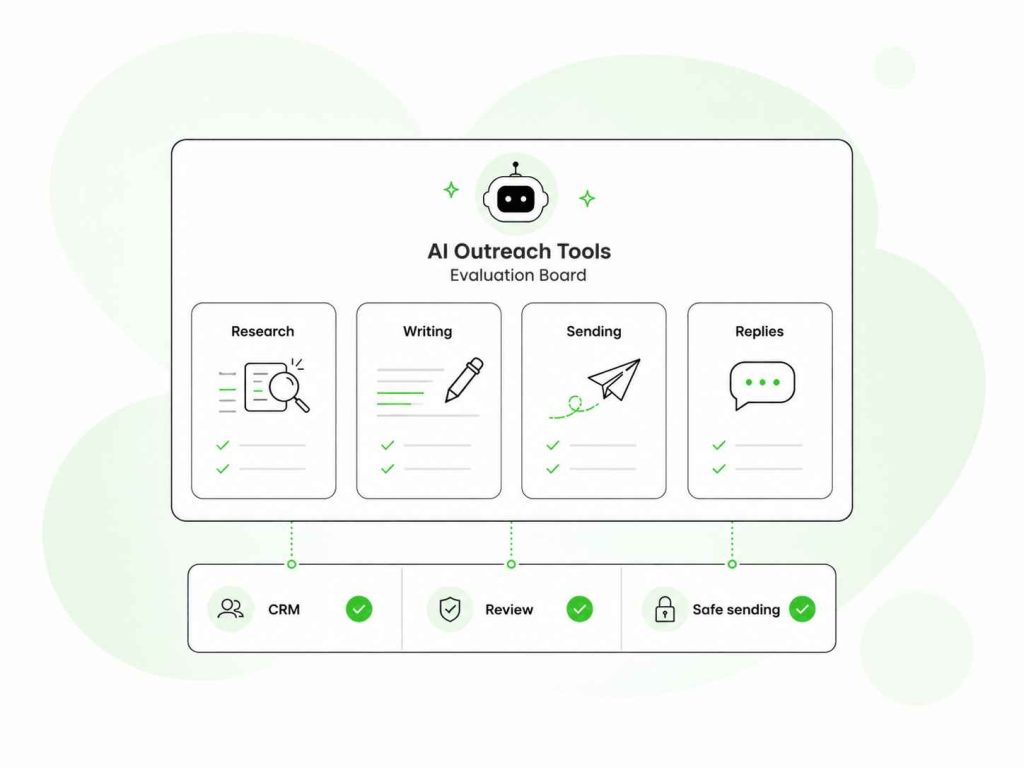
A useful platform should fit the actual outreach process. A small sales team may need help with research and follow-ups. Enterprise sales teams may need permissions, reporting, CRM integration and stronger sales enablement workflows.
Tools like Persana AI may focus heavily on AI prospecting and sales intelligence. Tools like Reply.io may appear in broader searches around sales engagement and outbound automation. The right choice depends on the workflow you want to improve, not the name that appears highest in a comparison list.
Best AI outreach tools for email, LinkedIn and multichannel outreach
Email remains central to B2B outreach, but it does not need to work alone.
Multi-channel outreach may combine cold email, LinkedIn outreach, calls and other touchpoints. Each channel should support the same sales conversation, not repeat the same pitch.
For example, a sequence may begin with an email. A LinkedIn touch can add familiarity. A follow-up can refer back to the original issue. A sales call can happen only once the prospect shows enough interest.
The wrong way to do multichannel outreach is to send the same message everywhere.
The better approach is to let each channel play a different role.
Woodpecker’s guide to multichannel sales cadence explains how to structure those touches without overwhelming the prospect. Its LinkedIn outreach guide also helps teams use LinkedIn more carefully alongside email.
AI sales tools and sales intelligence
AI sales tools can support sales intelligence by turning scattered account information into a usable summary.
That may include company news, job changes, hiring activity, public posts, website changes or CRM data.
The goal is not to collect every possible signal.
The goal is to find the few signals that can change the outreach message.
For example, “the company has 500 employees” is useful background. “The company is hiring its first outbound team after opening a new region” may be useful outreach context.
AI uses data quickly, but the sales rep still needs to decide what deserves attention.
That is why AI prospecting should connect with a clear ICP and a defined sales process. A long list of weak signals does not help sales. A short list of relevant signals can.
Woodpecker’s B2B sales lead generation guide is useful when you need to connect account research with a more focused prospecting motion.
How to automate your outreach without losing relevance
To automate your outreach safely, separate what AI should do from what people should do.
AI can help:
- summarise account information
- suggest message angles
- create first drafts
- prepare follow-up options
- organise outreach campaigns
- flag replies that need attention
- update simple sales workflows
People should still:
- choose the accounts
- validate the outreach angle
- edit sales emails
- handle uncertain or sensitive replies
- qualify leads
- decide when to stop outreach
That split helps prevent AI outreach from becoming impersonal.
A good campaign should still sound like a person who understands why they are writing. AI can make that preparation faster. It should not replace it.
For practical message structure, see Woodpecker’s guide to writing a cold email and its cold email templates. Both are more useful when you adapt them to the account instead of copying them unchanged.
Cold outreach tools, deliverability and outreach at scale
Cold outreach tools need to do more than create messages.
A platform may have built-in AI, an AI reply agent or sophisticated outreach workflows. But none of that protects sender reputation if the email infrastructure is weak.
Before you scale outreach, check the basics:
- verify prospect email addresses
- authenticate your sending domain
- use separate domains and mailboxes for outbound where appropriate
- warm up new mailboxes gradually
- keep sending volume measured
- monitor bounces and replies
- stop sequences when a prospect responds
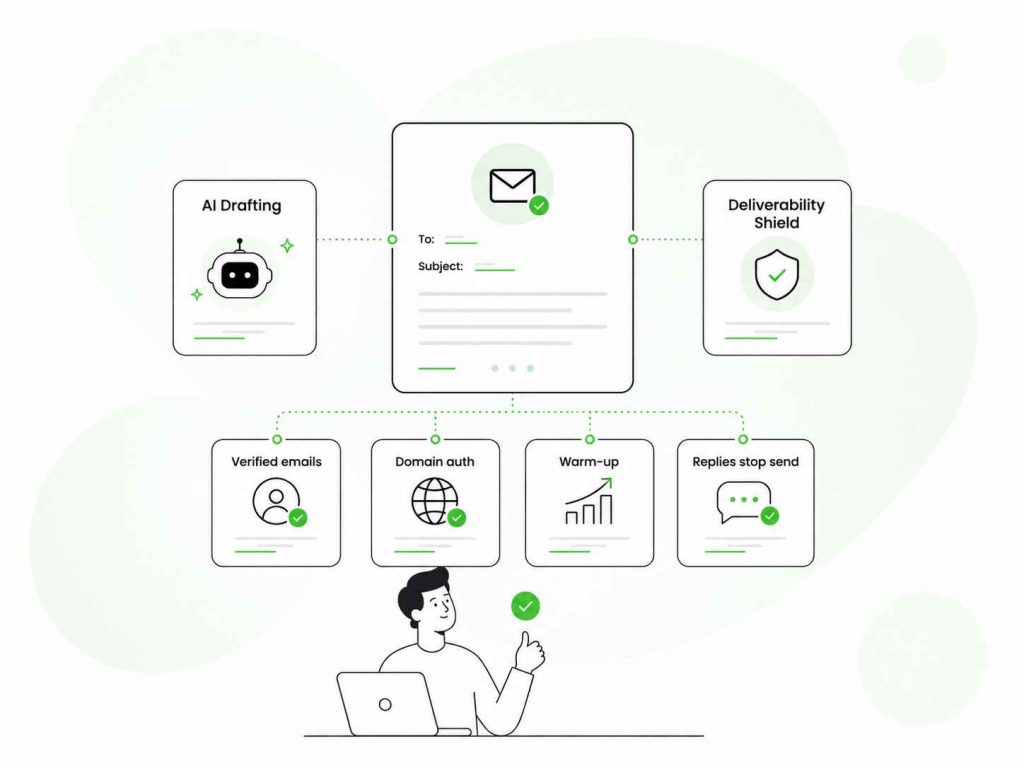
A good all-in-one outreach platform should connect AI support with the sending controls that help protect campaign health.
Woodpecker supports cold email outreach with email verification, warm-up, adaptive sending and deliverability monitoring. Its cold email infrastructure guide explains why a well-written message still needs the right technical setup behind it.
You can also review how to set up a domain and mailbox for cold outreach, SPF, DKIM and DMARC and domain reputation before launching outreach at scale.
AI outreach campaigns: how to judge quality
The wrong metric can make AI outreach look more successful than it is.
A campaign may generate a high number of emails sent, opens or superficial replies. That does not mean it creates pipeline.
Review the quality of outreach campaigns through questions such as:
- Are prospects replying with genuine interest?
- Are sales reps booking relevant meetings?
- Are leads entering the sales pipeline with a real problem to solve?
- Are prospects asking to be removed or reporting messages as spam?
- Is the team spending less time on admin, or more time cleaning up AI output?
AI can help sales teams produce more activity. The better goal is better activity.
The strongest outreach messages are relevant, concise and honest about why the sender is getting in touch. Woodpecker’s personalized cold email guide explains why the prospect should feel like the email was written for their situation, not their job title.
Can an AI sales agent book meetings?
An AI sales agent can support meeting booking by researching accounts, preparing outreach and helping with follow-ups.
It can also identify responses that may justify a sales call.
But booking a meeting is not the same as creating a qualified opportunity.
A tool may book meetings with people who are curious but not a fit. It may create activity without moving the sales pipeline forward.
A sales rep still needs to qualify the prospect, understand the problem and decide whether a conversation makes sense.
That is where discovery remains human work.
Woodpecker’s discovery call questions guide can help sales teams turn an interested reply into a useful sales conversation instead of rushing into a product pitch.
B2B outreach, sales process and AI engagement
B2B outreach often involves more context than a short transactional sale.
The prospect may need internal approval. Several stakeholders may influence the decision. The sales cycle may take months. A sales agent needs to understand the account before assuming that an AI-generated message is enough.
AI engagement can help the team keep track of signals and conversations across a larger account list.
But the best results still come from a clear sales process.
Start with the right account. Build a useful message hypothesis. Send a short outreach email. Follow up with a new angle. Stop when the prospect says no. Nurture when timing is not right.
AI can help at each stage. It cannot remove the need for judgement between stages.
Frequently asked questions
What is an AI outreach tool?
An AI outreach tool uses artificial intelligence to support prospect research, message drafting, campaign setup, follow-up preparation or reply handling. Some tools also combine those features with sending and deliverability controls.
What are the best AI outreach tools?
The best AI outreach tools depend on your workflow. Some teams need AI research and lead generation. Others need a sales engagement platform that helps them automate outreach, manage replies and protect deliverability.
Can AI automate sales outreach?
Yes. AI can automate parts of sales outreach, including research summaries, first drafts, follow-ups and reply classification. Sales reps should still review targeting, message quality and important prospect conversations.
What is the difference between AI SDR and AI outreach?
An AI SDR focuses on sales development tasks such as prospecting, qualification and meeting preparation. AI outreach is broader. It can include research, message generation, campaign sending and follow-up workflows.
Is agentic AI safe for cold outreach?
Agentic AI can support outreach when there are clear limits around data, message approval and sending behaviour. Fully autonomous AI can create risk when it sends unreviewed messages or scales before the campaign strategy is proven.
Use AI to supercharge your sales, not send more generic outreach
AI can help sales teams research faster, write better first drafts and manage outreach workflows with less admin.
It should not become an excuse to automate your outreach without a reason to contact the prospect.
The best AI outreach setup keeps people in control of targeting, strategy and conversations. AI handles the repetitive work around them.
Woodpecker helps teams combine AI-assisted campaign creation with cold email sending, LinkedIn outreach, reply management and deliverability protection. Explore how to safely scale cold email outreach, how to manage a cold email sequence and how to improve reply quality.