


Sales engagement platforms sit in a pricing bracket most buyers don’t expect the first time they see a quote. Entry-level seat pricing starts around $75–100 per month; mid-tier configurations run $125–150 per seat; enterprise deployments with full integration and analytics regularly clear $200 per seat per month. For a 10-person sales team, that’s $15,000–$24,000 a year for the platform alone, before any add-ons.
Those numbers aren’t wrong – sales engagement platforms do a lot, and teams that use them well get real return on the investment. But the pricing shock comes from a different place. Many teams evaluating SEPs don’t actually need a full sales engagement platform. They need one or two of its core capabilities (usually cold email automation and some CRM sync), and the rest of the platform is a category expansion they’re paying for but won’t use.
This guide covers what sales engagement platforms actually charge in 2026, what drives the pricing tiers, how to evaluate whether you need a full SEP or a specialized tool, and how Woodpecker fits for teams whose primary need is cold email rather than full sales engagement.
What is a sales engagement platform?
A sales engagement platform is a category of sales software that unifies multi-channel outreach (email, phone, LinkedIn, SMS), sequencing, analytics, and CRM integration into a single tool. The category was built for outbound sales teams – SDRs, BDRs, AEs – who need to run consistent, coordinated outreach at scale across every channel their prospects use.
The defining feature of an SEP is that it’s designed to be the sales rep’s primary workspace. Instead of bouncing between a CRM, an email tool, a dialer, a LinkedIn browser extension, and a spreadsheet, the rep works inside the SEP and lets the platform handle coordination. Done well, this saves meaningful time per rep per day. Done badly, it creates a workflow layer nobody wants to use.
The major vendors in the SEP category include Salesloft and Outreach at the enterprise end, with other established platforms like Salesforce Sales Engagement (part of the Sales Cloud ecosystem), HubSpot Sales Hub (part of HubSpot’s broader platform), and several mid-market options. Each has a different pricing model, a different feature depth, and a different ideal buyer. We’ll work through the major categories below.
What an SEP typically includes
Most full-featured sales engagement platforms include some version of the following:
Multi-channel sequences. Structured outreach campaigns that combine email, phone calls, LinkedIn actions, and sometimes SMS into a single sequence per prospect.
Dialer and call recording. Built-in phone capability with call logging, recording, and transcription. This is one of the features that separates true SEPs from specialized cold email tools – most SEPs include a dialer; cold email platforms typically don’t.
Email sending with tracking. Opens, clicks, replies, meeting bookings – all tracked at the activity level and pushed to the CRM.
CRM sync. Bi-directional sync with Salesforce, HubSpot, Microsoft Dynamics, or other CRMs. Activity, contacts, opportunities, and notes flow between systems.
Analytics and coaching tools. Rep-level and team-level dashboards covering activity volume, conversion rates, sequence performance, and pipeline contribution. Many platforms include conversation intelligence (analyzing call recordings for coaching signals).
AI features. Increasingly standard in 2026 – AI-drafted emails, AI-summarized calls, AI-predicted next-best-action, AI-routed leads, AI-written subject lines. The depth varies widely.
Admin and governance. User management, permission controls, content libraries, compliance settings. The enterprise-level features that matter when you’re running 50+ seats.
The full category is a lot of surface area. Which is partly why SEPs cost what they cost – and partly why teams that don’t need all of it end up overpaying.
What sales engagement platforms actually cost in 2026
The two most commonly referenced platforms in the category – Salesloft and Outreach – have pricing that’s partly public and partly custom. Both follow a seat-based model with tiers differentiated by feature depth.
Salesloft pricing
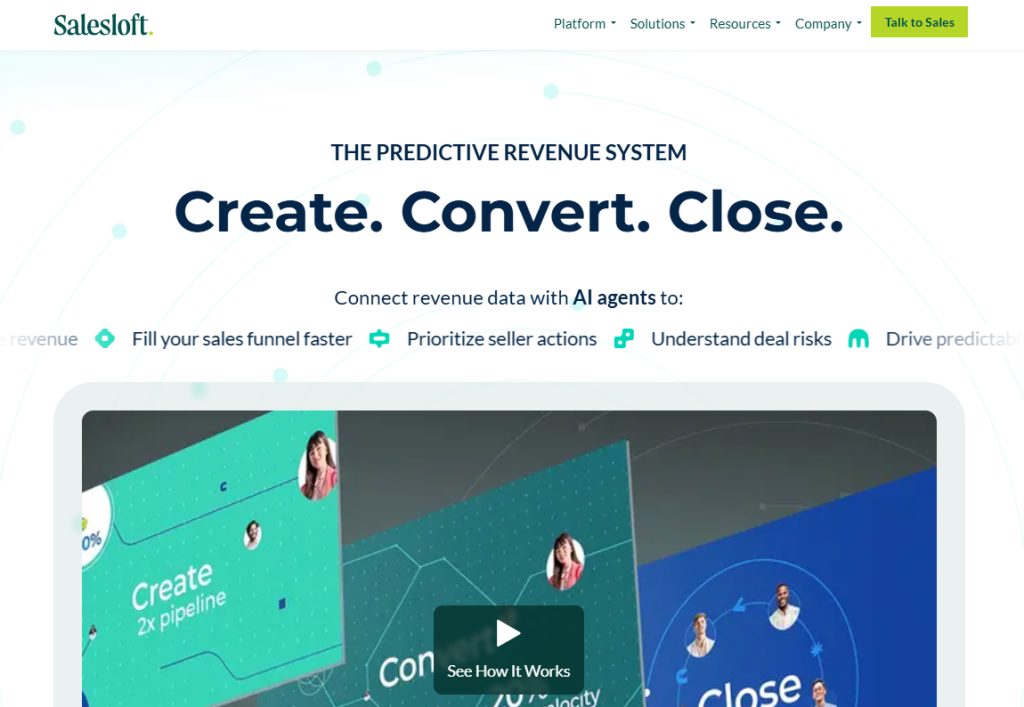
Salesloft offers three main tiers in 2026: Essentials, Advanced, and Premier. The platform has moved most of its pricing behind a sales conversation over the last two years, but industry analysts and buyers consistently cite the following ranges:
Essentials: Roughly $75 per seat per month (annual billing), though the entry tier is sometimes packaged differently for smaller teams. Covers core sequencing, email, and basic analytics.
Advanced: Approximately $125 per seat per month (annual). Adds multi-channel (phone and LinkedIn), deeper analytics, and conversation intelligence.
Premier: Around $165 per seat per month (annual). Adds forecasting, deal management, and enterprise-grade analytics.
Minimum contract commitments are common – typically 10 or 20 seats minimum, annual billing. The actual price a buyer pays often differs from list, especially for contracts above 25 seats where volume discounts kick in.
Outreach pricing
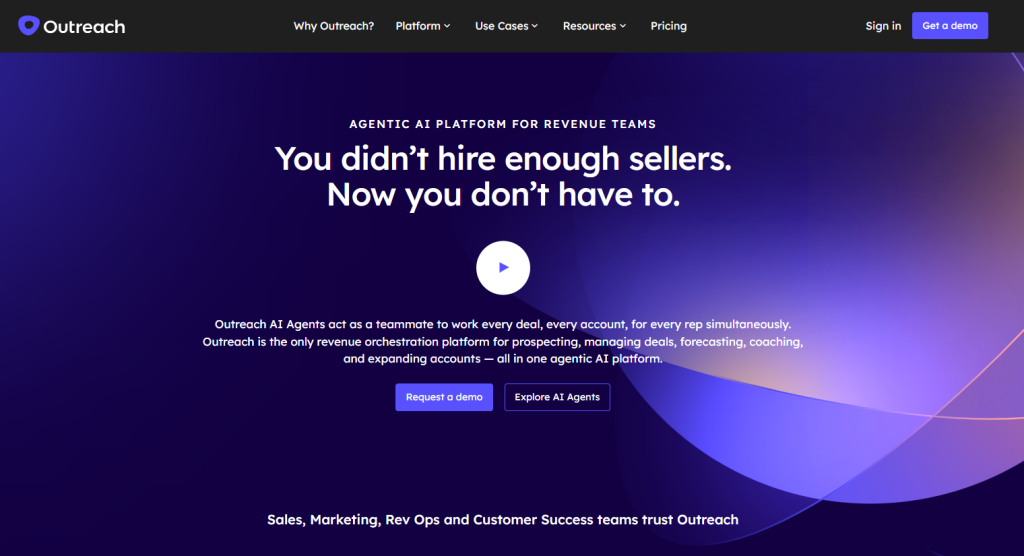
Outreach doesn’t publish public pricing. Industry reports and buyer surveys in 2026 put Outreach’s pricing in a similar bracket:
Standard tier: Approximately $100–130 per seat per month for mid-market deployments.
Enterprise tier: $150–200+ per seat per month, depending on seat count, integrations, and AI features enabled.
Outreach’s pricing is generally perceived as slightly higher than Salesloft’s at comparable tiers, though the gap narrows for multi-year deals. Minimum commitments are typically 25 seats.
Other platforms in the category
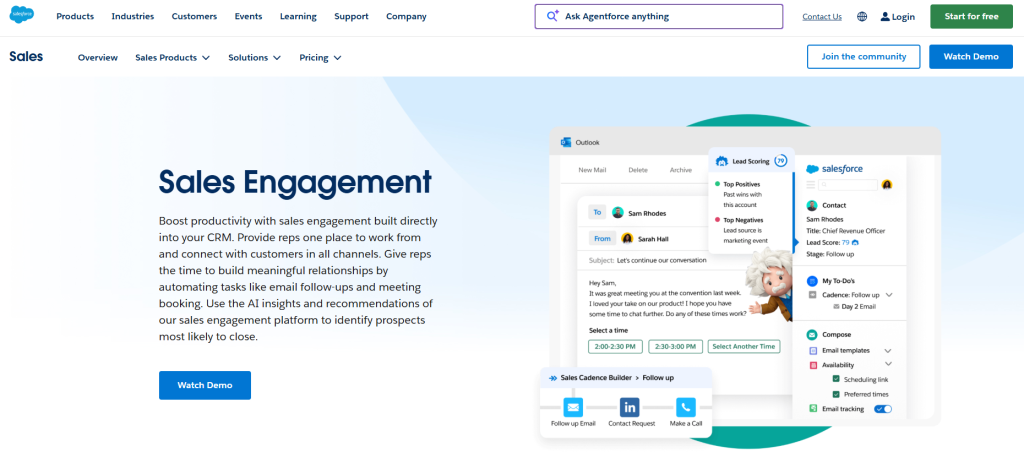
Salesforce Sales Engagement is bundled into Sales Cloud licensing rather than sold standalone. Effectively, you’re paying for Sales Cloud ($165–330+ per user per month depending on tier) and the engagement features are part of that.
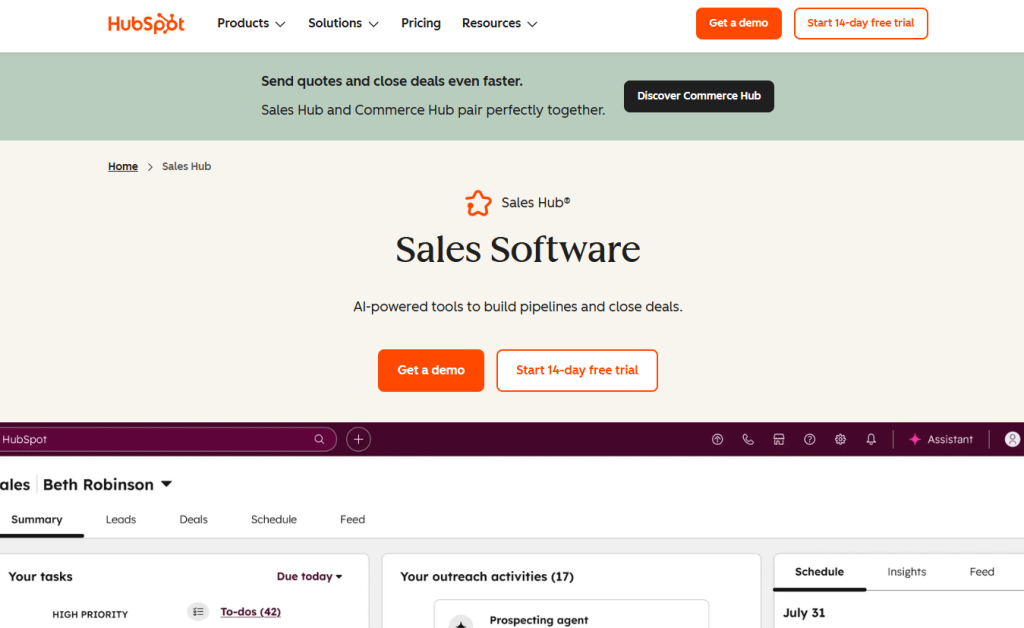
HubSpot Sales Hub has a more accessible pricing model: Professional at $100/seat/month and Enterprise at $150/seat/month, with minimum seat requirements scaling per tier. Sales Hub includes sequences, calling, and meeting scheduling, though it’s less deep on multi-channel orchestration than Salesloft or Outreach.
Mid-market SEPs like Salesmate, Klenty, and others cluster in the $50–100/seat/month range, trading some feature depth for a lower price point. These tools are often a better fit for teams that want SEP-style workflows but don’t need the enterprise muscle.
What the pricing tiers actually buy you
The gap between entry-level SEP pricing ($75/seat/month) and enterprise ($200+/seat/month) isn’t arbitrary. The higher tiers buy specific things:
Entry tier: Sequencing, email, basic CRM sync, basic analytics. Works for individual reps and small teams.
Mid tier: Adds dialer, LinkedIn integration, deeper analytics, A/B testing, conversation intelligence on calls. This is where most growing mid-market teams end up.
Enterprise tier: Forecasting, deal intelligence, advanced AI features, enterprise governance, SSO, custom integrations, dedicated success management. Makes sense at 50+ seats with mature revenue operations.
The common buyer mistake is overshooting – buying enterprise when mid-tier would deliver 90% of the value at two-thirds the cost. The opposite mistake (undershooting) shows up less often because reps will quickly complain about missing features; overshooting is invisible because the unused features don’t hurt.
What drives SEP pricing
Five factors consistently drive sales engagement platform pricing up or down. Understanding them helps you evaluate quotes and negotiate.
- Seat count. Most SEPs price per seat per month, with meaningful volume discounts above certain thresholds. A 10-seat contract and a 100-seat contract have very different effective per-seat pricing – typically 15–30% lower per seat at higher volumes.
- Contract length. Annual contracts save 20–30% over monthly billing. Multi-year contracts (2 or 3 years) save another 10–15% on top. For teams committing to the platform long-term, the multi-year discount is real money.
- Feature tier. The single biggest pricing lever. Moving from Essentials to Advanced to Premier at most vendors roughly doubles the per-seat cost across the tiers. Only buy the tier you’ll actually use.
- AI add-ons. Many SEPs now price AI features separately – conversation intelligence, AI-drafted emails, predictive scoring. Add-ons run $20–50 per seat per month on top of base platform cost. Check whether the AI features are included in your tier or priced separately before signing.
- CRM and integration depth. Deeper CRM integrations (especially Salesforce) sometimes require higher tiers or add-on fees. Enterprise integrations, custom fields, and complex workflow automation usually push buyers into higher tiers even when they don’t need other Enterprise features.
Who needs a sales engagement platform?
Full SEPs are expensive, high-coverage tools. They’re the right answer for specific team profiles – and the wrong answer for others.
Teams that should buy a full SEP
Multi-channel outbound teams at scale. If your SDRs do coordinated phone + email + LinkedIn outreach as their core job, and you have 10+ reps, a full SEP pays for itself in rep productivity. The coordination layer across channels is real value at this scale.
Enterprise sales organizations. If your deals involve multi-threaded outreach across buying committees, long cycles, and sophisticated CRM workflows, SEPs offer governance, analytics, and integration depth that specialized tools can’t match.
Teams with mature revenue operations. If you have dedicated RevOps, aligned SDR/AE motion, and sales leadership that actually reviews SEP analytics weekly, the platform’s depth compounds over time. Without this, the advanced features are mostly decorative.
Teams using phone as a primary channel. SEPs include dialers with call recording and transcription. If phone is a load-bearing part of your outbound motion, the dialer alone can justify the SEP.
Teams that probably don’t need a full SEP
Email-first outbound teams. If most of your outreach is cold email with LinkedIn as a supporting channel, and phone is rare or absent, you’re paying for dialer + call coaching + conversation intelligence you won’t use. A specialized cold email platform covers the core workflow at a fraction of the SEP cost.
Small teams (1–5 reps). SEP minimum commitments (often 10–25 seats) make them impractical for small teams. The feature overhead also doesn’t pay off until you have enough volume to justify coordination and analytics.
Agencies doing outreach on behalf of clients. Agency workflow – multiple client workspaces, separate reporting per client, white-label options – isn’t well served by most SEPs, which assume one-tenant-one-company. Dedicated agency-focused tools fit better.
Founders and early-stage teams. At the stage where the founder is doing their own sales, SEPs are overkill. The platform complexity isn’t worth the overhead; a simpler tool gets you moving faster.
Teams where cold email deliverability is the core problem. SEPs are generalist tools. They’re not optimized for the specific problem of cold email deliverability at volume – which is a narrow domain where specialized tools outperform.
When Woodpecker fits instead of (or alongside) an SEP
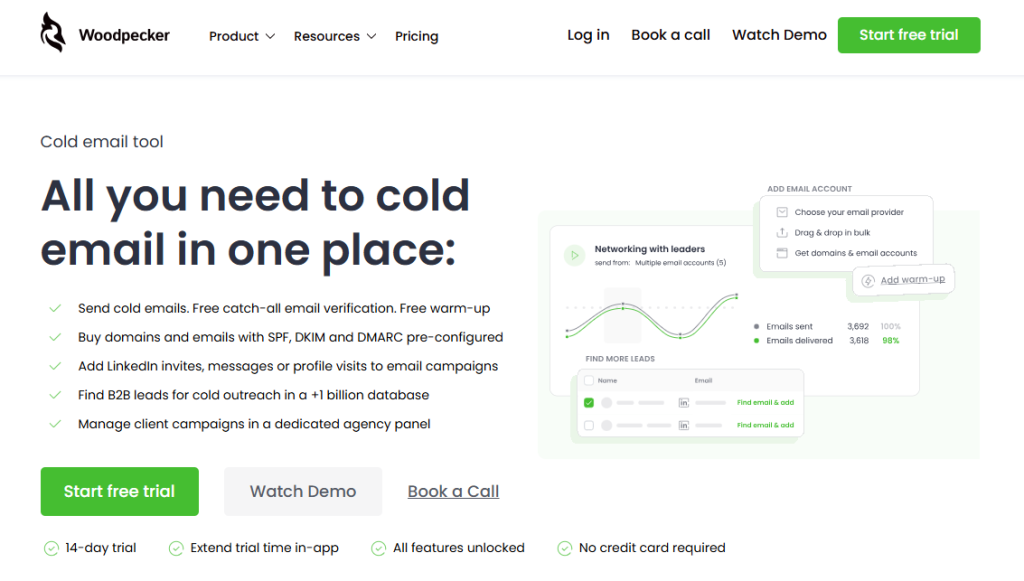
For the teams in the second group above – email-first outbound, small teams, agencies, deliverability-focused operations – a specialized cold email platform is usually a better fit than a full SEP.
Woodpecker is built specifically for this profile.
What Woodpecker covers that overlaps with SEP capabilities:
- Multi-step email sequences with conditional logic (if/then branching)
- LinkedIn integration (profile visits, connection requests, messages as sequence steps)
- Adaptive Sending, Deliverability, Inbox rotation
- Free catch-all email verification, unlimited
- CRM integrations with HubSpot, Pipedrive, Salesforce (bi-directional sync)
- A/B testing, AI-based reply detection, auto-stop on reply
- 1B+ B2B lead database built in
- Agency panel with separate workspaces, white-label reporting, per-client billing
- Free email warmup via partnerships with Warmy and Mailivery
What Woodpecker doesn’t cover that SEPs do:
- Built-in dialer and call recording
- Conversation intelligence on calls
- SMS or WhatsApp outreach
- Pipeline forecasting and deal management
- Enterprise-grade analytics beyond campaign-level reporting
- Dedicated success management (at higher SEP tiers)
For teams that don’t need the pieces in the second list, Woodpecker covers the actual work of outbound at a price point that’s dramatically lower – starting at $29 per month per slot rather than $75–200+ per seat. For a 10-person team running cold email as the primary outbound channel, that’s $3,480–$4,680 per year on Woodpecker versus $15,000–$24,000 per year on an enterprise SEP.
The right question isn’t “Woodpecker or Salesloft?” – they serve different profiles. The right question is “do we actually need a full sales engagement platform, or do we need specialized cold email tooling with good deliverability?” For teams where the answer is the second, Woodpecker is the fit. For teams where the answer is the first, a full SEP is worth what it costs.
Some larger organizations run both: a full SEP for their AE and enterprise sales motion (where phone, conversation intelligence, and multi-threaded deal management matter), and Woodpecker separately for their SDR-driven cold email motion (where deliverability, sequencing depth, and volume economics matter). That pattern – specialized tools for specialized jobs – is increasingly common in 2026.
How to evaluate an SEP quote
If you’re in the market for a full sales engagement platform, four questions save you money.
- What seat count are you actually committing to?
Vendors quote on the seat count you start with, but the contract usually locks you in. If you commit to 30 seats and only onboard 22, you’re paying for 8 unused seats for the duration of the contract. Match the seat count to realistic usage in the first 6 months.
- What’s in the base tier vs. add-ons?
AI features, conversation intelligence, premium integrations – all increasingly sold as separate add-ons. The $125/seat base tier might become $175/seat with the add-ons you actually need. Get the fully-loaded number before comparing vendors.
- What does onboarding cost?
Enterprise SEPs often include non-trivial onboarding and training costs. $5,000–$20,000 for initial setup isn’t unusual. This isn’t always line-itemed in the initial quote. Ask explicitly.
- What’s the renewal increase?
Vendors commonly raise pricing 8–12% at renewal. Multi-year contracts lock in the rate for the term, which is the primary reason multi-year deals are attractive even with the higher upfront commitment.
The build-vs-buy alternative
A small number of teams try to build an internal “poor man’s SEP” from cheaper components – a cold email tool, a separate dialer, a separate LinkedIn browser extension, a Zapier layer between them, and custom reports in the CRM. The appeal is cost: you might run the whole stack for $50/seat/month.
The trade-off is integration. Each tool has its own interface, its own data model, its own learning curve. Reps end up switching between four or five tools daily. Analytics fragment across systems. The time lost to tool-switching often exceeds the dollar savings – which is exactly why SEPs exist as a category.
For email-first teams this calculation looks different. Cold email is already 70%+ of the outreach workload; adding a phone dialer and LinkedIn extension doesn’t dramatically change the rep’s workflow because they weren’t using those channels heavily anyway. A specialized cold email tool covers the dominant channel well, and the other pieces can stay lightweight.
For multi-channel teams at scale, the integration benefit of a full SEP usually wins over the cost savings of a DIY stack.
Building the right cold email motion at SEP-alternative pricing
If you’ve worked through this guide and decided a full SEP isn’t the right fit – or you already have one and need a dedicated tool for cold email specifically – Woodpecker handles the outbound email layer with the deliverability features most SEPs don’t prioritize as deeply. Multi-step sequences with conditional logic, LinkedIn integration, free warmup, Adaptive Sending, Deliverability, free catch-all verification, pre-configured domains with SPF/DKIM/DMARC, and CRM integrations – all at $29–39 per slot per month starting, rather than SEP-level pricing.
For agencies running outbound on behalf of multiple clients, the agency panel with separate workspaces, white-label reporting, and per-client billing is built for exactly that workflow. For solo founders and small teams, the platform scales down in a way enterprise SEPs don’t.
Sign up to Woodpecker and run your first campaign with the deliverability and sequencing that most SEPs add as expensive upgrades.
FAQ
How much does a sales engagement platform cost in 2026?
Sales engagement platforms typically cost between $75 and $200 per seat per month, depending on tier and vendor. Entry-tier platforms like Salesloft Essentials start around $75/seat/month (annual billing). Mid-tier configurations run $125–150/seat/month. Enterprise deployments with full AI features, conversation intelligence, and deep integrations cross $200/seat/month. Minimum seat commitments (10–25 seats) and annual billing are standard.
What’s the difference between a sales engagement platform and a cold email tool?
Sales engagement platforms are generalist tools that cover multi-channel outreach (email, phone, LinkedIn, sometimes SMS), sequencing, analytics, CRM integration, and usually conversation intelligence. Cold email tools specialize in email outbound with deliverability, sequencing, and personalization as the primary focus. SEPs cost $75–200+ per seat; specialized cold email tools cost $29–99 per seat. Teams that use phone and all channels heavily need SEPs; email-first teams usually don’t.
Do I need a sales engagement platform?
Usually only if you meet specific criteria: 10+ reps doing coordinated multi-channel outbound, phone as a load-bearing channel, mature revenue operations, and a CRM workflow that benefits from the platform’s integration depth. Teams with fewer than 10 reps, email-first motions, or agency workflows typically get better ROI from specialized cold email tools.
Is Salesloft worth the price?
For enterprise sales teams running multi-channel outbound at scale, yes – the workflow coordination, conversation intelligence, and CRM integration deliver real productivity gains. For smaller teams or email-first operations, Salesloft is usually overkill; a specialized tool covers the actual work at a fraction of the price.
What’s the cheapest sales engagement platform?
Mid-market platforms like Salesmate and HubSpot Sales Hub Professional start around $50–100/seat/month, depending on tier and seat count. Entry-tier offerings from larger SEP vendors start around $75/seat/month. Below that, you’re typically in the specialized tool category (cold email, LinkedIn, dialer) rather than full SEPs.
How does SEP pricing compare to a specialized cold email tool?
Specialized cold email tools typically cost $29–99 per slot per month – roughly one-third to one-half the cost of entry-tier SEPs, and a fraction of enterprise SEP pricing. The tradeoff: SEPs include phone, analytics, and coaching features that cold email tools don’t. Teams that don’t use those features pay for them anyway when they buy an SEP.
Can I negotiate sales engagement platform pricing?
Yes, usually. Effective levers include: annual or multi-year contracts (20–40% savings over monthly), volume discounts at 25+ seats, bundling with other products from the same vendor, fiscal year-end timing (Q4 for most vendors), and procurement platform negotiation for enterprise contracts. Renewal negotiations are particularly effective because vendors often auto-renew at list price, which is typically above your original contract rate.
What’s included in SEP onboarding fees?
Onboarding typically covers platform configuration, CRM integration setup, user provisioning, sequence templates, initial training sessions, and success manager assignment. Enterprise onboarding packages run $5,000–$20,000 depending on complexity. Smaller deployments may include onboarding in the base contract. Always ask explicitly whether onboarding is included or priced separately.
Are free SEP trials useful?
Most SEP vendors offer free trials (usually 14–30 days), but the feature depth of SEPs makes it hard to evaluate the platform in a short trial window. The trial is best used to test core workflow fit – does the sequence builder work the way your team expects, does the CRM integration sync cleanly – rather than to evaluate advanced features that take weeks to deploy properly.
What’s the ROI on a sales engagement platform?
ROI depends heavily on current workflow inefficiency. Teams moving from manual multi-channel coordination to SEP-driven workflow often see 20–40% rep productivity gains in the first 6 months. Teams already using specialized tools (cold email, standalone dialer, LinkedIn extensions) typically see smaller gains – maybe 10–20% – because the workflow was already partly automated. The Forrester-style ROI studies published by vendors cite 200–300% three-year ROI, but those assume full feature adoption, which most teams don’t achieve.