


The email you send to your college roommate looks nothing like the email you send to a hiring manager at a Fortune 500 company. Both might be asking for the same thing – a favor, a meeting, a yes. The register is completely different, and so is what makes each one work.
Formal email is its own skill. It sits somewhere between old-school business correspondence and modern professional communication, and most people learn it by trial and error, which is a slow way to learn anything. This guide skips the trial part.
You’ll find 18 formal email examples below, grouped by situation: job applications, client communication, internal business requests, senior stakeholder outreach, follow-ups, and apologies. Each one is a template you can adapt, with notes on why it works and what to watch out for.
Before the templates, a quick grounding in what formal email actually is – because getting the structure right is 80% of getting the email right.
What is a formal email?
A formal email is a written message in a professional context that follows established conventions around greeting, structure, tone, and sign-off. It signals to the reader that the sender is taking the interaction seriously, respects the recipient’s time, and understands the norms of business communication.
Formal doesn’t mean stiff. It means deliberate. A good formal email is easier to read than a casual one because the structure is predictable. The reader knows where the ask is, where the context is, and where the next step lives. When you’re writing to people who get 150 emails a day, predictable structure is a gift.
Use a formal email when:
The recipient is someone you don’t know personally, or someone senior to you. You’re contacting a company for the first time – about a job, a partnership, or a service. The subject matter is sensitive: legal, financial, HR, complaint-related. You’re writing on behalf of your organization in an official capacity. The outcome matters enough that you want to leave nothing to accident.
Use a less formal register when:
You know the person well, the subject is routine, and the relationship is already comfortable. Sending “Dear Mr. Chen” to a colleague you talk to every day is more awkward than formal. Read the room.
The structure of a formal email
Every formal email has five parts. Understanding each one helps you write better emails faster, because you stop starting from a blank page.
- Subject line. Specific, informative, no gimmicks. “Meeting request: Q3 budget review” beats “Quick question” every time.
For more on why this matters so much, read our gide about subject line examples.
- Greeting. Matches the formality of the relationship. “Dear Dr. Chen,” “Dear Ms. Rodriguez,” “Dear Hiring Manager.” First-name greetings work when you’ve already established contact; stick with last names plus titles for first outreach.
- Opening line. States your purpose or provides necessary context in one sentence. The worst formal emails bury the point under pleasantries. The best ones get to it fast and respectfully. “I’m writing to request…” or “Following up on our conversation last Tuesday…” are clean, functional openers.
- Body. The substance of the email. Structured so the reader can skim – one idea per paragraph, clear paragraph breaks, any requests or deadlines called out explicitly. Length should match what the situation requires. Don’t pad.
- Closing and sign-off. A clear next step (“I’d appreciate a response by Friday if possible”), followed by a formal sign-off (“Sincerely,” “Best regards,” “Yours faithfully”) and your full name and title.
For the full catalog of closings, how to end a business email is worth bookmarking.
Formal email examples for job applications
1. Initial job application email
Subject: Application for Marketing Coordinator position – Anna Rodriguez
Dear Ms. Patel,
I’m writing to apply for the Marketing Coordinator position posted on your company website on March 15. I’ve attached my resume and a brief cover letter for your review.
I’m particularly interested in this role because of your team’s recent work on the international expansion campaign, which aligns with my experience leading multi-market launches at TechStart Inc. I believe my background in B2B content strategy and marketing automation would be a strong fit for the responsibilities outlined in the posting.
I’d welcome the opportunity to discuss how my experience could contribute to your team. Please let me know if there’s any additional information I can provide.
Thank you for your consideration.
Sincerely, Anna Rodriguez +1 (415) 555-0147 [email protected]
Why this works: Subject line includes both the role and the applicant’s name. The opener states the purpose in one line. The middle paragraph makes a specific connection to the company’s work – which is rare in application emails and gets remembered. The close is polite without being groveling.
2. Follow-up email after an interview
Subject: Thank you – Marketing Coordinator interview
Dear Ms. Patel,
Thank you for the conversation yesterday. I appreciated the chance to learn more about the team’s priorities for the rest of the year, and I’m even more interested in the role after hearing about the upcoming product launch.
Our discussion about the content repositioning project reminded me of a similar initiative I led last year. I’d be glad to share more details about the approach if it would be useful.
Please let me know if you need any further information from me. I look forward to hearing about the next steps.
Best regards, Anna Rodriguez
Why this works: Sent within 24 hours of the interview. References a specific topic from the conversation (showing you were listening and remember it). Offers something useful instead of just saying “thanks.”
3. Withdrawing an application
Subject: Withdrawing my application – Marketing Coordinator
Dear Ms. Patel,
I wanted to let you know that I’m withdrawing my application for the Marketing Coordinator position. I’ve accepted another role that aligns closely with my goals.
Thank you for the time your team invested in the interview process. I was impressed by the work your team is doing, and I’d be glad to stay in touch for future opportunities.
Kind regards, Anna Rodriguez
Why this works: Direct, honest, appreciative. Doesn’t burn the bridge.
Formal email examples for client and external communication
4. Initial outreach to a potential client
Subject: Partnership opportunity with [Their Company]
Dear Mr. Chen,
I’m reaching out because I noticed [Their Company] recently launched its European operations. At my firm, we’ve helped three similar companies navigate the compliance and localization challenges of entering EU markets, and I thought there might be an opportunity to discuss how we could be helpful.
I’d appreciate 20 minutes on your calendar in the next two weeks to explore whether there’s a fit. If useful, I’m happy to send over a brief case study in advance.
Thank you for your time.
Best regards, Michael Ferrera Partner, Horizon Advisory [email protected]
Why this works: Specific observation in the opening (not “I came across your website”). Concrete value proposition tied to an observed event. Modest ask – 20 minutes, not a full meeting.
For more insights, read our article about Cold Email Benchmarks by Campaign Size & Industry: What Makes Cold Emails Effective?
5. Proposal follow-up
Subject: Following up on the Q2 proposal
Dear Mr. Chen,
I’m following up on the proposal my team sent on April 8. I wanted to check in and see if you had any initial questions, or if there’s additional information I can provide to support your internal review.
If helpful, I’m available for a call this week on Wednesday or Thursday afternoon to walk through the details.
Please let me know what works.
Kind regards, Michael Ferrera
Why this works: No “just checking in” (which reads as nagging). Offers a specific next step with specific availability.
6. Declining a client request
Subject: Re: Project timeline request
Dear Ms. Okafor,
Thank you for the detailed brief. After reviewing the scope and the timeline you’ve outlined, I want to be upfront: we can’t commit to the June 15 delivery without compromising on quality in a way I don’t think would serve the project well.
What I can propose: either a phased approach, with the first deliverable by June 15 and the full scope by July 30, or a revised scope that fits the original date. I’ve outlined both options in the attached document.
I’d welcome a short call this week to discuss which path makes more sense.
Best regards, Michael Ferrera
Why this works: Says no without being evasive. Offers two concrete alternatives. Respects the client’s intelligence by naming the actual constraint (quality) rather than hiding behind capacity language.
7. Apologizing for a mistake
Subject: Correction to yesterday’s invoice
Dear Ms. Okafor,
I’m writing to correct an error in the invoice we sent yesterday. The line item for March consulting hours was billed at the incorrect rate. The corrected invoice is attached, reflecting the rate specified in our signed agreement.
I apologize for the oversight. We’ve also reviewed our internal billing process to ensure this doesn’t happen again.
Please let me know if you have any questions.
Sincerely, Michael Ferrera
Why this works: Owns the mistake in one sentence. States the fix. Mentions the preventive action briefly. Doesn’t overexplain.
Formal email examples for internal business communication
8. Meeting request to a senior stakeholder
Subject: Request for 30-min meeting: European market entry proposal
Dear Dr. Nakamura,
I’m writing to request 30 minutes of your time over the next two weeks to discuss a proposal for the European market entry initiative. I’ve been working with the strategy team on the financial modeling and would value your input before we finalize the plan for the board review.
I’d suggest the week of May 5, if that works for your schedule. I can work around your availability.
Thank you in advance.
Best regards, Elena Marchetti Director of Strategy
Why this works: Specific topic, specific time ask, specific reason for wanting this person’s input. Offers flexibility on scheduling rather than proposing a single slot.
9. Requesting approval from a manager
Subject: Approval request: Q3 vendor contract
Dear Mr. Hassan,
I’d like to request your approval for the attached Q3 vendor contract with Datagrid Analytics. Key points:
Contract value: $42,000 for three months. Scope: analytics consulting for the product launch. Start date: June 1, pending approval.
Finance has reviewed the terms and approved the budget allocation. Legal has signed off on the contract language. I’ve attached both approval notes.
Let me know if you have any questions or would like to discuss before signing.
Best regards, Elena Marchetti
Why this works: Summarizes the key decision points so the reader doesn’t have to hunt through an attached document. Shows the prep work is done. Makes approval easy.
10. Escalating an issue
Subject: Escalation: Critical bug in production environment
Dear Mr. Hassan,
I’m writing to escalate a production issue that we haven’t been able to resolve at the team level. As of 9:00 AM this morning, approximately 12% of users are experiencing login failures on the main app.
The engineering team is investigating. Current working theory: an issue with our authentication provider’s API changes from yesterday. ETA to resolution is uncertain until we isolate the root cause.
I wanted to flag this at your level now because of the potential customer impact. I’ll send an update by 1:00 PM with more information.
Best regards, Elena Marchetti
Why this works: States the severity and impact in the first two sentences. Names the working theory and the limit of current knowledge. Commits to a next update. A good escalation email reduces the recipient’s anxiety, not increases it.
11. Responding to a request for information
Subject: Re: Q1 budget variance report
Dear Ms. Lee,
Per your request, the Q1 budget variance report is attached. Three items to flag:
Marketing spend came in 8% over budget due to the unplanned trade show in February. We discussed and approved this overage with Finance in advance – notes are in Appendix A. Software tooling came in 14% under budget due to the delayed rollout of the new CRM. This is a timing issue, not a savings. Headcount was on target.
Let me know if you need further detail on any of the line items.
Best regards, Elena Marchetti
Why this works: Doesn’t make the recipient dig through the attachment to find the highlights. Flags what matters and explains the why briefly.
Formal email examples for senior stakeholder outreach
12. Email to a CEO or executive (external)
Subject: Brief introduction from a fellow [industry] operator
Dear Ms. Park,
I’ve been following your work at Lumen Industries for some time, particularly the piece you wrote last month on supply chain resilience. The point you made about pre-pandemic assumptions was one I’ve been thinking about in my own role at Meridian Logistics.
I’m not writing with an ask – I wanted to introduce myself and say that if there’s ever a reason to connect or compare notes, I’d welcome the chance. My contact information is below.
With respect, David Okoye VP Operations, Meridian Logistics
Why this works: No ask. References something specific the person wrote. Frames the relationship as peer-to-peer. CEOs get a high volume of transactional email; the ones that get remembered are usually the ones that aren’t asking for anything.
13. Request to a professor, researcher, or industry expert
Subject: Research question regarding your 2024 paper on supply chain risk
Dear Professor Schmidt,
I’m reaching out in reference to your 2024 paper on supply chain risk modeling in JAMA Operations. Your framework for second-order supplier dependencies has been useful in my work at Meridian Logistics, and I had a question I hoped you might be willing to discuss.
Specifically, I’m trying to understand how the model handles situations where a second-order supplier is itself a concentrated point of failure. I’ve worked through Sections 3–4 of the paper but believe I’m missing a nuance.
I’d be grateful for 15 minutes by phone or email whenever it’s convenient. I can work around your schedule.
With thanks, David Okoye
Why this works: Shows genuine engagement with the work. Specific question, not a general request for the person’s time. Humble framing about potentially missing something. Modest, concrete ask.
Formal email examples for sales and business development
14. Cold outreach email
Subject: Quick question about your SOC 2 audit process
Dear Ms. Bennett,
I’m writing because I saw your recent LinkedIn post about the complexity of managing your SOC 2 audit across three office locations. My company, Complion, has helped over 200 mid-market SaaS firms automate the evidence-gathering process, and I thought there might be a relevant comparison to discuss.
Would you be open to a 15-minute call in the next two weeks? If useful, I can share a short case study from a company in a similar situation before we speak.
Thank you for your time.
Best regards, Sofia Nakamura [email protected]
Why this works: Opens with a specific observation. Proposes a modest time ask. Offers value (a case study) rather than just asking. This is the register of cold outreach when the stakes are higher or the prospect is more senior.
15. Quote or proposal delivery
Subject: Proposal for compliance automation engagement – Complion x Acme
Dear Ms. Bennett,
Per our conversation last Thursday, please find the attached proposal for our proposed compliance automation engagement.
Summary of scope: 12-week implementation, three integrations (AWS, Okta, Jira), full evidence automation for your Type II audit. Total investment: $48,000, with 50% due at kickoff. Timeline: projected start June 10, audit readiness by September 15.
I’ve also attached references from two similar clients – feel free to reach out to either directly.
I’d welcome the chance to walk through the proposal together. Would Wednesday or Thursday afternoon work for a 30-minute call?
Best regards, Sofia Nakamura
Why this works: Gives the recipient the key terms upfront without requiring them to open the attachment. Offers references proactively. Proposes a specific follow-up action.
Formal email examples for apologies and sensitive situations
16. Apology for a missed deadline
Subject: Apology and revised timeline – Q2 campaign deliverables
Dear Mr. Lindgren,
I’m writing to apologize for missing the April 20 deadline for the Q2 campaign deliverables. The delay was on my side, and I want to be clear about both what happened and how we’ll get back on track.
The root cause was a scope change that came in late and wasn’t escalated. I should have flagged the impact on the timeline as soon as it came up.
Revised plan: all deliverables by April 27. I’ll send a status update on April 23 confirming we’re on track. I’m committed to avoiding a repeat of this.
Thank you for your patience.
Sincerely, Tomás Reyes
Why this works: Takes responsibility without excuse-making. Names the cause. Commits to a specific new plan with a mid-point check-in.
17. Declining a meeting politely
Subject: Re: Meeting request for Thursday
Dear Ms. Ahmadi,
Thank you for the invitation to discuss the Q3 planning process. Unfortunately, I’m not able to make Thursday work, and I’d rather decline than send a less-prepared colleague in my place.
Would the following week work? I’m open Tuesday afternoon or Wednesday morning.
Best regards, Tomás Reyes
Why this works: Explains the decline briefly without overjustifying. Offers alternatives. Respects the recipient’s time.
18. Closing a business relationship
Subject: Ending our service engagement
Dear Mr. Volkov,
After careful consideration, we’ve decided to end our service engagement with Apex Solutions, effective May 31. This decision isn’t a reflection of the quality of your team’s work – it’s a shift in our internal strategy that we’re handling across several vendor relationships.
We’d like to complete a smooth transition. I’m happy to schedule a call to walk through the handover plan and discuss how to transfer ongoing workstreams.
Thank you for the work your team has done over the past two years.
With respect, Tomás Reyes
Why this works: Clear, direct, non-accusatory. Separates the decision from any judgment of performance. Offers a practical next step. This is the register for ending a relationship you want to preserve as goodwill.
Common mistakes to avoid in formal emails
A few patterns show up repeatedly in formal emails that don’t land well.
Overusing “I hope this email finds you well.” It’s become the single clearest marker of an email that wasn’t written for the specific recipient. Skip it entirely. A specific observation or a direct purpose statement serves the same function better.
Softening every sentence with qualifiers. “I was just wondering if maybe you might possibly have a moment…” undermines the email. Formal doesn’t mean timid. Direct statements, politely framed, are far more effective.
Unclear subject lines. “Quick question” tells the reader nothing. “Question about the Q3 invoice – line item 4” tells them exactly what the email is about and whether it’s urgent.
Writing too long. Formal register invites overwriting. If you can say it in three paragraphs, don’t use five. The best formal emails are the shortest ones that still communicate fully.
Using “circle back,” “touch base,” “loop in.” Business jargon rarely adds clarity in formal email. Say what you mean.
Formal email greetings and sign-offs: quick reference
The greeting and sign-off you choose tells the reader how formal the interaction is. Matching them correctly is part of the register.
For a first-contact formal email: “Dear Mr./Ms./Dr. [Last Name]” paired with “Sincerely” or “Yours faithfully” (used when you don’t know the person’s name or it’s highly formal).
For an established professional relationship: “Dear [First Name]” or “Hello [First Name]” paired with “Best regards” or “Kind regards”.
For internal business email: “Hi [First Name]” paired with “Best” or “Thanks” – still formal enough for work contexts but not stiff.
For apologies or sensitive situations: the register goes up one notch from where it usually sits. If you’d normally use “Hi,” use “Dear” in a serious message.
When formal email becomes a volume problem
The examples above work one at a time. The problem most professionals actually face isn’t writing a single formal email – it’s writing dozens of them a week, many of them following a similar pattern, and losing time to the repetition.
This is especially true for sales, business development, recruitment, and account management – roles where the same kinds of formal emails (initial outreach, proposal follow-up, meeting request) go out constantly. Writing each one from scratch is slow, and using a generic template makes every email feel like a template.
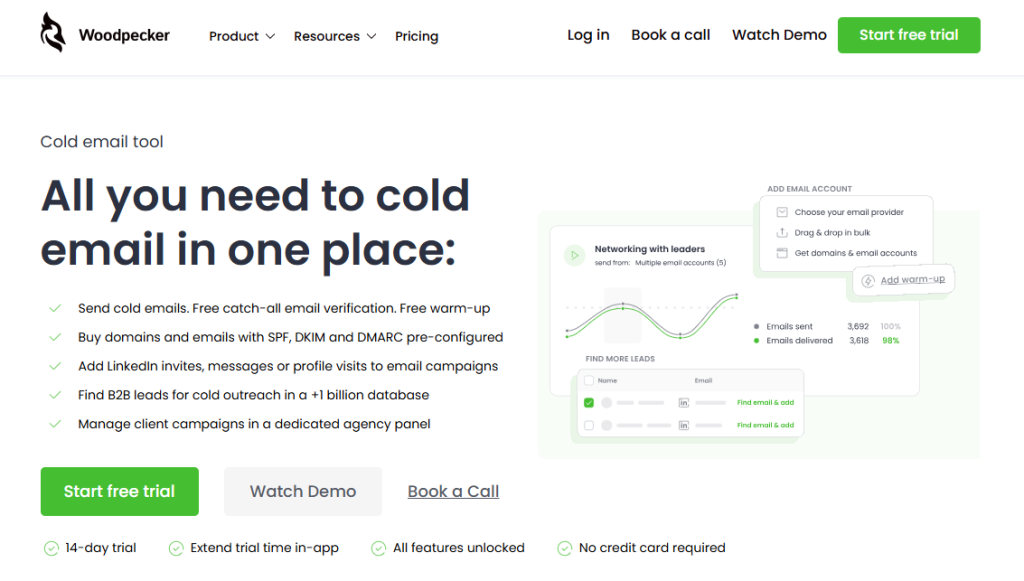
Woodpecker is built for this: sequences of formal and semi-formal emails that feel personal at scale. Merge fields that pull real information, not just first names. Automatic stops when someone replies. Deliverability protection so your emails actually arrive. Whether you’re running formal cold outreach, nurturing client relationships, or sending a hundred structured follow-ups a week, the platform handles the repetition so you can focus on the content.
If your work involves formal email at volume, sign up for Woodpecker and run your first sequence. The time you save on the mechanics adds up fast.
FAQ
What is a formal email example?
A formal email is a written professional message that follows conventional business structure: a specific subject line, a formal greeting (“Dear Ms. Chen”), a clear opening stating the purpose, a structured body, a polite close, and a formal sign-off (“Best regards” or “Sincerely”). Example situations: job applications, client outreach, requests to senior stakeholders, apologies, proposals, and sensitive communications.
What are the 5 parts of a formal email?
The five standard parts are: (1) subject line, (2) greeting, (3) opening line stating purpose, (4) body with the substance of the message, and (5) closing and sign-off. Some guides add a sixth – the signature block with your name, title, and contact details.
How do I start a formal email?
Start with a formal greeting that matches your relationship with the recipient (“Dear Mr./Ms./Dr. [Last Name]” for first contact, “Dear [First Name]” for established contacts). Follow with a one-sentence opener that states your purpose directly: “I’m writing to request…” or “Following up on our conversation…” – avoid filler like “I hope this email finds you well.”
How do I end a formal email?
End with a clear next step or thank-you sentence, followed by a formal sign-off and your full signature. Common formal sign-offs: “Sincerely,” “Best regards,” “Kind regards,” “With respect,” “Yours faithfully.” Match the sign-off to the level of formality in your greeting.
What’s the difference between a formal and a professional email?
Professional email is a broader category that includes both formal and semi-formal communication. Formal email specifically follows stricter conventions – titled greetings, conservative sign-offs, more structured body. Most day-to-day work email is professional but not fully formal. Formal email is reserved for first-contact, senior stakeholders, sensitive topics, or official correspondence.
Can I use “Hi” in a formal email?
Usually not in first contact or with senior external stakeholders. “Hi” reads as friendly-professional rather than formal. Use “Dear” for first contact with someone senior or outside your organization. Once a relationship is established and both parties use first names, “Hello [First Name]” or even “Hi [First Name]” is typically fine.
How long should a formal email be?
As short as it can be while communicating fully. Most formal emails land between 100 and 250 words. Job application emails and proposal follow-ups can go longer. Internal business emails should aim for under 150. If your formal email is over 400 words, ask whether a phone call or a meeting would be more effective.
Is it okay to follow up on a formal email if I don’t get a reply?
Yes – in fact, most replies in business contexts come from follow-ups, not first emails. Send a follow-up 3–5 business days after the original. Keep it short and reference the original. Avoid “just checking in” – add something useful or restate the ask clearly. Two to three follow-ups is the typical comfortable range before letting the thread rest.