


Cold emailing has grown from a quick tactic to a strategic craft. In 2026 the landscape is filled with email outreach tools that promise miracles. Teams now manage follow‑up tasks, track deliverability and build sequences that read like conversations.
The question on every sender’s mind: which platform, Saleshandy or Instantly, will put your outreach into orbit?
At first glance both names conjure opposite feelings. One seems handy and methodical; the other implies light speed and urgency. The stakes are high.
Hidden behind every cold email outreach is the risk of landing in the spam folder, the need to maintain sender reputation, and the desire to balance volume with personalization.
This article looks into the Saleshandy vs Instantly debate, weaving in dozens of features and key features you might not have considered.
The changing face of outreach
Back when email was new, marketers could send a few hundred messages and hope for a reply. Today’s campaigns are engineering projects.
Tools integrate with CRMs, run cold outreach on autopilot, and even connect with LinkedIn. A modern team wants a unified inbox to monitor conversations, detailed analytics to track response patterns and campaign management to orchestrate sequences across multiple channels.
On top of that there’s the art of personalization, from merge tags to spintax, and the science of deliverability features such as inbox rotation and warm up features that slowly nurture new domains.
The crowded market leaves buyers confused. Some tools come with a free plan, others promise a 7 day free trial. Pricing ranges from entry‑level basic plan tiers to premium packages. Teams must decide whether to pay per user, per email accounts or per campaign. And as AI enters the scene, platforms boast ai capabilities like auto‑generated icebreakers.
Let’s see how Saleshandy and Instantly stack up.
Saleshandy: personalization and structure
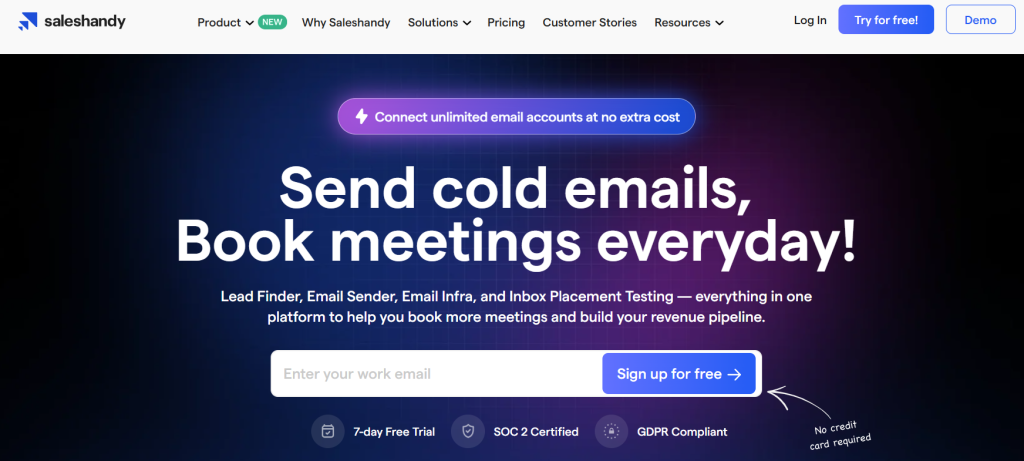
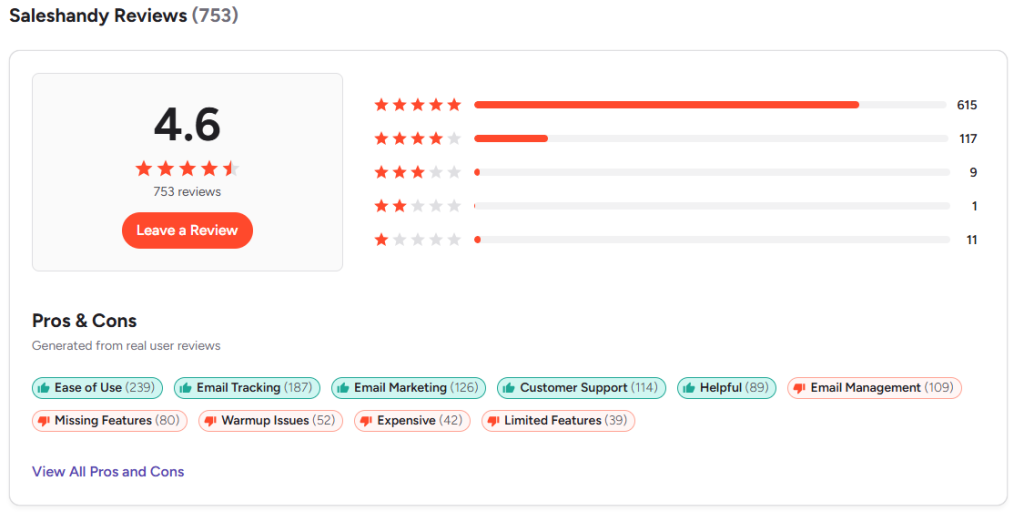
Saleshandy (founded 2016) built its reputation on customization and deliverability. It offers real‑time tracking, a unified inbox and collaboration with unlimited team members even on lower plans. That means you can invite colleagues, assign tasks and manage outreach from a single dashboard without paying extra for more seats. The unified inbox is tidy: it aggregates all conversations into a primary inbox so you’re not jumping across windows.
When it comes to campaign management, Saleshandy stands out for its sequence logic.
It supports AI‑assisted sequence generation and multi‑step conditional flows. This ensures follow‑ups go only to contacts who haven’t replied, while prospects who open or click get different messaging.
Saleshandy’s automated follow ups adjust to each prospect’s behavior, leaving no one behind. If you like building complex outreach flows, the campaign builder will be your playground. You can add steps across email and LinkedIn, set up triggers, and watch your cold email campaigns run like clockwork.
- Personalization is where Saleshandy really shines.
You can use merge tags, dynamic fields like the current date and spintax to personalize messages. Unlike Instantly, you don’t need to upload a CSV to handle custom fields – it’s built into the editor. Want to personalize messages by referencing a prospect’s recent blog post? Saleshandy makes it easy to embed this data. Their advanced personalization also extends to AI features that help with subject lines and call‑to‑action suggestions, although those may require a higher tier.
- Deliverability is another core competency.
Saleshandy not only nurtures mailboxes but includes spam‑trigger detection and an “Inbox Radar” for monitoring deliverability. Unlimited warm‑up on all plans means every mailbox you add receives an automatic warm‑up period. The tool includes inbox rotation, so it can rotate sending from multiple email accounts to spread volume evenly and keep your sender score intact. Saleshandy provides verification capabilities with free email validation credits, proactively weeding out invalid addresses. It even offers email warm up features that simulate natural conversations to build trust with mailbox providers. These deliverability tools come baked into the lowest tier, unlike some competitors that hide them behind premium plans.
- When it comes to connections, Saleshandy lets you connect unlimited email accounts, and its pricing is transparent.
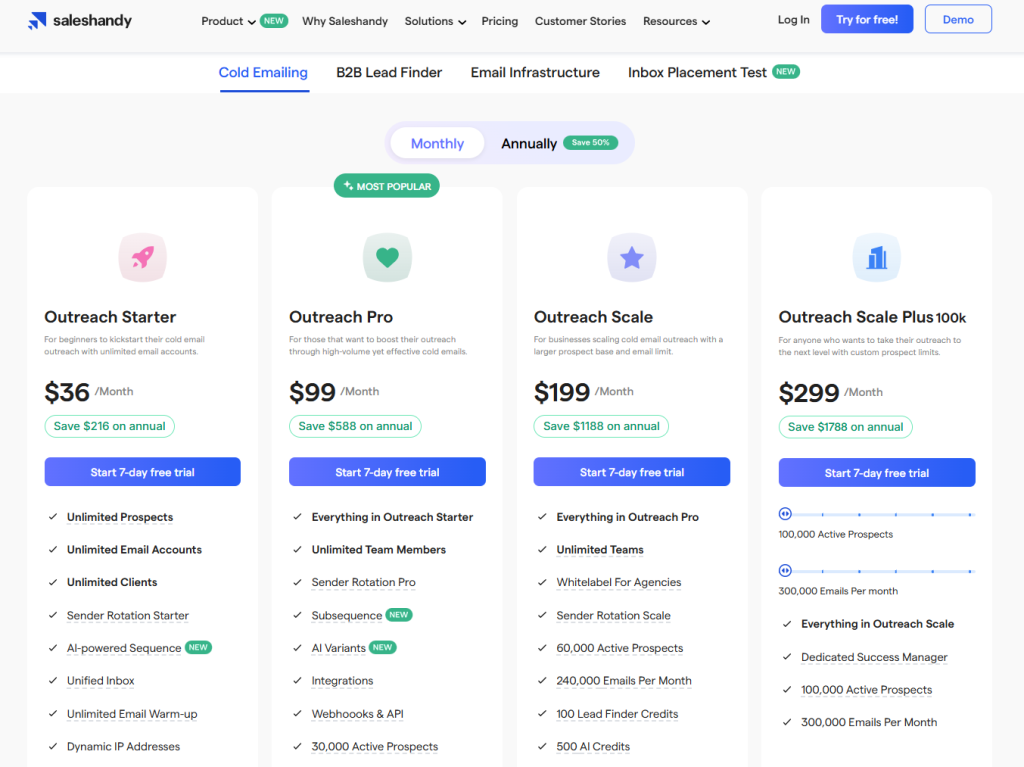
The Outreach Starter plan costs roughly $36 per month per user (or about $25 if billed annually), enabling 6,000 emails per month. Higher tiers like Pro and Scale increase sending limits and bring advanced automation features, team sub‑accounts and CRM sync. There’s also a Scale Plus for agencies with large volumes. Saleshandy does not charge per connected mailbox; you can add unlimited mailboxes at no extra charge – a big deal for startups with many domains to manage. For agencies, there’s support for unlimited clients, so you can handle dozens of brands under one roof without worrying about seat pricing.
- Saleshandy integrates with CRM solutions and Zapier.
These native integrations mean you can sync leads with HubSpot, Salesforce or Pipedrive, update statuses automatically, or trigger tasks in other apps. With native CRM integrations and simple API connections, the platform plays nicely with the rest of your stack. If you need API access for deeper customization or data export, Saleshandy offers it through its developer portal. A dedicated onboarding specialist – in essence a dedicated success manager – is available on higher plans to guide you through deliverability best practices.
Instantly: scale and speed
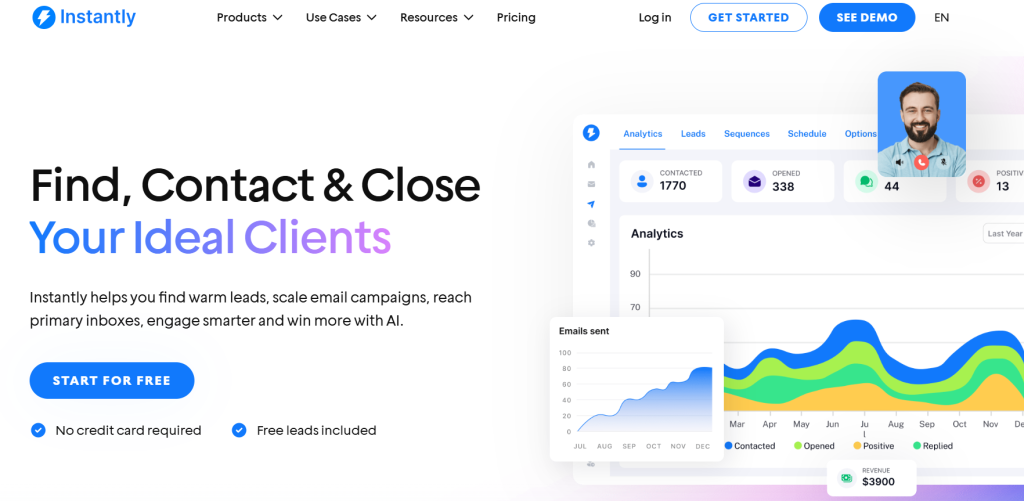
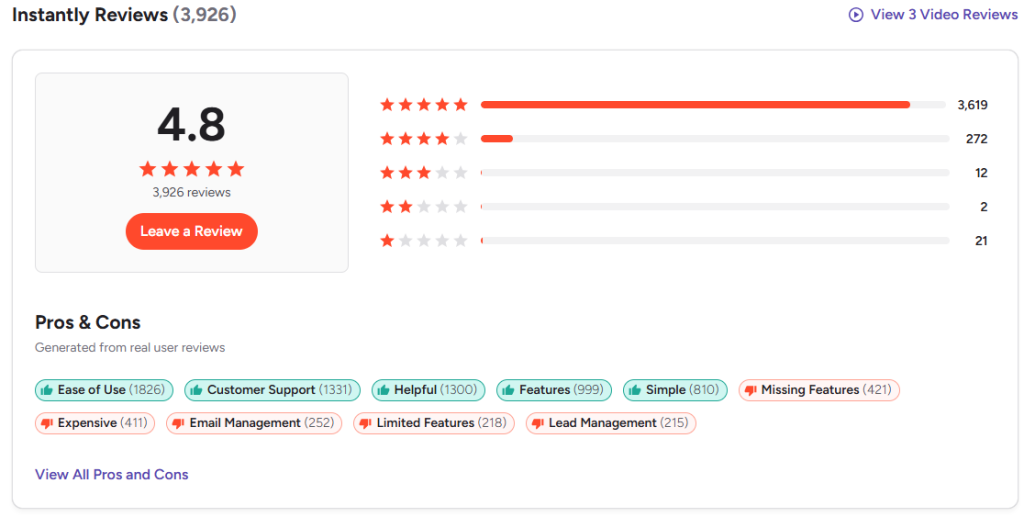
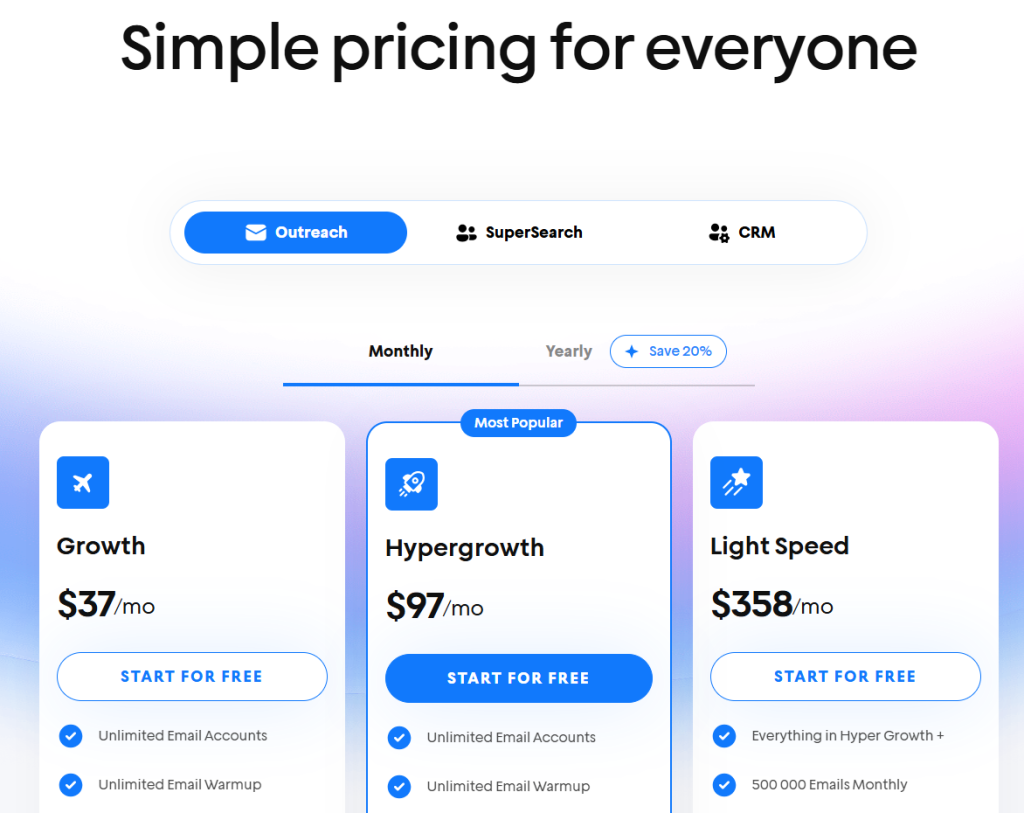
Instantly (founded 2021) has captured attention by removing limits. Its main appeal lies in unlimited email accounts per plan and automatic email warm‑up. The Growth plan at $37 per month includes unlimited senders and up to 5,000 emails per month. Upgrading to Hypergrowth lifts the cap to 100k emails monthly, and the premium Light Speed plan lives up to its name by unlocking nearly boundless sending capacity. If you’re among the high volume senders, Instantly’s promise of outreach scale is attractive.
- But scale is not just about numbers. Instantly’s user friendly interface focuses on speed and ease of use.
Their tagline could read: “Up and running in minutes,” echoing user reviews that praise its intuitive user interface. Beginners can import a list, select a template, and fire away. There’s also a built‑in leads module with about 450 million contacts. You can search by industry or job title, filter results and export directly into campaigns. This built‑in lead generation is convenient but note that the accuracy has drawn critiques for lower precision.
- Instantly’s AI promises glimpses of the future.
It offers auto‑generated icebreakers and subject lines, though these AI features are reserved for higher tiers. On the deliverability side, Instantly includes a warm‑up system that automatically engages with peers to nurture your domain. However, crucial deliverability analytics like spam checker scores are only available in the top tier. Some users report inconsistent deliverability performance. That means you might need to watch open rates manually or use third‑party tools to see if your messages hit the inbox or vanish into junk. Instantly does include unlimited email warm up across plans, but advanced analytics require an upgrade.
- Pricing is simpler but reveals a trade‑off.
Instantly markets a basic plan with a flat fee regardless of the number of users. The free plan is minimal; you get a taste but must upgrade quickly to sustain campaigns. Growth ($37/mo) is comparable to Saleshandy’s starter but includes unlimited mailboxes and 5,000 monthly sends. Hypergrowth ($97/mo) raises the send limit to 100k emails, and the Light Speed tier at $358 per month appeals to agencies needing to blast hundreds of thousands of messages. However, advanced capabilities like A/B testing, advanced AI and team management require more expensive tiers. Some features are sold separately – inbox placement tests and extra AI credits involve hidden costs. This lack of transparency has drawn criticism.
- Instantly focuses solely on email.
It lacks LinkedIn automation and therefore cannot help with LinkedIn outreach. If you want a cohesive outreach strategy that mixes channels, you’ll need to pair Instantly with another platform. The absence of social automation means you may juggle multiple tools, maintain separate lists and risk duplicate sends. Instantly’s CRM connectors are still a work in progress – “CRM plans” begin at around $47 per month and are considered add‑ons.
- For agencies, Instantly does offer unlimited seats, but granular users report features are minimal.
Support is known to be responsive only to higher‑tier customers. If you need robust analytics per sender or per client, you might end up exporting data manually.
Deliverability face‑off
Saleshandy’s deliverability suite includes a warm‑up network, spam‑trigger detection and an “Inbox Radar” for monitoring performance. You get unlimited warm up on all plans, plus email warm up features that simulate natural conversations to build trust. The platform rotates through multiple email accounts using inbox rotation, which helps keep each domain’s send volume low and steady. It also gives free email credits for verification and supports email verification built‑in.
Instantly also warms up emails and uses a network across its user base to generate engagement. However, advanced deliverability analytics (AI spam checker, deliverability score) live only in top plans. A number of users report mixed results with deliverability performance. If deliverability is your top concern, you may need to budget for the premium tier or supplement with third‑party services. Instantly’s deliverability tools help maintain sender reputation, but the lack of strong deliverability features on lower tiers remains a drawback.
Check this out: Email Deliverability Ebook
Personalization and AI
Good copy alone seldom moves the needle – it’s the personal touches that convert.
Saleshandy’s personalization engine is robust. You can insert custom text through merge tags, dynamic fields and spintax right in the editor. The tool even accommodates conditional logic so follow‑ups adjust to the recipient’s behavior. This advanced features suite ensures messages feel authentic rather than mass‑blasted.
Instantly’s personalization options are more basic. It supports merge tags, but customizing fields requires uploading a CSV with predetermined columns. Its AI icebreaker generator is interesting but only appears on the Hypergrowth tier. For quick campaigns, you might accept these constraints. However, if you plan to nurture deals over time, you may miss deeper segmentation and dynamic variables.
AI is the wild card. Both platforms integrate AI for content suggestions and performance analysis. Instantly markets AI capabilities heavily, promising AI‑based lead search and automated icebreakers, but some users have noted inaccurate contact data. Saleshandy’s AI quietly aids sequence design and subject line suggestions.
In the long run, AI will evolve, but as of 2026, the difference lies more in marketing than actual execution.
Plans and pricing: Instantly vs Saleshandy
Pricing comparisons often become a math puzzle. Let’s break it down for clarity.
Saleshandy has tiered plans. Outreach Starter is roughly $36 per user monthly (or about $25 if billed annually) for 6,000 emails per month. This base level includes advanced automation and nearly all deliverability checks. Pro ($99/mo) and Scale ($199/mo) raise send limits and add features such as multi‑channel sequencing, account‑based flows and a campaign builder. There’s also a Scale Plus package for agencies with monstrous sending volumes. Saleshandy does not charge per connected mailbox; you can add unlimited addresses, and you can invite as many users as you need. For agencies, this unlimited seat model means you can assign sequences to different reps without spiralling costs. Saleshandy’s pricing has no hidden fees and unused lead credits roll over.
Instantly sets pricing differently. Growth ($37/mo) is comparable to Saleshandy’s starter but includes unlimited senders and 5,000 monthly sends. Hypergrowth ($97/mo) allows 100k sends, and the Light Speed tier ($358/mo) covers hundreds of thousands. Instantly charges one flat fee regardless of the number of users, which can be cost‑effective for agencies. However, advanced features like A/B testing, AI personalization and email deliverability tools require the $77–$100/mo tier. Some add‑ons, such as inbox placement tests, extra AI credits or the leads database, cost extra. The base package appeals to those who want simplicity and aren’t bothered by hidden extras.
To decide between them, think about your team structure. Do you have multiple teammates? Saleshandy charges per user but not per mailbox. Instantly charges per account but not per user. The cost difference will hinge on whether you prioritize collaboration or unlimited sending capacity. Also consider whether you need advanced features like conditional logic or you simply want to push large numbers of cold emails.
Beyond email: LinkedIn and multichannel outreach
Modern prospecting isn’t limited to email. LinkedIn messages, profile views and connection invites form part of a successful funnel.
Here, Saleshandy edges ahead by offering multi‑channel sequencing on higher tiers. It syncs with LinkedIn to schedule connection requests, messages and subsequent touches, making it a LinkedIn outreach powerhouse. You can design a sequence that starts with a connection invite, waits a day, then sends a warm email, followed by a social nudge if the prospect engages.
Instantly, on the other hand, lacks Linkedin Automation. It focuses solely on email, so if your outreach vision includes social touchpoints, you’ll need another platform. Many agencies pair Instantly with specialized software for LinkedIn. But juggling multiple tools can be tiring. You must maintain separate lists, handle duplicate detection and pay multiple subscriptions. If your strategy is purely email, the absence of social automation might not matter. But those who value multi‑channel contact should weigh this limitation.
Workflow and team management
On the human side, how do these tools support team management?
Saleshandy excels with user roles and unlimited members. You can assign sequences to colleagues, share templates and manage permission levels. A built‑in users report shows who’s sending what and how each sequence performs. You can run multiple client campaigns simultaneously and see analytics per account. Saleshandy gives agencies room to scale and even offers features like team management dashboards where you can view performance, allocate quotas and keep everyone aligned.
Instantly is leaner. It markets itself toward agencies, promising unlimited senders. However, detailed team analytics are minimal. If you manage several brands or want granular stats by user, you might find yourself exporting data into spreadsheets. Instantly’s support is known to be responsive only to higher‑tier customers.
Woodpecker: a hidden champion
Now for the twist: what if there’s a third option that blends the strengths of both platforms?
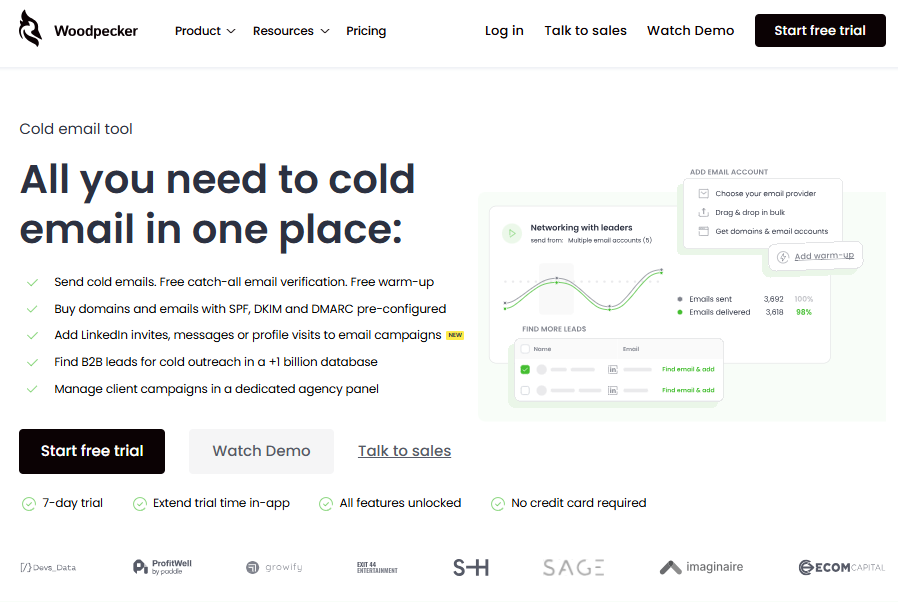
Woodpecker has all you need to cold email in one place. It has been in the market since 2015 and prides itself on high deliverability and scalability. Let’s explore why Woodpecker might be a smarter choice.
First, Woodpecker offers free and unlimited email address verification. Catch‑all validation comes at no extra cost and is powered by the reputable Bouncer service. This saves money because third‑party verification services can cost hundreds monthly. It also offers warm‑up for free up to a generous threshold, using Mailivery behind the scenes. Additional warm‑ups are available as an add‑on, but many customers report that the included quota suffices for typical campaigns.
Second, Woodpecker has its own B2B lead database boasting over one billion contacts. Connected to People Data Labs, Prospeo, Datagma and more, this lead finder reduces the need for separate services. You can search for qualified prospects, verify them automatically and feed them into sequences. And because the data comes from multiple sources, you get a broad range of industries and geographies.
Third, Woodpecker gives you the infrastructure to manage domains and accounts. You can run your cold outreach on your private dedicated server or use a shared server with rotating IPs. If you don’t want to fuss with DNS settings, you can purchase Google or Microsoft domains directly. Each domain and email is preconfigured with SPF, DKIM and DMARC. You then connect these addresses to Woodpecker instantly – no pun intended – and start sending. This eliminates the headache of domain setup and reduces time‑to‑first email for non‑technical users.
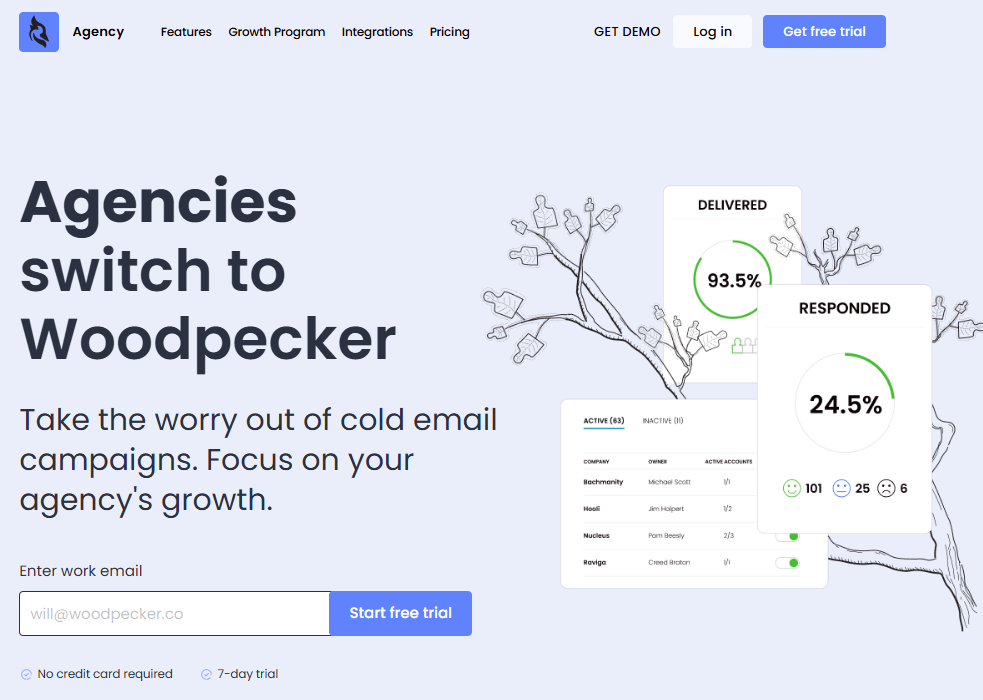
Fourth, Woodpecker caters to agencies with a separate management panel. Here you can perform bulk campaign actions like stop, pause or start across all clients. You can upload multiple mailboxes, maintain a global blacklist and manage separate prospect databases. The tool can handle up to 60 million emails a month without slowing down. There’s also account‑based selling and multi‑language email organization, plus granular analytics for each client. Agencies appreciate features like clients connecting mailboxes without sharing passwords and centralized billing.
Fifth, Woodpecker’s pricing is refreshing. It doesn’t charge per user – you can invite as many team members as you want. It also doesn’t charge per connected mailbox. The feature set is identical across plans; the only differences are consumption limits and dedicated account managers. This transparent model means you don’t need to guess which tier has a feature you need. Pricing includes a built‑in calculator for optional add‑ons, and LinkedIn slots are sold at $29 per month – about half the price of specialized email only platforms. The trial is generous: seven days or contact 50 prospects, whichever comes first.
Finally, Woodpecker is evolving into a multichannel outreach tool. It supports LinkedIn actions like profile views, invites and messages, so you can build outreach campaigns that cross channels. In fact, the company may soon change its positioning from “cold email tool” to “multichannel outreach tool,” as stated in the roadmap. You can run a cohesive outreach strategy mixing email and LinkedIn steps, maintain consistent messaging and measure results in one dashboard. For teams seeking to orchestrate email and LinkedIn outreach without juggling separate providers, Woodpecker’s unified approach is appealing.

Choosing the right tool
So which platform wins? The answer depends on your priorities:
- For high volume senders who want unlimited senders and simple setups, Instantly’s flat pricing and scale may be tempting. You get outreach scale quickly and can blast thousands of cold emails daily. The trade‑off is minimal personalization and extra costs for deliverability metrics.
- For teams craving personalization and strong deliverability features, Saleshandy’s sequence builder and built‑in checks are compelling. It supports advanced features such as conditional flows, multi‑channel steps and AI suggestions. The transparent pricing and generous warm up resources ease anxiety about hidden charges.
- For agencies or businesses seeking an all‑in‑one solution, Woodpecker emerges as a robust alternative. It bundles free verification, warm‑up, lead sourcing, domain management and LinkedIn automation. With unlimited users and mailboxes, it reduces cost complexity. Its outreach platform with native integrations and agency dashboard makes scaling simpler.
When evaluating, ask yourself:
- Do you need multiple email accounts for each rep?
- Will you run multiple client campaigns simultaneously?
- Do you value deep personalization, or do you simply need to push large numbers of messages?
- Are you sending purely by email, or is LinkedIn part of your funnel?
- How important is having a dedicated success manager to guide you?
Once you know the answers, the choice becomes clearer.
The email outreach tools verdict
Cold email in 2026 is no longer about pushing harder. It’s about choosing the right engine.
Saleshandy leans toward careful personalization and inbox control. Instantly races ahead with scale and speed. Both can work, but neither tells the full story.
That’s where Woodpecker steps in. It brings email, LinkedIn, warm-up, verification, and infrastructure into one focused outreach platform, built for teams that want consistency without chaos.
Think of it this way: Saleshandy is a Swiss army knife, Instantly is a rocket, and Woodpecker is a full workshop.
If you want outreach that stays steady, clean, and ready to grow long term, Woodpecker is worth a serious look. Start with the fee trial, run real campaigns, and let replies decide.