


Most B2B teams don’t actually do cross-channel lead generation. They do single-channel lead generation three times and call it a strategy.
Email goes to one list. LinkedIn outreach goes to a different list. Cold calls happen when someone feels like it. The campaigns don’t talk to each other, the data lives in separate spreadsheets, and when a prospect replies on LinkedIn a week after getting three emails, nobody connects the two.
Real cross-channel lead generation is different. It’s one coordinated sequence where each channel does a specific job, reinforces the others, and hands off cleanly when the prospect responds. Done right, it can lift reply rates by 2–3x compared to running the same channels in isolation. Done wrong, it just creates more noise in more places.
This guide covers what cross-channel lead generation actually is, why it outperforms single-channel approaches, how to decide which channels fit your situation, and a 30-day playbook you can run next month.
What is cross-channel lead generation?
Cross-channel lead generation is a coordinated outreach strategy where multiple touchpoints – email, LinkedIn, phone, content, events, direct mail – work together to move prospects toward a conversation. The channels are sequenced deliberately: one reinforces the next, the data flows between them, and the prospect’s experience feels intentional rather than random.
The defining word is coordinated. Running cold email, LinkedIn messages, and phone calls in parallel isn’t cross-channel – it’s multi-channel noise. What makes it cross-channel is the sequencing logic: the LinkedIn view warms up the email open, the email references the LinkedIn context, the call follows up on both.
Cross-channel vs. multichannel vs. omnichannel
These terms get used interchangeably. They’re not the same.
Multichannel means using more than one channel. It says nothing about coordination. A company running Facebook ads and email newsletters is doing multichannel marketing – even if the two efforts never reference each other.
Cross-channel means channels actively reinforce each other. A LinkedIn connection request references a blog post the prospect wrote. The follow-up email references the LinkedIn interaction. The phone call references the email. Each touchpoint builds on the previous one.
Omnichannel goes further: every interaction across every channel is unified into one continuous customer experience, typically via shared data infrastructure. Omnichannel is more common in B2C retail than in B2B sales. Most B2B teams are better served aiming for solid cross-channel execution than attempting true omnichannel from day one.
Why single-channel outreach is losing effectiveness
Cold email still works. So does cold calling. So does LinkedIn. None of them work as well in isolation as they did five years ago – and the reason is structural, not tactical.
Inboxes are more crowded. LinkedIn is overrun with generic connection requests. Phone numbers go to voicemail. Each channel individually has more noise, more competition, and lower response rates than it used to.
The teams that have adapted did one of two things: they got dramatically better at a single channel (world-class cold email, for example, still converts well), or they started running channels in coordination, so each touchpoint compensates for the weakness of the others. The second path is more accessible for most teams.
The logic works like this. A cold email on its own has a reply rate of 3–5% for well-targeted outbound. Add a LinkedIn touch before the email – your face visible in the inbox when the email arrives – and reply rates jump meaningfully. Add a phone touch between emails for the highest-priority prospects, and the pipeline compounds. None of these channels got better. But the combined sequence outperforms any of them alone.
Which channels fit your situation: Quiz
Before the playbook, a practical question: which channels should your team actually invest in? Not every cross-channel strategy includes every channel, and the right mix depends on your market, your deal size, and your team’s capacity.
📋 Channel selection quiz
Instructions:
Answer each question by choosing one option (A–D).
At the end, count your answers and match your result.
1. What’s your average deal size?
- A) Under $5,000
B) $5,000 – $50,000
C) $50,000 – $250,000
D) Above $250,000
2. How long is your typical sales cycle?
- A) Days to 2 weeks
B) 2–6 weeks
C) 6 weeks to 3 months
D) 3+ months
3. How many stakeholders are typically involved in the buying decision?
- A) One
B) 2–3
C) 4–6
D) 7+
4. How defined is your target account list?
- A) Broad – any company fitting a loose ICP
B) Specific industries and company sizes
C) A named list of 100–500 target accounts
D) A tight list of 20–100 strategic accounts
5. What’s your team size?
- A) Solo or 1–2 people
B) 3–10 in sales/marketing
C) 10–30
D) 30+
Your result
Count which letter appears most often:
🔹 Mostly A
Email-dominant with light LinkedIn
Low ACV and short cycles mean you need volume.
Cold email should be your primary channel.
Use LinkedIn as a light secondary touch.
Skip phone and paid channels until the economics make sense.
🔹 Mostly B
Email + LinkedIn (coordinated)
This is the sweet spot for multi-channel outbound.
Email does the heavy lifting, while LinkedIn builds visibility and trust.
Run both channels in sequence.
Use phone for warm follow-ups only.
🔹 Mostly C
Email + LinkedIn + phone, with a content layer
Longer cycles and more stakeholders require multiple touchpoints.
All three outbound channels should work together.
Content (LinkedIn posts, case studies) helps warm accounts over time.
🔹 Mostly D
Full account-based motion (ABM)
High deal size justifies deeper investment per account.
Use email, LinkedIn, phone, events, direct mail, and executive outreach.
Go multi-threaded across the buying committee.
This requires a serious resource commitment.
Mixed answers?
Start with the channels your most common answer points to, then expand.
You don’t need to run everything at once.
The 5 core channels in B2B cross-channel lead generation
Each of these channels does a specific job. Understanding what each one is best at – and what it’s bad at – is how you sequence them intelligently.
1. Cold email
The workhorse of B2B outbound. Scales efficiently, relatively cheap, asynchronous (prospects respond when it’s convenient for them), and easy to measure. Cold email is the backbone of most cross-channel strategies because it can carry significant volume without breaking the economics.
What it’s good at: Reaching prospects who aren’t actively searching, delivering a thoughtful pitch at their own pace, building a paper trail of context that follow-ups can reference.
What it’s bad at: Breaking through the noise on its own. A generic cold email is easy to ignore. Needs the credibility layer that other channels provide.
Make cold email work with our simple guides:
2. LinkedIn
The highest-value warming channel in B2B outbound. Viewing a profile, engaging with a post, or sending a connection request creates visibility – so when the email arrives, the prospect recognizes the sender. It’s not magic, but it moves the needle.
What it’s good at: Credibility, warming up cold prospects, giving the email something to reference (“saw your post about X”), surfacing common connections or background.
What it’s bad at: Direct conversion. Pure LinkedIn sequences have lower response rates than email. LinkedIn works best as a reinforcement layer, not a primary channel.
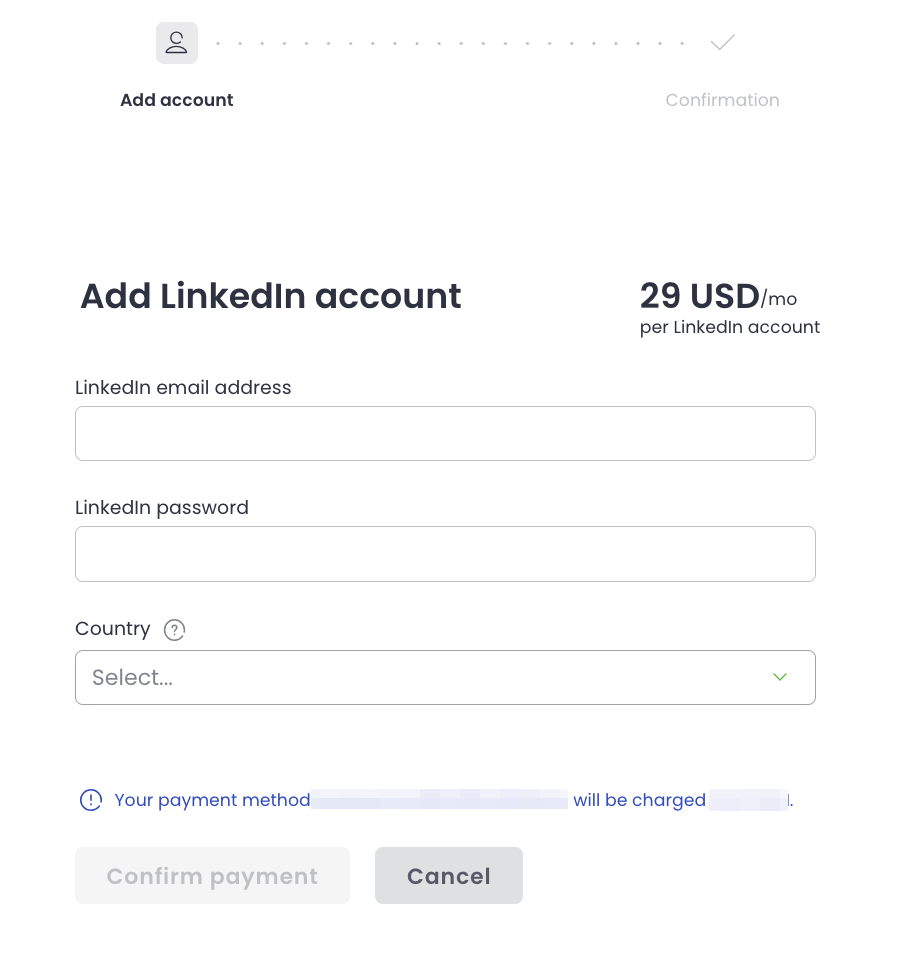
Automated LinkedIn outreach in Woodpecker handles the job properly.
3. Phone
Underused in 2026. Most SDRs have quietly abandoned the phone because “nobody answers anymore.” That’s partially true. But for high-intent prospects – ones who’ve already engaged with email or LinkedIn – the phone has higher conversion rates than any other channel. Because almost nobody else is calling, the ones who do break through.
What it’s good at: Mid-funnel prospects showing signals of interest. Complex deals where a real conversation moves things faster than a dozen emails. High-value accounts where one connected call is worth 50 unanswered ones.
What it’s bad at: Cold-cold outreach at volume. Calling people who’ve had zero prior touchpoints is wildly inefficient compared to calling warm prospects. Use phone as a reinforcement channel, not the first touch.
4. Content / thought leadership
The slowest channel to produce results, but the one that compounds fastest over time. Content doesn’t convert directly – it conditions. Prospects who’ve read your CEO’s LinkedIn posts for six months before getting a cold email are a fundamentally different conversion population than prospects starting from zero.
What it’s good at: Building ambient credibility, surfacing inbound interest from warm prospects, giving your cold outreach something to reference (“you may have seen our recent research on…”).
What it’s bad at: Producing immediate pipeline. If your team needs meetings booked this month, content is not the lever. But if you want lead gen to get cheaper and easier over a 12-month horizon, it’s non-negotiable.
5. Events and community
In-person events, industry webinars, podcast appearances, and active participation in niche communities. Higher cost per interaction than email, but much higher trust and conversion per interaction.
What it’s good at: Top-of-funnel brand building, reaching buyers who’ve opted out of other channels, creating reference points for cold outreach (“met briefly at X conference”).
What it’s bad at: Scaling efficiently. Events are resource-intensive. Worth doing when the ICP is concentrated enough that one event reaches a meaningful slice of it.
The 30-day cross-channel playbook
This is a playbook for a mid-market B2B team running a target account list of 200–500 accounts. Adapt it to your scale – the pattern holds even if the numbers change.
Week 1: Setup and enrichment
Clean your list. Enrich with verified emails, LinkedIn profiles, and phone numbers where available. Segment by ICP fit – not every account gets the same treatment. Split into three tiers: top 20% get the full multi-threaded sequence, next 30% get email + LinkedIn, bottom 50% get email only. This tiering is the single most important decision in the whole playbook. If you run the full sequence against every account, the team runs out of time. If you run only email against the top accounts, you leave pipeline on the table.
Week 2: Start the sequence
Day 1: LinkedIn profile views and light engagement (liking a recent post) across the full list. This is the cheapest touch that creates measurable visibility.
Day 2: Email #1. Short, specific, references something from their company or role. Not “hope this finds you well.” Something actually observed.
Day 5: Email #2. Shorter than the first. Different angle on the same value proposition. No “just following up” – add something useful.
Week 3: Multi-channel reinforcement
Day 10: LinkedIn connection request to the top tier of accounts, with a short note referencing the earlier emails. For accounts where the prospect hasn’t opened or responded to emails, this is where you find out if email deliverability is the problem (they’re seeing your LinkedIn but not the emails).
Day 12: Phone attempts to the top 20% who’ve engaged with any email or LinkedIn touch. Leave voicemails. Most calls won’t connect; the ones that do are high-intent.
Day 14: Email #3. A different angle again – maybe a case study, a relevant insight, or a direct question about their current approach.
Week 4: Final push and handoff
Day 18: Second phone attempt for the top tier.
Day 21: “Breakup” email – politely closing the loop. “If this isn’t a priority right now, no problem, happy to check back later in the year.” Breakup emails consistently generate 10–15% of total replies in an outbound sequence because they remove pressure and give the prospect an easy out.
Prospects who responded at any stage get handed off to the account executive with full context. Prospects who didn’t respond go into a nurture track – not deleted, just deprioritized for 90 days.
Where most cross-channel efforts fall apart
The mechanics above are simple. The execution is where teams struggle. Four failure modes show up consistently.
Channels run in parallel instead of sequence. The LinkedIn person doesn’t know what the email person did. The SDR doesn’t know what the LinkedIn person did. Nothing references anything else. This is the most common problem and the most fixable one.
The sequence doesn’t stop when someone responds. Prospect replies on LinkedIn, keeps getting emails for two more weeks. Or responds to an email, gets a cold call anyway. Nothing tanks trust faster than confirmation that you’re a sequence, not a person.
Personalization is faked. Merge tags are not personalization. “Hi Sarah, I saw Acme Corp is in the SaaS space” is worse than no personalization at all – it signals that you’re automating something that shouldn’t be automated.
Measurement stays at the channel level. If you measure email reply rates and LinkedIn acceptance rates separately, you’ll miss the actual signal: which combinations convert. A prospect who engaged with LinkedIn twice before replying to the third email looks like a LinkedIn win or an email win depending on how you count it. It’s actually a cross-channel win, and reporting needs to reflect that.
How Woodpecker fits into a cross-channel motion
Cross-channel lead generation lives or dies on coordination. When a prospect replies to an email, the LinkedIn sequence needs to stop. When someone engages on LinkedIn, that signal needs to inform the next email. Without this orchestration layer, cross-channel becomes multi-channel chaos.
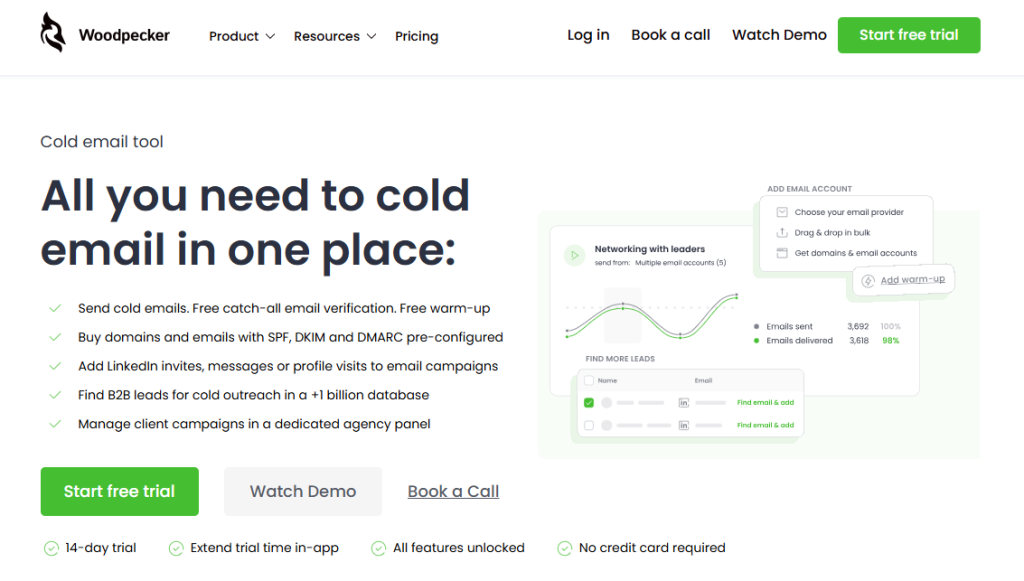
Woodpecker is a tool created specifically for the email layer of this motion – the one that’s doing most of the work. What it handles:
Auto-stopping sequences on reply. If a prospect responds to any email in the sequence, the rest of the emails don’t send. Sounds basic. Most teams still mess it up. For cross-channel teams, this is the minimum functionality needed to not burn goodwill.
Multi-touch sequences with conditional logic. Different follow-ups based on whether the previous email was opened. Different paths for prospects who clicked a link vs. those who didn’t.
Integration with other channels. Email is the workhorse, but it has to talk to your CRM, your LinkedIn outreach tool, and your calendar. Woodpecker integrates with the rest of the sales stack so the email layer is coordinated with everything else.
Deliverability protection. High-volume outbound is useless if your emails land in spam. Built-in deliverability features keep send rates safe and inboxes warm.
If you’re running – or planning to run – a cross-channel lead generation motion, email automation is the load-bearing piece.
Sign up to Woodpecker and run your first coordinated sequence.
FAQ
What is cross-channel lead generation in simple terms?
Cross-channel lead generation is a strategy where multiple outreach channels – email, LinkedIn, phone, content – work together in a coordinated sequence to reach prospects. The key word is coordinated: each channel references and reinforces the others, rather than running independently.
What’s the difference between multichannel and cross-channel?
Multichannel means using more than one channel. Cross-channel means those channels actively reinforce each other – a LinkedIn view warms up an email, the email references the LinkedIn interaction, the phone call follows up on both. Coordination is what separates them.
What is an example of cross-channel marketing?
A classic B2B example: SDR views a prospect’s LinkedIn profile on day 1, sends a personalized email on day 2 referencing the prospect’s recent post, sends a connection request on day 10 noting the earlier email, attempts a phone call on day 12 for high-priority accounts. Each touch builds on the last.
What is the 3-3-3 rule in marketing?
The 3-3-3 rule (sometimes attributed to different frameworks) generally refers to reaching a prospect 3 times across 3 channels within 3 days, or a similar compressed-sequence approach. It’s more of a heuristic than a proven formula – what matters is sequencing, not the specific numbers.
What is the 5-minute rule for leads?
The 5-minute rule states that the probability of qualifying an inbound lead drops significantly if you don’t respond within 5 minutes of the lead being created. Research from MIT and others has confirmed this pattern. In outbound contexts it applies differently, but the principle – fast response creates conversion advantage – is the same.
Is cross-channel lead generation legal?
Yes, when done in compliance with email (CAN-SPAM, GDPR), LinkedIn platform rules, and local telemarketing laws (TCPA in the US, equivalents elsewhere). The legal issues tend to arise from buying bad lists, scraping data without consent, or ignoring opt-outs – not from using multiple channels per se.
How many channels should I use in cross-channel lead generation?
Two to three is plenty for most teams. Email + LinkedIn is the most common starting combination. Add phone for high-value accounts, content for longer-term brand building. Most failures come from spreading too thin across too many channels – not from using too few.
How do I measure cross-channel lead generation effectiveness?
Measure at the opportunity level, not the channel level. Which account made it to a meeting, and which combination of touches moved them there? This requires attribution tracking in your CRM, not just channel-level reply rates. Most teams underinvest in this and end up optimizing the wrong metrics.